Group Adventure Dates.  4.9 of 489 reviews
 4.8 of 232 reviews
4.9 of 489 reviews 4.8 of 232 reviews 
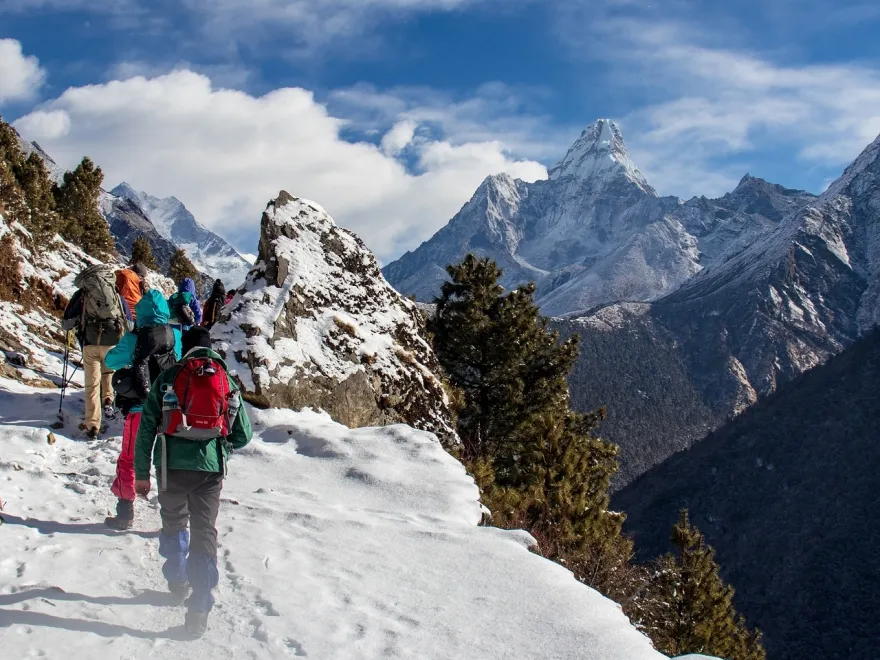
Experience an unforgettable Himalayan adventure with Everest Extreme Adventure on the Ama Dablam Expedition. Trek through the beautiful Khumbu region, acclimatize among Sherpa villages, and challenge yourself on Ama Dablam’s technical terrain while enjoying breathtaking views of Everest and surrounding Himalayan peaks.
Popular as one of the most beautiful mountains in the world, Ama Dablam (6856m) is located in the Khumbu Valley. Also, the mountain is a familiar face to those who want to explore the Everest region.
As such, the Ama Dablam Expedition is a surreal journey in the Himalayas. Also, the trip includes exciting treks through Sherpa villages and the Sagarmatha National Park. All in all, this trip is a display of both natural and cultural riches in the Khumbu region.
Overview of Ama Dablam Expedition
Firstly, the trip begins in Kathmandu as you prepare for the Ama Dablam Expedition. Then, a short cross-country flight will take you to Lukla. As you start your trek in the Everest region, the trail joins the Dudh Koshi River. You will trek past Phakding and enter the premises of Sagarmatha National Park.
Hereon, you will be in the company of rhododendron forests as you head to Namche. After acclimatizing for a day, you head east to Sanasa. Then, the trek reaches the Tengboche village and follow with a trek to Debuche. The next destination on the trek is Dingboche, where you adapt to the high altitude.
For the next part of the trip, you begin the climb Ama Dablam. The next ascent takes you to the Ama Dablam Base Camp, where you can take a few hiking sessions. Then, you begin the actual scaling of the mountain and continues for the next two weeks. After trekking past the Ama Dablam High Camp, you head to the top of the peak.
En route, you will indulge in numerous practice ascents and descents. Later, after the successful climb, you return to Tengboche. Then, you head back to Lukla, passing Tengboche on the way.
Ama Dablam Expedition is a difficult journey in the Everest region. So, the climbers need to be in top physical shape for the trip. Also, the spring and autumn seasons are ideal for the journey.
About Us
At Everest Extreme Adventure, we are a team of highly professional staff with great resources. Also, we have various trips similar to the Ama Dablam Expedition across Nepal. Moreover, we also allow you to modify the itinerary as per your travel wishes.
The Ama Dablam Expedition is an extraordinary Himalayan mountaineering adventure designed for climbers seeking to ascend one of Nepal’s most iconic peaks. Standing at 6,812 meters (22,349 feet), Ama Dablam is renowned for its striking pyramid-shaped summit, exposed ridges, steep snow and ice sections, and spectacular views of Everest, Lhotse, Nuptse, Makalu, Baruntse, and surrounding Himalayan peaks. The expedition begins in Kathmandu and follows the classic Everest region route, flying to Lukla before trekking through Phakding, Namche Bazaar, Debuche, and Dingboche. After acclimatization, the journey continues toward Ama Dablam Base Camp, where climbers spend an extended period preparing for the summit attempt.
Everest Extreme Adventure organizes the expedition with an emphasis on acclimatization, safety, climbing preparation, and experienced logistical support. The itinerary allows substantial time at high altitude for gradual adaptation and pre-climb training before the summit phase. The expedition itinerary provided includes approximately 30 days, from arrival in Kathmandu through final departure, although actual summit schedules may be adjusted according to weather, route conditions, acclimatization, and climbing requirements.
The best seasons for an Ama Dablam Expedition are generally spring (April–May) and autumn (October–November). These periods traditionally offer more favorable mountain conditions, better visibility, and comparatively stable weather windows for trekking and climbing in the Khumbu region. Autumn is particularly popular because the post-monsoon atmosphere can provide clear mountain views, while spring brings longer daylight hours and generally suitable climbing conditions. Nevertheless, conditions on Ama Dablam can change rapidly, and summit success always depends on current weather and route conditions.
During the climbing season, climbers must be prepared for cold temperatures, strong winds, snowfall, and rapidly changing conditions at higher elevations. The expedition schedule therefore includes acclimatization and contingency flexibility rather than relying on a fixed summit date. Everest Extreme Adventure can structure the climbing program around mountain conditions, allowing the expedition team to make informed decisions regarding movement between camps and the summit attempt.
Ama Dablam is considered a technical and demanding Himalayan climbing peak. Its elevation is significant, but the technical character of the mountain is an equally important challenge. Climbers encounter steep rock, snow, and ice terrain, exposed ridges, fixed-rope sections, and high-altitude conditions. Successful participation requires strong physical fitness, good acclimatization, competent rope skills, and previous experience with technical mountaineering. Climbers should be comfortable using equipment such as crampons, ice axes, harnesses, ascenders, and other climbing equipment appropriate to the route.
Transportation begins with arrival in Kathmandu and preparation before the expedition team flies to Lukla. The short mountain flight is followed by trekking through the Khumbu villages toward Ama Dablam Base Camp. After completing the climbing program, the return journey follows the trekking route toward Namche Bazaar and Lukla before the flight back to Kathmandu. Flight schedules in the Himalayas can be affected by weather, so flexibility is essential.
Food and accommodation are important components of a successful Ama Dablam Expedition, particularly because adequate nutrition and rest become increasingly important as altitude increases. During the trekking portion, climbers generally stay in comfortable local teahouses or lodges where meals commonly include traditional Nepali dishes, rice, noodles, soups, potatoes, vegetables, eggs, pasta, bread, and other suitable trekking foods. At higher elevations and Base Camp, meal arrangements become more expedition-oriented, with nutritious foods selected to provide sufficient carbohydrates, protein, fats, and calories for demanding climbing days.
Accommodation changes as the expedition progresses. In Kathmandu, climbers can stay in a comfortable hotel, while teahouses and lodges are normally used during the trekking approach. At Ama Dablam Base Camp, accommodation is typically provided in expedition tents, with communal dining and kitchen facilities supporting the climbing team. Everest Extreme Adventure places importance on hygienic food preparation, hydration, adequate nutrition, and comfortable camp organization throughout the expedition.
Climbing Ama Dablam requires the appropriate Nepal government climbing permits and regional permissions, along with the necessary trekking and administrative arrangements for entering and traveling through the Khumbu region. Permit requirements and associated fees can change according to government regulations, climbing season, and expedition circumstances. Climbers should therefore ensure that all permits are arranged correctly before beginning the expedition.
Everest Extreme Adventure can assist with the necessary expedition administration and documentation as part of the trip preparation process. Depending on the applicable regulations and itinerary, the expedition may involve peak climbing permits, Sagarmatha National Park entry arrangements, local or regional permits, and other required documentation. Climbers should carry valid identification, passport documentation, insurance details, and any other paperwork requested by the expedition organizer or authorities.
Choosing an Ama Dablam Expedition with Everest Extreme Adventure provides an opportunity to approach one of the Himalayas’ most spectacular technical peaks through a structured expedition itinerary. The program is designed around gradual acclimatization, allowing climbers to spend meaningful time in the Khumbu region before reaching Base Camp. The itinerary includes acclimatization days and pre-climb training, which are particularly important for preparing the body and mind for the demands of climbing above 6,000 meters.
Ama Dablam is not simply a high-altitude trekking destination; it is a serious mountaineering objective requiring preparation, discipline, teamwork, and careful decision-making. Everest Extreme Adventure focuses on expedition logistics, route planning, climbing preparation, support, and safety throughout the journey. From Kathmandu preparations and the Lukla approach to Base Camp training and the return trek, the goal is to provide a well-organized experience while respecting the unpredictable nature of Himalayan mountaineering.
The Ama Dablam Expedition with Everest Extreme Adventure is a carefully planned 30-day Himalayan adventure combining trekking, acclimatization, technical climbing preparation, and a challenging ascent of Ama Dablam. The journey begins in Kathmandu with expedition preparation before flying to Lukla and trekking through the scenic Khumbu Valley, passing Phakding, Namche Bazaar, Tengboche, Debuche, and Dingboche. Dedicated acclimatization days help climbers gradually adapt to increasing altitude while experiencing Sherpa culture and spectacular Himalayan landscapes.
From Dingboche, the expedition continues toward Ama Dablam Base Camp, where climbers undertake acclimatization and pre-climb training before attempting the summit. After the climbing phase, the team descends through Tengboche and Namche Bazaar to Lukla before flying back to Kathmandu. Everest Extreme Adventure focuses on organized logistics, safety, acclimatization, and professional expedition support throughout the journey.
You arrive at the country of mountains, Nepal via Tribhuvan International Airport located in Kathmandu. You will find our staff eagerly waiting to welcome you warmly. After brief introductions, you head to the hotel and refresh. You’ll meet our staff again for dinner, and you can discuss the expedition in detail.elcome to Nepal! Enjoy the beautiful aerial view of Kathmandu Valley as you approach the city. You will meet our representative outside the airport. He will greet you and bring you to your hotel. You will stay in a Three Star Rated Hotel in Kathmandu. In the meantime, you will visit our office to talk about the trek in detail. Meet your trek guide and exchange necessary documents. You can spend the rest of the day purchasing any needed gear and equipment or relax at the hotel. Overnight in Kathmandu.
Today, you buy/rent the necessary items needed for the expedition at Thamel. If you want, we can arrange a short session where you can meet professional mountaineers, so that you know what to do.
After an early breakfast, you head to the domestic airport and board the plane heading to Lukla. En route, you get to see magnificent views of the hill landscape and mountains like Langtang, Annapurna, Ganesh Himal, and even Everest. At Lukla, you meet your local guide and porters who will accompany you. After brief introductions and rest, you start your trek to Phakding. The route ascends and goes along the banks of the Dudh Koshi River. Overnight stay at the lodge.
After breakfast, you commence the trek and cross the Dudh Koshi River. The route goes through thick pine and rhododendron forest. En route, you get to see stunning views of Mt. Thamserku. After crossing several suspension bridges, you arrive at Namche Bazaar, the heart of Sherpa culture and Khumbu region. Overnight stay at the lodge.
It is vital to acclimatize yourself to higher elevations because you will be going to more than 6,000m. After breakfast, you head to the Sherpa Culture Museum. Then, you head to Everest View Hotel and enjoy the panoramic views. At Namche Bazaar (market), explore the shops and cafes.
After breakfast, you head to Debuche. Today’s route provides beautiful views of Everest, Lhotse, Nuptse, and Ama Dablam. After crossing the Dudh Koshi River, you arrive at Tyangboche, where you pay your respects at the sacred monastery. Continue the trek to reach Debuche for overnight stay.
After breakfast, you head to Pangboche. From here, you cross several settlement areas filled with Mani walls. Then, the route goes through dense forests of pines and juniper bushes. You will reach Dingboche to stay overnight.
You need to acclimatize again since you’ll be heading to more than 5,000 m. After breakfast, you can hike up to the nearby hills to see amazing views of the valley. Then, you lead to the nearby villages and interact with the locals.
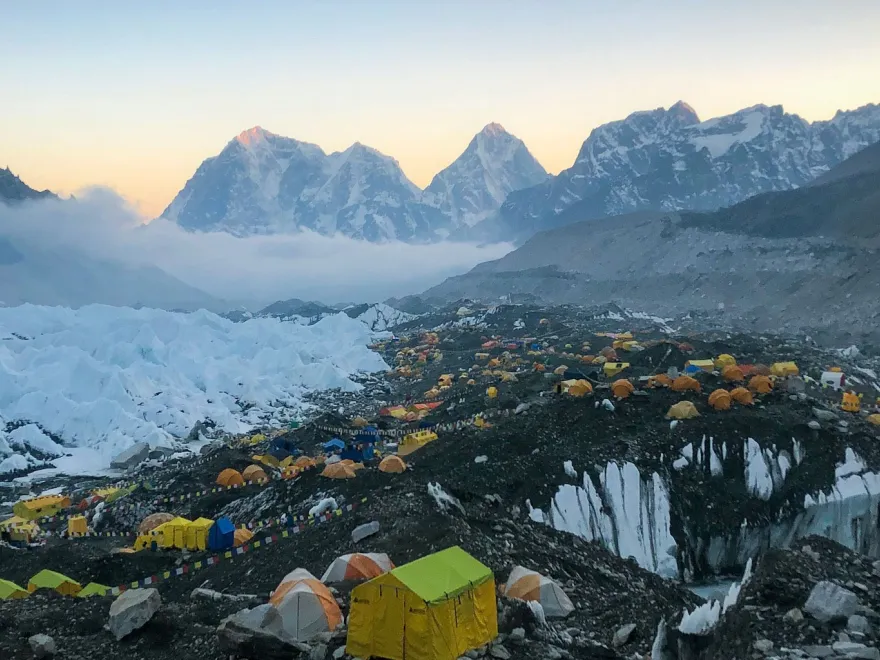
The day has arrived when you take the first step towards the summit. After an early breakfast, you head to Ama Dablam Base Camp. The route is steep and narrow, but later on, as you arrive at the foothills of the mountain, it opens up to the Base Camp. Then, you set up tents for overnight stay.
You need to train your body before you start the climb to the summit. You will be ready with the help of your guides and porter. You also need training on how to use specific gears like ice axe, crampons, and harness for the climb.
Ultimately, the day has arrived for you to start the summit. On average, it takes about 14-15 days to ascend to the top and return to the Base Camp. To reach the top, you set up three camps at different elevations. From the summit, you get to see spectacular views of Everest and its neighboring mountains. After reaching the peak, you descend back.
After cleaning up the base camp, you head back to retrace the route you took to ascend. The trail goes along the picturesque landscape, and after crossing rustic villages like Dingboche and Pangboche, you arrive at Tengboche for overnight stay. If you want, you can visit the local yak cheese factory.
Today, you head down to Namche Bazaar. The trail goes along the pine and rhododendron forest. Then, you cross the Dudh Koshi several times via suspension bridges. After crossing the last one, you arrive at Namche Bazaar for overnight stay.
After a hearty breakfast, you head down to Lukla. After ascending, you go downhill to the banks of the Dudh Koshi River. Walking through a forest filled with pines and rhododendrons, you arrive at Phakding. After a short trek from there, you arrive at Lukla for overnight stay. After refreshing, you join the local staff for farewell dinner.
Today is the last day in the Khumbu region. You have to say goodbye to the majestic mountains and return to Kathmandu. During the flight, enjoy the aerial views of the hills and terrain. Once you reach the hotel, you can rest and wash your fatigue away.
Finally, you head back to your home. If you have free time before the flight, you can buy souvenirs. Our staff will make sure that you reach the airport on time. Thank you for choosing us, and I hope to meet again to make beautiful memories in Nepal!
The Ama Dablam Expedition is a challenging high-altitude mountaineering adventure in Nepal’s Khumbu region. Organized by Everest Extreme Adventure, the expedition combines a scenic trek from Lukla with acclimatization, technical climbing training, and a summit attempt of Ama Dablam. The journey also provides spectacular views of Everest, Lhotse, Nuptse, Makalu, and other Himalayan peaks.
Ama Dablam stands at approximately 6,812 meters (22,349 feet) above sea level. Its impressive pyramid-shaped profile makes it one of the most recognizable mountains in the Everest region. Despite being lower than Mount Everest, Ama Dablam is technically demanding because of its steep rock, snow, ice, exposed ridges, and high-altitude climbing conditions.
The Ama Dablam Expedition is considered an advanced technical mountaineering challenge. Climbers need excellent physical fitness, endurance, acclimatization, and previous experience with crampons, ice axes, ropes, harnesses, and fixed-line climbing. Everest Extreme Adventure includes acclimatization and pre-climb training to help participants prepare for the technical and physical demands of the mountain.
The itinerary provided by Everest Extreme Adventure covers approximately 30 days, including arrival and departure from Kathmandu. It allows time for trekking, acclimatization, Base Camp preparation, technical training, climbing, and descent. The actual summit schedule may change according to weather, route conditions, individual acclimatization, and the availability of a safe climbing window.
The expedition begins in Kathmandu, where climbers complete trip preparations and necessary arrangements. The team then takes a flight toward Lukla and starts the trek through the Khumbu region. The approach passes through well-known destinations such as Phakding, Namche Bazaar, Tengboche, Debuche, and Dingboche before continuing toward Ama Dablam Base Camp.
Yes. Acclimatization is an important part of the Ama Dablam Expedition itinerary. The program includes dedicated acclimatization days around Namche Bazaar and Dingboche, followed by an extended acclimatization and pre-climb training period at Ama Dablam Base Camp. These rest and training periods allow climbers to adapt gradually to increasing altitude and prepare for the summit attempt.
Yes, the itinerary includes pre-climb training at Ama Dablam Base Camp. Training focuses on preparing climbers for the technical aspects of the route and may include practical instruction in crampon movement, ice-axe techniques, rope systems, ascending and descending fixed lines, harness use, and other essential mountaineering skills. Everest Extreme Adventure emphasizes preparation before the summit phase.
Choosing Everest Extreme Adventure provides a structured expedition experience combining trekking, acclimatization, technical preparation, logistics, and climbing support. The itinerary is designed to give climbers sufficient time to adapt to altitude and prepare for the demanding mountain environment. With careful planning, experienced support, and attention to safety, the company aims to make the Ama Dablam Expedition a memorable and professionally organized Himalayan adventure.
The most suitable climbing seasons are generally spring and autumn, particularly April–May and October–November. These periods typically offer comparatively favorable weather and visibility in the Himalayas. However, mountain conditions can change quickly, so the Everest Extreme Adventure team must make climbing decisions according to current weather, route conditions, snow and ice stability, and overall expedition safety.
Climbing Ama Dablam requires the appropriate Nepal government climbing permit and other applicable trekking, conservation-area, or local permissions. Permit requirements and fees can change according to government regulations and climbing season. Everest Extreme Adventure assists with the necessary expedition documentation and administrative arrangements so climbers can focus on preparation and the climbing journey.
During the trekking portion, accommodation is generally provided in local teahouses or lodges. In Kathmandu, climbers stay in a comfortable hotel, while Ama Dablam Base Camp uses expedition-style tents. Everest Extreme Adventure coordinates accommodation and camp arrangements throughout the itinerary, with the goal of providing climbers with suitable places to rest and recover at different elevations.
Meals are arranged to provide sufficient energy for demanding trekking and climbing activities. During the trek, climbers can enjoy common Nepalese and international dishes such as rice, vegetables, noodles, pasta, potatoes, soup, eggs, bread, and other nutritious foods. At Base Camp, expedition meals are prepared with greater emphasis on calories, hydration, nutrition, and maintaining energy at high altitude.
| No of people | Price per person |
|---|---|
| 1 - 1 | $1,999 |
| 2 - 4 | $1,775 |
| 5 - 9 | $1,755 |
| 10 - 15 | $1,735 |
| 16 - 20 | $1,715 |