Group Adventure Dates.  4.9 of 489 reviews
 4.8 of 232 reviews
4.9 of 489 reviews 4.8 of 232 reviews 
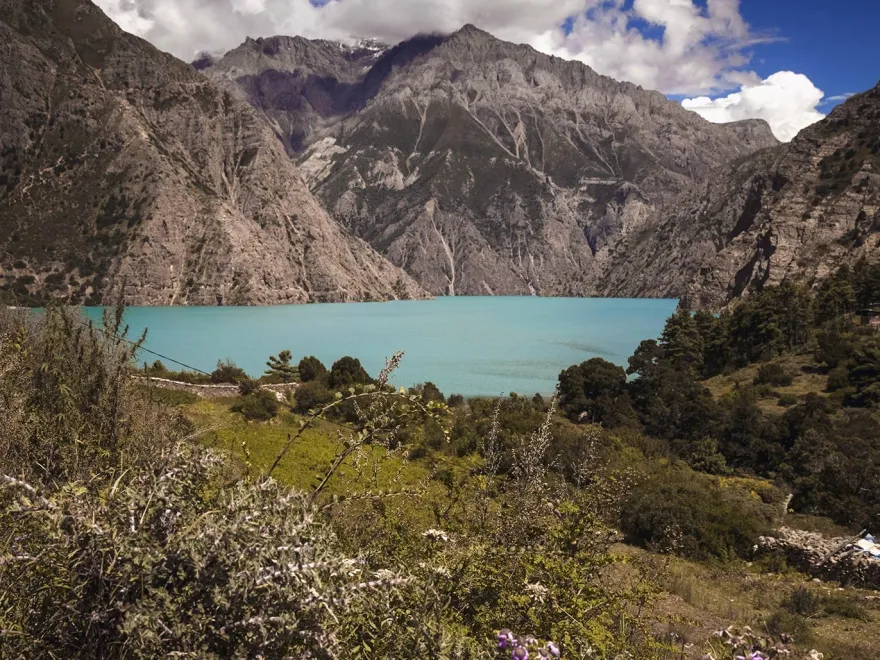
Explore the remote Himalayan wilderness with the Upper Dolpo Trek by Everest Extreme Adventure. Discover turquoise Phoksundo Lake, ancient Shey Gompa, traditional Tibetan-influenced villages, dramatic high mountain passes, and the unique landscapes and spiritual heritage of restricted Upper Dolpo, Nepal.
A remote region of Nepal bordering Tibet, the Dolpo region is one of the restricted areas of Nepal. Discovered as a trekking route only in the late 80s, the Dolpo region is one of the least developed areas because of its remoteness. Nonetheless, the Dolpo region holds some of nature’s mystical beauties.
The Dolpali people have cultural similarities with the bordering Tibetan people. To trek here, one needs a special permit. Individual trekkers are not permitted, while a group requires a minimum of two trekkers. You begin the trek with a flight from Kathmandu to Nepalgunj, and another flight from Nepalgunj to Juphal.
From Jhupal, you trek towards Sulighat for the overnight stay. Towards your next main destination of Shey Phoksundo, you trek through Ringmo village via Renje. The unique Bon Po religion practiced by the people of Ringmo village is older than Buddhism. The trail is steep as you ascend towards Phoksundo Lake. Upon reaching the lake, the spectacular natural beauty of the lake and surrounding region will reward you.
You then trek past some beautiful waterfalls and forage areas. From Phoksundo Lake, you reach Kang La pass via Phoksundo Khola and Phoksundo Bhanjyang. You reach Shey Gompa and explore the ancient 11th century Gompa, also the spiritual heart of the Dolpo region. It belongs to the Chaiba community, who follow Padmasambhava and Kagyu sects.
The trail then takes you through Saldang La Pass to reach Namgung village. Then, you trek through the steep trails to Saldang village, situated at a Plateau Nam Khong Nala. The trail passes through another ancient Gompa, Yangze Gompa, before heading over to Sibu. From Sibu, you trek towards Jeng La Phedi. Trekking eastwards to Do Tarap, you explore even more rustic, ancient, and unique villages of the region. This trek is recommended during March-May (spring) and September-November (autumn) months as the weather is pleasant.
With Everest Extreme Adventure, you get to travel all across Nepal at affordable prices. Along with it, the transportation and accommodation services will all be as per your choice. To make the trip meaningful, our certified staff and guides will accompany you.
The Upper Dolpo Trek is one of Nepal’s most remote, adventurous, and culturally rewarding trekking experiences, offering an extraordinary journey through the isolated Himalayan landscapes of western Nepal. Organized by Everest Extreme Adventure, this 24-day expedition takes trekkers into the fascinating world of ancient Tibetan Buddhist traditions, traditional mountain villages, dramatic high-altitude passes, and the spectacular turquoise waters of Phoksundo Lake. Far from the crowded trekking routes of Everest and Annapurna, Upper Dolpo provides a rare opportunity to explore a region where centuries-old customs, traditional lifestyles, and pristine natural beauty remain remarkably well preserved.
The journey begins in Kathmandu with sightseeing and trek preparation before continuing by air to Nepalgunj and Juphal. From Juphal, the trail leads through remote settlements and rugged mountain terrain toward Ringmo village and the beautiful Phoksundo Lake at approximately 3,620 meters. After exploring the lake and surrounding landscapes, trekkers venture deeper into Upper Dolpo, crossing challenging high mountain passes, including Kang La Pass at approximately 5,160 meters and Jeng La Pass at approximately 5,090 meters. The route also passes through historic monasteries, traditional settlements, and breathtaking valleys before descending toward Dunai and Juphal.
Throughout the trek, visitors experience a unique combination of natural scenery, cultural heritage, and high-altitude adventure. The region is particularly famous for its Tibetan-influenced culture, ancient monasteries such as Shey Gompa, and spectacular views of the snow-covered Himalayan mountains. The long walking days and remote terrain make this trek demanding, but the rewards are exceptional for well-prepared adventurers.
Choosing the right season is essential for a successful Upper Dolpo Trek because of the region’s high elevation, remote geography, and challenging mountain passes. Unlike many other trekking destinations in Nepal, Upper Dolpo lies in the rain-shadow region of the Himalayas, making it comparatively dry during the summer monsoon. This distinctive geographical feature makes the trek particularly attractive during the months when other popular Himalayan trails receive heavy rainfall. Everest Extreme Adventure recommends selecting travel dates according to weather conditions, flight schedules, trail accessibility, and the trekker’s experience.
Late spring, summer, and early autumn are generally the most suitable periods for this adventure. May and June can offer favorable conditions, although some high passes may still have lingering snow depending on the previous winter. July and August are popular months because Upper Dolpo receives relatively little rainfall compared with many other regions of Nepal. September and early October can also provide excellent trekking conditions, with generally pleasant daytime temperatures and impressive mountain scenery. However, weather conditions in the high Himalayas can change quickly, and no season guarantees completely clear skies or uninterrupted flights.
Spring offers a sense of renewal, with beautiful mountain landscapes and increasingly accessible trails as the snow melts. Summer is especially appealing for trekkers who want to explore the distinctive dry landscapes, ancient settlements, and turquoise lakes of Dolpo. Early autumn is often favored for comfortable walking conditions and crisp mountain views. Late autumn and winter are generally less suitable for the standard itinerary because temperatures fall significantly, snowfall can block high passes, and access to remote settlements becomes more difficult.
Recommended trekking seasons:
Everest Extreme Adventure can help trekkers choose suitable departure dates based on current conditions, flight availability, and individual travel plans. Since Upper Dolpo is a remote destination, flexibility is important, particularly when domestic flights are affected by weather.
The Upper Dolpo Trek is a challenging, high-altitude adventure designed primarily for trekkers with good physical fitness, endurance, and a willingness to walk for extended periods in remote mountain environments. The 24-day itinerary includes several long trekking days, steep ascents and descents, rugged trails, and high mountain passes exceeding 5,000 meters. Kang La Pass, at approximately 5,160 meters, is one of the most demanding sections of the journey, while Jeng La Pass, at approximately 5,090 meters, presents another significant physical challenge. Trekkers should be prepared for limited facilities, unpredictable weather, and considerable distances between settlements.
The itinerary includes acclimatization opportunities at Phoksundo Lake and Shey Gompa, along with an exploration and acclimatization day in Do Tarap. These rest days help travelers adapt to the increasing altitude, although they cannot completely eliminate the risk of altitude sickness. Walking slowly, staying hydrated, eating adequately, and communicating symptoms to the trekking guide are essential. Prior experience with multi-day trekking at altitude is highly recommended. Trekkers should also prepare with regular cardiovascular exercise, hill walking, stair climbing, and strength training before departure.
Transportation is another important part of the adventure. The journey begins with arrival in Kathmandu, followed by sightseeing and preparation. Travelers then take a domestic flight from Kathmandu to Nepalgunj and continue by air to Juphal, the gateway to the Dolpo region. The flight from Nepalgunj to Juphal typically takes approximately 35 minutes, although schedules and operating conditions can vary. After completing the trek, travelers walk back to Juphal and fly to Nepalgunj before connecting to Kathmandu. Flight delays or cancellations can occur because of weather, so additional time in the travel schedule is advisable.
Difficulty and transportation highlights:
With experienced guides, careful planning, and appropriate preparation, Everest Extreme Adventure helps trekkers manage the physical and logistical challenges of this remarkable Himalayan expedition.
Food and accommodation during the Upper Dolpo Trek reflect the remote character of the region. In Kathmandu and Nepalgunj, trekkers can enjoy a variety of meals and stay in comfortable hotels before entering the more isolated mountain areas. Once the trek begins, meals are generally provided through local teahouses, lodges, or organized camping arrangements, depending on availability along the route and the specific trekking package. Facilities in Upper Dolpo are considerably more basic than those found on Nepal’s busier trekking routes, so travelers should arrive with realistic expectations and an adventurous attitude.
Typical meals include traditional Nepali dal bhat, consisting of rice, lentil soup, vegetables, and sometimes meat, as well as noodles, soups, potatoes, Tibetan bread, porridge, and other simple local dishes. Dal bhat is especially popular because it provides carbohydrates and energy for long walking days. Hot drinks such as tea, ginger tea, and coffee may be available in settlements, although choices become more limited in remote locations. Trekkers with dietary restrictions should inform Everest Extreme Adventure before departure so the team can discuss practical arrangements with local accommodation providers and support staff.
Accommodation varies throughout the itinerary. In Kathmandu and Nepalgunj, travelers typically stay in hotels. In accessible villages, basic teahouses or local lodges may provide simple rooms with shared facilities. In more isolated parts of Upper Dolpo, lodging options can be extremely limited, making camping necessary depending on the route, availability, and package arrangements. Camping expeditions require tents, sleeping equipment, cooking facilities, and a support team to prepare meals and manage camp logistics.
Because of the region's remoteness, the variety of food and the availability of fresh ingredients can be limited. Travelers should carry suitable snacks, energy bars, nuts, or other lightweight food they enjoy, particularly for long days between settlements. Adequate hydration is also important at high altitude, and drinking water should be treated or purified when necessary.
Food and accommodation highlights:
Everest Extreme Adventure coordinates food, accommodation, and trekking logistics according to the selected package and local conditions. Travelers should confirm whether meals, accommodation, camping equipment, and porter or support-team services are included in their specific booking.
The Upper Dolpo Trek enters a restricted and highly regulated region of Nepal, so obtaining the appropriate permits is an essential part of the preparation process. Unlike many standard trekking routes, Upper Dolpo requires special authorization because of its sensitive border location, protected landscapes, and distinctive cultural heritage. Travelers should arrange their permits through an authorized trekking agency and ensure that all documentation is completed before entering the restricted area. Everest Extreme Adventure assists trekkers with the necessary permit arrangements and related administrative procedures as part of the planned expedition.
The main authorization for this itinerary is the Upper Dolpo Restricted Area Permit (RAP). Depending on the precise route, additional restricted-area permits may be required for Lower Dolpo sections or other regulated areas. The trek also passes through Shey Phoksundo National Park, so the applicable national park entry permit must be arranged. Permit requirements, fees, validity periods, and documentation rules can change, so they should be verified with the relevant Nepalese authorities before departure.
Restricted-area trekking regulations generally require visitors to travel through an authorized agency and meet the applicable group and guide requirements. Independent trekking without the required authorization is not permitted in restricted areas. Trekkers should provide passport details, valid visa information where applicable, photographs or other requested documentation, and sufficient preparation time for permit processing. The exact requirements can depend on nationality, the chosen route, and regulations in force at the time of travel.
Common permit considerations include:
Everest Extreme Adventure can help coordinate the required permits and explain the documentation needed for the 24-day itinerary. Travelers should confirm the current fees and regulations before booking, as permit costs and entry requirements may change. Keeping copies of travel documents and following local conservation and cultural guidelines will also help ensure a smooth and responsible trekking experience.
Choosing the Upper Dolpo Trek means discovering one of the most secluded and culturally distinctive regions of the Nepal Himalayas. While many popular trekking destinations offer developed trails, busy villages, and extensive tourist facilities, Upper Dolpo provides a much more remote and immersive experience. Its vast mountain landscapes, deep valleys, ancient monasteries, traditional settlements, and turquoise alpine lakes make it an outstanding destination for travelers seeking something beyond a conventional Himalayan holiday. The 24-day journey offers time to explore both the natural environment and the region’s rich cultural traditions.
One of the greatest attractions is Phoksundo Lake, famous for its striking blue-green water and dramatic mountain surroundings. The route continues through traditional villages such as Ringmo, Namgung, Saldang, and Do Tarap, where Tibetan-influenced architecture, religious customs, and traditional ways of life remain important parts of local identity. Visiting Shey Gompa offers another memorable experience, connecting trekkers with the spiritual history of the region. The demanding crossings of Kang La Pass and Jeng La Pass add a sense of accomplishment while revealing expansive views of the remote Himalayan landscape.
Everest Extreme Adventure helps make this challenging expedition more manageable through itinerary planning, guide coordination, permit assistance, transportation arrangements, and logistical support. Traveling with an experienced team is particularly valuable in Upper Dolpo because of its restricted-area regulations, limited accommodation, remote trails, and unpredictable flight schedules. Professional support allows trekkers to focus on the journey while ensuring that important practical arrangements are considered before and during the expedition.
The trek is especially suitable for adventurous travelers who value authentic cultural encounters, wilderness, physical challenges, and the opportunity to explore less-visited Himalayan destinations. However, it is important to understand that Upper Dolpo is not a luxury trekking destination. Facilities are basic in many places, walking days can be long, and the altitude requires careful preparation.
Reasons to choose Everest Extreme Adventure for Upper Dolpo Trek:
With its extraordinary scenery, rich cultural heritage, and demanding mountain trails, the Upper Dolpo Trek offers a truly distinctive Himalayan adventure. Everest Extreme Adventure aims to help travelers experience this remarkable region through thoughtful preparation, responsible travel practices, and appropriate support throughout the expedition.
The Upper Dolpo Trek is an extraordinary 24-day Himalayan adventure offered by Everest Extreme Adventure, taking you into one of Nepal’s most remote and culturally fascinating regions. Your journey begins in Kathmandu with sightseeing and preparation before flying to Nepalgunj and Juphal, the gateway to Dolpo. Trek through spectacular mountain landscapes, traditional villages, and isolated valleys toward the breathtaking turquoise waters of Phoksundo Lake, one of the region’s most iconic natural attractions.
Continue deeper into Upper Dolpo, crossing challenging high mountain passes, including Kang La Pass (5,160 m) and Jeng La Pass (5,090 m). Explore ancient monasteries such as Shey Gompa, discover Tibetan Buddhist and Bon Po traditions, and experience authentic village life in Saldang and Do Tarap. The trek concludes with a return to Juphal and flights to Kathmandu.
The trek starts with your arrival in Nepal, the land of the Himalayas. You land at Tribhuvan International Airport in the capital city of Kathmandu. At the airport, our staff and representatives will be waiting to welcome you, and after introductions, you head to the hotel. After refreshing, you join our staff again for a welcome dinner. You can share your queries about the trip with our staff during this time.
Today, you fill in necessary personal details for the permits and then head out to sightsee some famous landmarks of Kathmandu. First, you head to Kathmandu Durbar Square, where you learn the history and civilization of the valley. Then, you head to Boudhanath Stupa and discover the serene monasteries. The last stop is Swayambhunath Temple, where you get to see spectacular panoramas of the Kathmandu valley. If you have any item you need for the trek, you can buy or rent as well.
After an early breakfast, you head to the airport and catch the first flight to Nepalgunj. During the flight, you get to see the amazing sceneries of the flatlands and hills. Once you land at Nepalgunj airport, our local staff will welcome you and take you to the hotel to rest. Before dinner, you can head to explore the local market area.
After breakfast, you head to the airport and board the flight to Juphal. The plane flies above the western landscapes, and you arrive at Juphal. From Juphal, you trek to Sulighat. The trek first goes downhill to Kalagauda. Then, you ascend to the trail that lies just above the Thuli Bheri River. The trail gradually ascends, and you cross a large suspension bridge. After crossing the river, you enter the Phoksundo Valley and follow the Phoksundo Khola to reach Sulighat.
Today, you head west from the river. Trek past pasturelands and arrive at Jyalhasa, the winter settlement for people of Ringmo village. Then, you ascend to Sankta. From Sankta, a series of ups and down start. As you walk up to a ridge, the Phoksundo Lake comes into view, and then you descend to Chepka. The trail goes along the river, and you arrive for Renje for overnight camping.
The trail continues with a climb to a ridge and crosses via a wooden suspension bridge to head down to Samduwa, a small Tibetan village. The trail then goes through grassy areas and a few monasteries. You then reach the tallest waterfall of the region. Then, you head down to the chir and pine forests. The trail goes along the Phoksundo Khola, and then you reach Ringmo village. A short hike will take you to Phoksundo Lake’s bank, where you camp overnight.
Today, you get to explore the old Ringmo villages as well as the beautiful Phoksundo Lake. After breakfast, you head to explore the old Thasung Chholing Gompa and then head to explore Phoksundo Lake. Believed to be the deepest lake in Nepal, many tourists from all over the world visit the lake.
The trail goes along the Phoksundo Lake. From the west bank, the trail starts to get rocky. There is a wooden path made from here, but you still need to be careful. As you ascend, you reach a meadow, where you might see herds of sheep and yak. The meadow opens to the floodplain of Phoksundo Lake. Walk more in-depth into the valley to arrive at Phoksundo Khola village for the overnight stay.
The trail today starts with a relatively easy trek to a glacial valley. You then cross a wooden bridge at the confluence of Phoksundo Khola and a stream. After crossing the stream, the trail is not very distinct, so you need to follow the guide carefully. You then walk through the rocks and boulders as you head deep into the valley. Then, you ascend to a meadow and see the Kang La Pass. After crossing this meadow, you arrive at Phoksundo Bhanjyang for the overnight stay.
After breakfast, you head up to the Kang La Pass. The route is strenuous, as it is very steep. Once you reach the pass, the amazing views of the valley reward you. You then descend through the meandering river. The terrain changes to meadows, and you get to see herds of yak, sheep, and domesticated mountain goats called “Chengra” in Nepali. Enjoying the pleasant views, you walk through the landscape and arrive at Shey Gompa, where you camp overnight.
Today, you explore the historic Shey Gompa, which is also known as the crystal monastery. Dedicated to Padmasambhava or Guru Rinpoche, it is the first monastery of the Kagyu sect and depicts the history of Bon Po, which existed before Buddhism. Lined with quartz and a variety of marine fossils, the ridge of the Shey Gompa is environmentally important.
The trail today goes through a juniper forest, which then descends to gray canyons. You then ascend to Saldang La after passing the rocky path. Then, the long descent to the pastureland starts. Once you arrive at the pastureland, you get to see many yaks, sheep, and Chengra with their nomadic herders. Then, you head to Namgung village.
Today starts with a steep slope to a barren landscape. You see Nam Khong Nala and then descend towards it. Walking through the harsh terrain, you reach the Saldang village. It is the biggest village of the region and spreads widely throughout the terrain. It is a trading region as it is closer to the Tibetan border. Overnight stay at a teahouse.
After breakfast, you follow the Nang Chun River that goes throughout the barren valley. With a series of ups and downs, you walk past various villages like Marang and Ki. Then, you cross the Panzang River and arrive at the Yangze Gompa. It is also one of the oldest monasteries of the region and depicts the ways of Bon Po. Overnight stay at the camp.
There are two routes to reach Sibu. One path heads west and passes through villages of Nishalgaon and Shimengaon. The other route goes back to Saldang village and is relatively easier. You retrace your steps to Saldang and pass through Chortens, stupas, and farmlands. You then trek at the banks of Nam Khong Khola and cross it to reach Sibu. Overnight stay in the camp.
Today, you continue to trek along the banks of Nam Khong Khola. You then reach the pasturelands for yaks and see the Tibetan border. Then, you head east and arrive at a small confluence. From the junction, you steeply ascend to the foothills of Jeng La Pass. Overnight stay at the camp.
Today, you head to the top of the pass. At the top, the stunning view of mountain ranges like Dhaulagiri reward you. After soaking in the view, you head down to the Tarap Valley. The valley is fascinating, and you walk through the vast plains with amazing views of the mountains. The trail then goes east, and you come across Tokyu Monastery. As you walk further through the marshlands, you arrive at Do Tarap for the overnight stay.
Today, you get to explore the Do Tarap region and acclimatize as well. The village is filled with small houses and barley fields. After breakfast, you head to visit the Ribo Bhumpa Gompa, which has a unique picture of a demon killed by Guru Rinpoche. You can then head to Dero Gompa and Shipchok Gompa to understand more about Bon Po.
From the barren landscape, you descend to the wide valley. As you walk through the vegetation filled with juniper bush and wild rose, the valley narrows down to a gorge. The trail then takes you to the confluence of Tarap Chu and Lang Khola. Following the banks, you arrive at the floodplain of Tarap Khola. Set up tents for overnight camping.
After breakfast, you head down to the gorge of Tarap Khola. The trail today is exciting because the gorge narrows down to the point where you can jump from one side to another. You need to cross several suspension bridges. The thrilling trail may get washed at times, so you need to follow the guide carefully. The gorges then end at Khanigaon, where you set up tents for the overnight stay.
After breakfast, you continue the trail and arrive at the village of Lalberi first. Then, you descend through the forest and walk into another gorge. At the end of the gorge, you will arrive at Tarakot, a fort used during the Rana regime. Then, you walk along the banks of the Bheri River and arrive at Dunai for an overnight stay.
Today is the last day of the trek, so try to enjoy the surroundings as much as possible. The route mostly goes downhill as you retrace your steps back to Juphal.
After an early breakfast, you head to the airport and board the first flight back to Kathmandu. Flying over the scenic landscapes, you arrive at Kathmandu and head to the hotel. You rest and refresh. If you want, you can head to explore the streets or buy souvenirs. In the evening, you join our staff again for a farewell dinner.
Sadly, the trek has come to an end. You head for your home country. As per your flight time, our staff will drop you off at the airport. Thank you for making unforgettable memories with us, and we hope to see you again. Have a safe flight!
The Upper Dolpo Trek typically takes 24 days, including arrival in Kathmandu, sightseeing, trek preparation, domestic flights, trekking, and departure. The itinerary organized by Everest Extreme Adventure includes time to explore Phoksundo Lake, visit ancient monasteries, cross high mountain passes, and experience traditional Dolpo villages. The duration may vary depending on weather conditions, flight schedules, route adjustments, and individual trekking requirements. Additional buffer days are recommended because flights to remote Dolpo can be delayed.
The Upper Dolpo Trek is considered challenging to strenuous because of its remote location, high altitude, long walking days, and demanding mountain passes. Trekkers typically walk around four to seven hours daily, although some sections may take longer depending on terrain and weather. Crossing Kang La Pass at approximately 5,160 meters requires good physical fitness and careful acclimatization. Previous experience with multi-day trekking is highly recommended. Everest Extreme Adventure encourages participants to prepare through regular hiking, cardiovascular exercise, and strength training before departure.
The highest point on the standard Upper Dolpo Trek itinerary is Kang La Pass, at approximately 5,160 meters above sea level. At this elevation, trekkers may experience reduced oxygen levels, fatigue, headaches, or other symptoms of altitude sickness. Walking slowly, staying hydrated, and following the guide's advice are important for reducing risks. The itinerary includes rest and acclimatization opportunities at Phoksundo Lake, Shey Gompa, and Do Tarap. Everest Extreme Adventure recommends discussing relevant medical concerns with a healthcare professional before undertaking this high-altitude adventure.
Previous trekking experience is strongly recommended, although suitability depends on your fitness, preparation, and ability to handle high-altitude conditions. The route involves steep ascents, rocky trails, remote terrain, and mountain passes above 5,000 meters. Beginners with excellent fitness may be able to participate, but they should understand the physical demands and limited facilities. Preparation should include regular hiking, stair climbing, endurance training, and practice walking with a loaded daypack. Everest Extreme Adventure can help assess your experience and explain the challenges before you commit to the expedition.
Choosing Everest Extreme Adventure for the Upper Dolpo Trek provides an opportunity to explore one of Nepal's most fascinating restricted regions with organized logistical support. The company can assist with itinerary planning, permit coordination, domestic transportation, accommodation arrangements, and local trekking support according to the selected package. The journey includes Phoksundo Lake, Shey Gompa, traditional Dolpo villages, and spectacular high mountain passes. Before booking, travelers should confirm the guide arrangements, group size, included services, accommodation standards, and cancellation policies. Careful preparation helps make this demanding Himalayan expedition more comfortable and rewarding.
Yes, cultural exploration is one of the most rewarding aspects of the Upper Dolpo Trek. The route passes traditional settlements such as Ringmo, Saldang, Namgung, and Do Tarap, where Tibetan-influenced traditions remain important to everyday life. Trekkers can visit ancient monasteries, including Shey Gompa, and learn about Buddhist practices and the region's historic Bon Po heritage. Local architecture, prayer flags, chortens, and mani walls add to the cultural experience. Everest Extreme Adventure encourages respectful interactions with local communities and responsible photography, particularly around religious sites and private homes.
Solo travelers can join an organized Upper Dolpo Trek, but restricted-area regulations mean that independent trekking without the required authorization and arrangements is generally not permitted. Travelers should confirm the applicable group, guide, and permit requirements before booking. Joining an organized departure can provide practical advantages, including coordinated transportation, local guidance, accommodation planning, and support in remote locations. Everest Extreme Adventure can explain available group or private trekking arrangements, subject to departure dates and current regulations. Solo travelers should also discuss single-room or single-tent supplements and any additional costs before confirming their reservation.
The Upper Dolpo Trek stands out for its remarkable remoteness, dramatic barren landscapes, traditional Tibetan-influenced culture, and limited tourist infrastructure. Unlike busier routes such as Everest Base Camp or the Annapurna Circuit, Upper Dolpo offers a quieter experience through isolated Himalayan valleys and historic settlements. Highlights include the turquoise waters of Phoksundo Lake, the spiritual atmosphere of Shey Gompa, and challenging crossings of Kang La and Jeng La passes. With Everest Extreme Adventure, travelers can explore these distinctive landscapes while experiencing the region's natural beauty, cultural heritage, and demanding high-altitude trails.
Packing appropriate equipment is essential because temperatures, weather, and trail conditions can change considerably throughout the journey. Important items include layered trekking clothing, a warm down jacket, waterproof outerwear, sturdy trekking boots, warm gloves, a hat, sunglasses, sunscreen, and a suitable sleeping bag if camping is included. A comfortable backpack, reusable water bottle, water purification supplies, personal medication, headlamp, and basic first-aid items are also recommended. Everest Extreme Adventure can provide a detailed packing checklist based on the season, accommodation arrangements, and services included in your trekking package.
The Upper Dolpo Trek can be undertaken responsibly with proper preparation, experienced local support, appropriate equipment, and careful attention to altitude. However, its remote location, limited medical facilities, challenging terrain, and unpredictable weather mean that risks cannot be eliminated. Trekkers should recognize symptoms of altitude sickness, follow acclimatization advice, and inform their guide immediately if they feel unwell. Comprehensive travel insurance covering high-altitude trekking and emergency helicopter evacuation, where available, is strongly recommended. Everest Extreme Adventure helps coordinate trekking logistics, but travelers should remain flexible and follow professional safety guidance throughout the journey.
The best seasons for the Upper Dolpo Trek are generally May to June and July to early October, depending on snow conditions and the weather. Upper Dolpo lies in the Himalayan rain-shadow region, making it suitable for summer trekking compared with many other areas of Nepal. May and June can offer beautiful mountain scenery, while July and August provide access to the relatively dry landscapes. September and early October are also popular for pleasant trekking conditions. Everest Extreme Adventure can help you select suitable dates.
The Upper Dolpo Trek generally begins with arrival in Kathmandu, followed by a domestic flight to Nepalgunj and another flight to Juphal. The flight from Nepalgunj to Juphal usually takes approximately 35 minutes, although schedules depend on operating conditions. Juphal serves as the main gateway to the trekking region. After completing the trek, travelers return to Juphal and fly to Nepalgunj before connecting to Kathmandu. Weather-related delays and cancellations are possible, so Everest Extreme Adventure recommends allowing extra time in your travel schedule.
Yes, the Upper Dolpo Trek requires a Restricted Area Permit because the region is specially regulated by the Nepalese authorities. Trekkers also need the applicable Shey Phoksundo National Park entry permit, and additional permits may be required depending on the precise itinerary. Restricted-area trekking generally requires booking through an authorized trekking agency and following applicable guide and group regulations. Everest Extreme Adventure can assist with permit arrangements and documentation. Permit fees and requirements may change, so travelers should confirm the latest regulations before booking their trek.
Accommodation varies throughout the Upper Dolpo Trek because the region is remote and has limited tourism infrastructure. In Kathmandu and Nepalgunj, travelers generally stay in hotels, while basic teahouses or local lodges may be available in some villages. In more isolated sections, camping may be necessary depending on the route and package arrangements. Facilities can be simple, with shared bathrooms and limited hot water. Everest Extreme Adventure coordinates accommodation according to the selected package and local availability. Trekkers should confirm whether camping equipment, sleeping arrangements, and associated support services are included.
Food during the Upper Dolpo Trek generally consists of traditional Nepali meals and simple local dishes. Common options include dal bhat, rice, lentil soup, vegetables, noodles, potatoes, Tibetan bread, porridge, and soups. Meal choices become more limited in remote villages because transporting supplies is difficult. Trekkers should eat sufficient carbohydrates and nutritious meals to maintain energy during long walking days. Everest Extreme Adventure can discuss meal arrangements and dietary preferences before departure. Travelers with allergies or specific dietary requirements should communicate these in advance and consider carrying suitable snacks for remote sections.
| No of people | Price per person |
|---|---|
| 1 - 1 | $1,999 |
| 2 - 4 | $1,775 |
| 5 - 9 | $1,755 |
| 10 - 15 | $1,735 |
| 16 - 20 | $1,715 |