Group Adventure Dates.  4.9 of 489 reviews
 4.8 of 232 reviews
4.9 of 489 reviews 4.8 of 232 reviews 
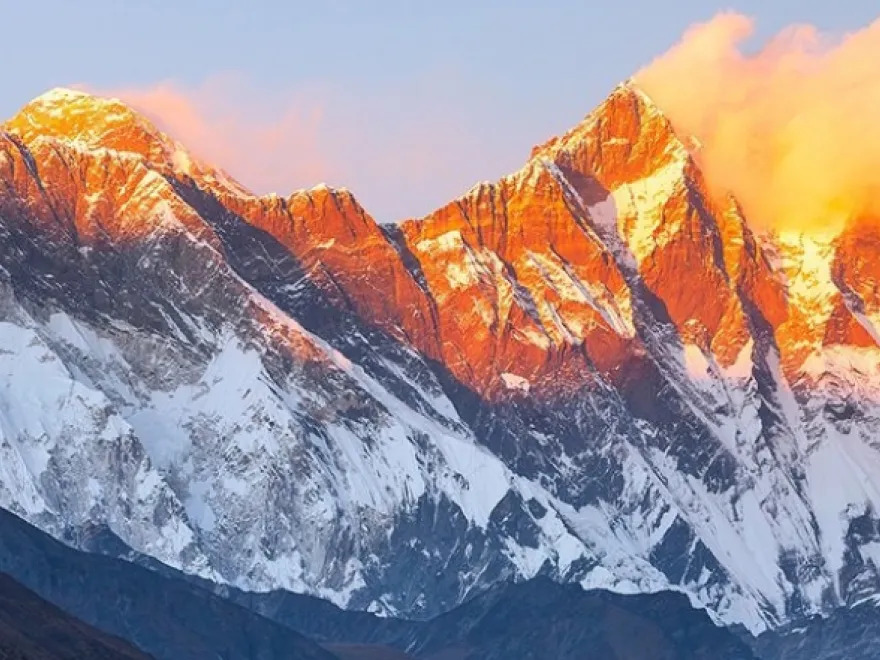
Join Everest Extreme Adventure for an unforgettable Mt. Lhotse Expedition (8,516m), the world's fourth-highest mountain. Experience breathtaking Himalayan landscapes, Sherpa culture, challenging high-altitude climbing, and spectacular Everest region views on this extraordinary 50-day mountaineering adventure in Nepal.
Nepal, known as the land of the Himalayas, shelters eight of the fourteen eight-thousanders. Among them is Mt. Lhotse, the fourth highest mountain in the world. Located in the Khumbu region, it neighbored Mt. Everest and was first climbed by a Swiss expedition team in 1956.
In terms of difficulty, Mt. Lhotse is graded, strenuous, and challenging. Due to this reason, mountaineers who want to test their limits choose the Mt. Lhotse expedition. Experience the thrill of summiting the fourth-highest mountain of the world. Along with it, this expedition takes you on an adventure to see the best of what the Khumbu region has to offer.
The trip starts with your arrival at Kathmandu, where you need to prepare permits and necessary items required for the expedition. Then, you fly to Lukla, and from there, you trek along the picturesque landscape. You trek to various beautiful Sherpa villages like Phakding, Namche Bazaar, and Dingboche. En route, you get to see mountains like Everest, Lhotse, Nuptse, Ama Dablam, and even the smaller peaks.
From Dingboche, you head to Lobuche and then ascend to Lhotse Base Camp. At the base camp, you spend another two days to prepare for the summit. It will take almost a month to summit the peak. With the trail meandering through the glaciers, moraines, and crevasses, you will conquer the summit.
At the top, you will witness breathtaking views of the Khumbu region. The expedition is best done in the spring and autumn seasons as the weather is relatively stable with fewer chances of snow and rain.
At Everest Extreme Adventure, our main aim is to provide you with the best services so that your stay in Nepal will be memorable. To do so, we provide you with the finest and best facilities for transportation, accommodation, and other facilities as per your requirements.
The Mt. Lhotse Expedition is an extraordinary high-altitude mountaineering adventure designed for experienced climbers seeking to summit the world's fourth-highest mountain, Mt. Lhotse (8,516 m). Located in the Mahalangur Himalaya range of Nepal, Lhotse shares much of its approach route with Mount Everest before branching toward its own challenging summit. Famous for its steep slopes, technical climbing sections, icy terrain, and spectacular Himalayan scenery, Lhotse offers an unforgettable experience for climbers with strong mountaineering skills and high-altitude experience. Everest Extreme Adventure organizes this expedition with a focus on careful planning, acclimatization, experienced mountain support, and climber safety throughout the journey.
The expedition typically follows a 50-day itinerary, beginning with arrival in Kathmandu at 1,400 m, equipment checks, and climbing preparations. After flying to Lukla, the team begins trekking through the beautiful Khumbu region, passing Phakding, Namche Bazaar, Tengboche, Dingboche, and Lobuche before reaching Everest Base Camp at approximately 5,300 m. Dedicated acclimatization days help climbers gradually adjust to increasing altitude before the climbing period begins. The expedition includes a planned climbing window of approximately 27 days, followed by the descent through the Khumbu Valley and a return flight from Lukla to Kathmandu.
Throughout the journey, climbers experience traditional Sherpa villages, Buddhist monasteries, glacial valleys, and panoramic views of some of the world's most iconic Himalayan peaks. Reaching the summit of Lhotse requires determination, technical competence, patience, and the ability to make sound decisions in extreme conditions.
Choosing the right season is essential for a successful Mt. Lhotse Expedition. The best climbing periods generally occur in spring (April–May) and, under suitable conditions, autumn (September–October). Spring is the primary season for climbing Lhotse because weather patterns often provide more favorable summit opportunities, comparatively manageable winds, and established expedition activity across the Everest region. Temperatures remain extremely cold at high elevations, but climbers can benefit from carefully planned acclimatization and weather windows during the main spring climbing season.
Autumn can offer clear mountain views, stable weather during suitable periods, and excellent trekking conditions along the approach route. However, post-monsoon conditions, colder temperatures, changing winds, and the availability of suitable summit windows must be considered carefully. For an 8,516 m peak, the weather can change rapidly in any season, so the final summit attempt must depend on professional forecasts and the expedition leader's assessment rather than a fixed calendar date.
Everest Extreme Adventure plans expedition schedules around seasonal conditions, acclimatization requirements, climbing logistics, and the anticipated availability of high-altitude support. The itinerary allows time for trekking, base camp preparation, acclimatization, and a dedicated climbing period, although actual summit opportunities depend on weather, route conditions, and individual climber health.
For the best chance of a safe and successful expedition, climbers should coordinate their departure dates with Everest Extreme Adventure and remain flexible enough to accommodate changes in weather and mountain conditions.
The Mt. Lhotse Expedition is an extremely demanding mountaineering undertaking suitable for experienced climbers with previous high-altitude expedition experience. At 8,516 m, Lhotse lies within the extreme-altitude zone, where oxygen availability is critically low and the risks of altitude sickness, frostbite, exhaustion, and other serious complications increase substantially. Climbers must be prepared for prolonged exposure to severe cold, high winds, crevasses, steep snow and ice, and technically challenging climbing sections. Physical fitness alone is not sufficient; sound judgment, rope skills, crampon technique, ice-axe use, and familiarity with high-altitude climbing systems are essential.
The itinerary begins with a flight from Kathmandu to Lukla, usually taking around 35 minutes, subject to weather and operational conditions. From Lukla, the trekking route passes through Phakding, Namche Bazaar, Tengboche, Dingboche, and Lobuche before reaching Everest Base Camp. The approach trek includes several days for rest and acclimatization, allowing climbers to adjust gradually to higher elevations. During the climbing period, expedition teams may establish and use multiple camps above base camp, depending on route conditions and the expedition's operating plan.
After the summit attempt, the team descends through the Khumbu region toward Namche Bazaar and Lukla before flying back to Kathmandu. Flights to and from Lukla are weather-dependent and may be delayed or rerouted, so travelers should maintain a flexible schedule. Depending on operational arrangements, transfers between Kathmandu and Ramechhap may also be required.
Everest Extreme Adventure emphasizes preparation and realistic expectations. Climbers should complete appropriate endurance and strength training, practice technical mountaineering skills, and consult qualified medical professionals about their fitness for extreme altitude before departure.
Food and accommodation are important parts of a successful Mt. Lhotse Expedition, especially during the long approach trek and extended stay at high altitude. During the trekking phase, climbers generally stay in local teahouses or mountain lodges along the established Everest Base Camp route. These accommodations provide basic rooms, shared dining areas, and meals suited to trekkers. Typical food options include dal bhat, rice, noodles, pasta, potatoes, soups, vegetables, eggs, porridge, bread, and other locally available dishes. Dal bhat, a traditional Nepali meal of rice, lentil soup, and accompanying vegetables, is a popular choice because it provides carbohydrates and energy for demanding trekking days.
At Everest Base Camp, accommodation arrangements become more specialized. Expedition members typically stay in individual or shared expedition tents, with dining and kitchen facilities organized according to the expedition's support plan. During the climbing period, climbers use high-altitude tents at designated camps and rely on carefully planned food supplies. Meals at higher elevations generally focus on easy-to-prepare, energy-dense foods, hot drinks, and hydration. Appetite often decreases at extreme altitude, making regular nutrition and fluid intake important components of expedition management.
Everest Extreme Adventure can coordinate the food and accommodation arrangements included in the agreed expedition package. Climbers should confirm in advance whether meals and lodging in Kathmandu, trekking accommodation, base camp facilities, high-altitude food, and personal beverages are included. Food availability becomes more limited as elevation increases, and special dietary requirements should be communicated before the expedition begins.
Because high-altitude climbing demands considerable energy, climbers should follow their expedition team's guidance on hydration, nutrition, and food hygiene. Accommodation standards become increasingly basic with elevation, and comfort must be balanced with the practical requirements of a remote, high-altitude environment.
Climbing Mt. Lhotse requires official mountaineering authorization and compliance with Nepal's applicable climbing, conservation, and trekking regulations. Permit requirements may vary according to the expedition season, current government rules, route arrangements, and the activities included in the itinerary. The principal requirement is a valid climbing permit for Mt. Lhotse issued through the relevant Nepalese authorities. Additional documentation and administrative arrangements may be required for access to the Everest region, national park entry, and expedition operations.
The approach route passes through Sagarmatha National Park, a protected area in northeastern Nepal. Climbers and trekking participants must comply with applicable park-entry requirements and local regulations. The expedition operator generally assists with organizing the required permits and supporting documentation, but travelers should confirm which fees, government charges, and administrative services are included in their package. Permit costs can change, so the latest official requirements should be checked before booking and again before departure.
Everest Extreme Adventure can coordinate the permit application process as part of its expedition preparation and logistics services, subject to the agreed package and applicable regulations. Climbers should provide accurate passport information, photographs, emergency contacts, and other required documents within the requested timeframe. They should also ensure that their travel insurance covers high-altitude mountaineering, emergency evacuation, and helicopter rescue where available and applicable.
Climbing permit fees, applicable royalties, and supporting charges should be confirmed directly with Everest Extreme Adventure before the booking is finalized. The operator should also clarify whether permits, government fees, liaison or expedition administration costs, and other mandatory charges are included in the advertised price or payable separately.
Choosing the right expedition operator is an important decision when planning an ascent of Mt. Lhotse. An 8,516 m mountain demands careful logistical coordination, experienced leadership, reliable communication, appropriate equipment, and a realistic approach to risk management. Everest Extreme Adventure aims to support climbers through the major stages of the journey, from initial planning in Kathmandu to the approach trek, base camp preparation, climbing period, and return to the capital. A well-organized expedition helps climbers concentrate on preparation and performance while ensuring that essential arrangements are addressed in advance.
The 50-day itinerary provides time for equipment checks, trekking through the Khumbu region, acclimatization at key elevations, and an extended climbing window. This structure recognizes that high-altitude mountaineering cannot be treated as a simple summit hike. Weather delays, changes in route conditions, health concerns, and the need for additional acclimatization may affect the schedule, so flexibility is an essential part of the planning process. The expedition's support arrangements should be discussed in detail before departure, including guide qualifications, high-altitude staffing, oxygen provisions, communication equipment, rescue procedures, and contingency plans.
Everest Extreme Adventure can also help coordinate transport, accommodation, meals, climbing permits, equipment logistics, and other services according to the selected package. Prospective climbers should request a written itinerary and a detailed list of inclusions and exclusions to understand precisely what support will be available throughout the expedition.
Before committing to the expedition, climbers should verify the operator's current registrations, insurance arrangements, guide credentials, previous high-altitude expedition experience, and written safety protocols. They should also confirm the availability of supplemental oxygen, medical support, evacuation arrangements, and appropriate emergency resources. These checks help establish realistic expectations and ensure that the expedition is suited to the climber's experience and risk tolerance.
With thorough preparation, suitable mountaineering experience, and a carefully coordinated support plan, the Mt. Lhotse Expedition can become a remarkable Himalayan achievement. Everest Extreme Adventure offers a starting point for organizing this demanding journey, while summit success will ultimately depend on climber readiness, mountain conditions, weather windows, and responsible decisions throughout the expedition.
The Mt. Lhotse Expedition Itinerary Overview by Everest Extreme Adventure is a challenging 50-day Himalayan adventure designed for experienced mountaineers aiming to summit Mt. Lhotse (8,516m), the world's fourth-highest mountain. The journey begins with arrival in Kathmandu, followed by expedition preparations and a scenic flight to Lukla. From there, climbers trek through Phakding, Namche Bazaar, Tengboche, Dingboche, and Lobuche, enjoying spectacular mountain scenery and traditional Sherpa villages before reaching Everest Base Camp.
The itinerary includes essential acclimatization days, climbing preparations, and an extended summit period to accommodate changing weather and mountain conditions. After the climbing phase, the team descends through the Khumbu region to Lukla and returns to Kathmandu. Everest Extreme Adventure coordinates expedition logistics and support to help climbers experience this demanding Himalayan mountaineering journey.
As per your scheduled flight, you land at the country of the Himalayas, Nepal. The flight lands at Tribhuvan International Airport, which is located in the capital city of Kathmandu. Our representatives and staff will be waiting to welcome you warmly. After introductions and pleasantries, you head to the hotel and refresh. Then, you join our staff again for a welcome dinner. During this time, you can discuss the details of the trip with them.
It is important to prepare for the expedition carefully, so we have separated two days for it. You can exercise and boost your stamina through various activities like bouldering. We can also arrange sessions with experts and experienced mountaineers who can help and give you useful tips for the expedition.
You head to the domestic airport early in the morning and board the flight that will take you to Lukla. In flight, you get to see amazing views of mountains like Everest, Langtang, Manaslu, and many more. At Lukla Airport, the local staff and porters will be waiting for you. After brief introductions, you start to trek towards Phakding. Ascending and descending through the rhododendron forests and crossing suspension bridges, you arrive at Phakding for an overnight stay.
The trek starts as you walk along the banks of the Dudh Koshi River. Walking through the pine and juniper forests, you get to see glimpses of Mt. Thamserku and even Mt. Everest, if the weather is clear. At Monjo, you need to show your permits because from here, you’re going to enter the Sagarmatha National Park. After the necessary procedures, you continue the trek and cross five suspension bridges. After crossing the last one that is called the Hillary Bridge, you ascend to Namche Bazaar.
It is important to familiarize yourself with the increasing altitudes, so today, you will spend the day acclimatizing. Along with it, you also get to explore the vibrant town of Namche Bazaar. After breakfast, you hike to the Sherpa Culture Museum, where you can learn more about the amazing Sherpa culture and their ties with mountaineering in Nepal. Then, you hike to another place, Everest View Hotel, where you can see incredible panoramas of the Everest range.
After a hearty breakfast, you continue the trek past smaller villages and then walk along the banks of the Dudh Koshi River. En route, you get to see splendid views of mountains like Everest, Lhotse, and Ama Dablam. Then, you ascend from the valley through the forests and reach Tengboche Monastery. The monastery is sacred to the local people. You can observe the lifestyles of monks living there. You explore the monastery and head to the teahouse for overnight stay.
The trail continues after breakfast, and the fantastic views of mountains like Everest, Lhotse, Ama Dablam, and Nuptse greet you. The trail goes along forests filled with rhododendrons and pine trees. The trail then goes along the banks of the Imja Khola, and you arrive at Pangboche Monastery, which is another sacred place for the locals. After a quick tour of the place, you trek along the Lobuche River and ascend to Dingboche for an overnight stay.
Two days are set as rest days, so you need to utilize the time as much as you can. You are recommended not to rest in one place but rather keep your body active. On the first day, you can attend a seminar conducted by the Himalayan Rescue Association, located near Pheriche. Here, you can learn more about altitude sickness and how to tackle other problems in the higher elevations. On the second day, you can hike up to nearby hills to enjoy the views of the landscape and mountains.
The trail today is shorter compared to other routes in the previous days. You ascend to the glacier stream and walk along with it, enjoying the view. The trail goes steep, and you arrive at the memorial site for fallen trekkers. The trail continues with beautiful views of Pumori, and you finally arrive at the foothills of Lobuche Peak, where the village of Lobuche is located. Overnight stay at the teahouse.
Today, you make your way to the base camp. The trek goes uphill through glaciers and moraines. Enjoying the views of the mountains and landscape, you ascend to the Lobuche Glacier, and from here onwards, the base camp is a short hike away. Once you reach the base camp, you find a suitable spot to set up camps for your stay.
Since you’ll be climbing to more than 8,000m, it is important to prepare your body and acclimatize accordingly. You can hike up to nearby places to explore as well as train your body. With the help of the guides and staff, you can also do some quick exercises that will help you ascend to the summit. You can train yourself to use tools like ice-ax, especially if it is your first time using it.
Almost a month is separated for the climb to the summit. During this time, you gradually make your way through the icy trail and crevasses.
After finally reaching the summit, it’s time to head down to the lower elevations. Retracing the steps that you took, you pass by small villages and settlement areas and first arrive at Thyangboche. After enjoying the hearty Sherpa cuisine and culture, you descend to the next stop, Dingboche. You make your way through the pine forests, enjoying the views of mountains like Everest, Lhotse, Ama Dablam, and many more. Overnight stay at the lodge.
Today, after breakfast, you start to trek to Lukla. The route goes up and down several times through the rhododendron forests, and you get to see serene views of the landscape. Then, you arrive at Lukla and have lunch there. In your free time, you can explore the local market and buy local products.
Today, you leave the Khumbu region and head back to the capital. You catch the first flight back to Kathmandu. It is best to board an early flight because there are high chances of delay. Once you arrive at the domestic airport of Kathmandu, you head to the hotel and rest. In the evening, you can head to explore the markets or book an appointment in the spa to relax your body.
Today is separated to rest and explore the historic Kathmandu city. After breakfast, you head to Kathmandu Durbar Square to learn more about the city’s history and the Newari culture. The next stop is Boudhanath Stupa, where the tranquil environment soothes your mind. After touring the stupa, you have a Tibetan-style lunch and then head to explore the last destination, Swayambhunath, also called the monkey temple. Here, you can enjoy the sunset with panoramic views of the valley.
The expedition has finally come to an end, and it is time to head back home. Make sure that you have all your personal belongings with you. As per your scheduled flight, our staff will drop you off at the airport. Thank you for traveling with us, and we hope you have a safe flight!
The Mt. Lhotse Expedition is a challenging high-altitude mountaineering adventure to the summit of Mt. Lhotse, standing at 8,516 meters above sea level. It is the fourth-highest mountain in the world and lies in Nepal's Mahalangur Himalaya range, close to Mount Everest. Organized by Everest Extreme Adventure, the expedition combines trekking through the Khumbu region, acclimatization, technical climbing, and an extended summit attempt period. It is designed for experienced climbers seeking a demanding Himalayan mountaineering achievement.
The Mt. Lhotse Expedition typically takes approximately 50 days, including arrival in Kathmandu, preparation, trekking, acclimatization, climbing, and departure. The journey begins with equipment checks and expedition arrangements before flying to Lukla and trekking through Phakding, Namche Bazaar, Tengboche, Dingboche, and Lobuche to Everest Base Camp. The itinerary includes a dedicated climbing period of approximately 27 days, followed by the descent and return to Kathmandu. Everest Extreme Adventure may adjust the schedule according to weather, route conditions, and safety requirements.
The Mt. Lhotse Expedition is extremely difficult and is suitable for experienced mountaineers with previous high-altitude climbing experience. Climbers must cope with severe cold, low oxygen levels, steep snow and ice, crevasses, and technically demanding sections. Reaching 8,516 meters requires excellent physical conditioning, mental resilience, strong decision-making skills, and proficiency with mountaineering equipment. Everest Extreme Adventure encourages climbers to undertake comprehensive endurance and strength training, practice technical climbing skills, and obtain appropriate medical advice before committing to this demanding expedition.
Climbers should have substantial high-altitude mountaineering experience and a proven ability to function safely in challenging alpine environments. Experience with crampons, ice axes, fixed ropes, harnesses, glacier travel, and ascending and descending steep snow or ice terrain is essential. Previous experience on major high-altitude peaks is highly beneficial, and successful climbs above 6,000 or 7,000 meters may help demonstrate readiness, although individual requirements depend on the operator and climbing conditions. Everest Extreme Adventure can discuss your climbing history and preparation needs before confirming your participation.
The expedition usually begins in Kathmandu, where participants complete arrival formalities, equipment checks, and climbing preparations. Climbers then take a domestic flight to Lukla, which generally takes around 35 minutes when flights operate as scheduled. From Lukla, the trekking route continues through Phakding, Namche Bazaar, Tengboche, Dingboche, and Lobuche before reaching Everest Base Camp. After the climbing period, the team descends toward Lukla and returns to Kathmandu by air. Everest Extreme Adventure can coordinate transportation according to the itinerary, but weather-related flight delays and alternative transfers should be anticipated.
Yes, acclimatization is an essential part of the expedition itinerary. The planned journey includes rest and acclimatization days around Namche Bazaar and Dingboche, followed by additional preparation at Everest Base Camp before the climbing period. These stages allow the body time to adjust gradually to decreasing oxygen availability at higher elevations. However, acclimatization does not eliminate the risk of altitude sickness. Everest Extreme Adventure's itinerary should be followed alongside appropriate medical guidance and careful monitoring. Climbers must report symptoms promptly, and descending may be necessary if serious altitude-related illness develops.
Climbers need specialized equipment suitable for extreme altitude, severe cold, and technical snow and ice climbing. Essential items generally include high-altitude mountaineering boots, crampons, an ice axe, climbing harness, helmet, carabiners, suitable ropes and ascenders, insulated gloves, layered clothing, a down suit, glacier eyewear, and a high-altitude sleeping system. Supplemental oxygen equipment may also be required according to the expedition plan. Everest Extreme Adventure can provide an equipment checklist and explain which items are supplied, rented, or personally required. All technical equipment should be checked for suitability and condition before departure.
No expedition to an 8,516-meter mountain can be considered completely safe. Risks include altitude sickness, frostbite, avalanches, crevasse falls, extreme weather, and other serious high-altitude emergencies. Safety depends on preparation, experienced leadership, suitable equipment, conservative decision-making, and willingness to turn back when conditions become unsafe. Climbers should obtain insurance that explicitly covers high-altitude mountaineering up to the planned elevation, emergency medical treatment, and helicopter evacuation where available. Everest Extreme Adventure can explain its operational safety arrangements, but participants should independently verify insurance coverage, rescue limitations, and emergency procedures before departure.
Spring, particularly April and May, is generally considered the primary climbing season for Mt. Lhotse because it can offer suitable weather windows and favorable conditions for high-altitude mountaineering. Autumn, especially September and October, may also provide opportunities, depending on snow conditions, wind speeds, and the overall weather pattern. Everest Extreme Adventure recommends confirming expedition dates in advance and maintaining flexibility for summit attempts. Even during the preferred seasons, extreme cold, high winds, and rapidly changing weather can affect climbing plans and summit opportunities.
Climbing Mt. Lhotse requires an official mountaineering permit issued through the relevant Nepalese authorities. Additional requirements may include Sagarmatha National Park entry authorization and other documentation applicable to the itinerary and current regulations. Climbers also need valid passports and appropriate Nepal entry documentation. Everest Extreme Adventure can assist with coordinating the necessary permits and administrative arrangements according to the agreed package. Permit fees and government charges can change, so climbers should request a current breakdown of costs and confirm which permits and related expenses are included before booking.
Accommodation varies according to the location and altitude. In Kathmandu, climbers generally stay in hotels according to the selected package. During the approach trek, accommodation is typically provided in local teahouses or mountain lodges in villages such as Phakding, Namche Bazaar, and Dingboche. At Everest Base Camp, expedition members usually stay in organized tents with dining facilities, while higher camps require specialized high-altitude tents. Everest Extreme Adventure can explain the accommodation arrangements included in your package, including room-sharing options, base camp facilities, and any additional hotel nights required because of delays.
During the trekking stage, meals are generally available at mountain teahouses and lodges, with options such as dal bhat, rice, noodles, pasta, soups, potatoes, eggs, porridge, and vegetables. At Everest Base Camp and higher camps, food is organized according to the expedition's kitchen facilities and high-altitude supply plan. Climbers need sufficient calories and hydration to support prolonged physical activity and recovery. Everest Extreme Adventure can clarify which meals are included in the expedition package. Participants should communicate dietary requirements and allergies in advance, as food choices become more limited at higher elevations.