Group Adventure Dates.  4.9 of 489 reviews
 4.8 of 232 reviews
4.9 of 489 reviews 4.8 of 232 reviews 
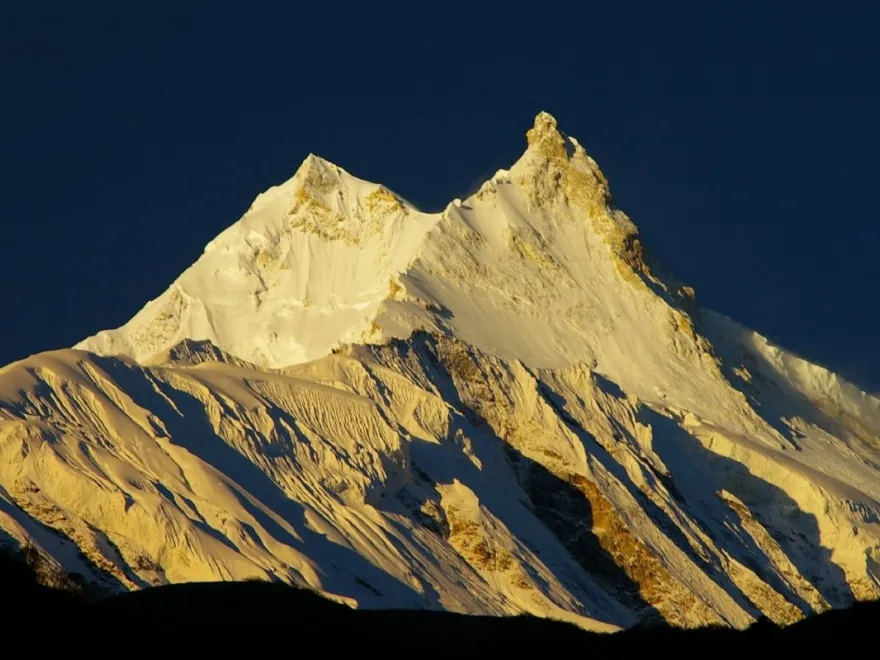
Explore an unforgettable Mount Manaslu Expedition with Everest Extreme Adventure, combining remote Himalayan trekking, rich mountain culture, challenging high-altitude climbing, and breathtaking landscapes. Experience the Manaslu Conservation Area, reach Base Camp, cross Larkya La Pass, and pursue the summit of 8,163-meter Manaslu.
The trip begins as you head west from the capital- Kathmandu to Soti Khola on a drive. From here, you start the trek and continue along the Marsayangdi River. The trek takes you to through Gurung and Magar villages to Jagat. Further, you will enter regions heavily dominated by Nubri people. The trek passes Lho and Sho to reach Samagaon. Here, you spend a day to adapt to the high altitude and visit the nearby landmarks.
Then, you will trek to the Manaslu Base Camp after passing Birendra Lake on the way. As the next phase on the trip begins, you will start to ascend across the snowy trails. Further, the trip heads to Camp I as you traverse the snow-laden pathways.
The Mount Manaslu Expedition is one of Nepal’s most rewarding high-altitude mountaineering adventures, combining a demanding Himalayan climb with the spectacular Manaslu Circuit trekking route. At 8,163 meters (26,781 ft), Manaslu is the world’s eighth-highest mountain and is situated in Nepal’s Mansiri Himal range. The expedition begins with arrival in Kathmandu, followed by essential documentation and preparation before traveling by road toward Soti Khola. From there, the journey gradually gains elevation through Machha Khola, Jagat, Dang, Namrung, and Samagaon before reaching Manaslu Base Camp at approximately 4,750 meters.
The itinerary allows climbers to progressively acclimatize before entering the expedition climbing period. After the climbing phase, the descent follows Samdo, Dharamsala, and the spectacular Larkya Pass (5,100 m) before continuing toward Bimthang, Goba, Dharapani, and Besisahar. The expedition is designed for climbers seeking a serious Himalayan experience supported by experienced guides, Sherpa staff, logistical coordination, and carefully planned acclimatization.
Everest Extreme Adventure can coordinate the expedition logistics, trekking arrangements, climbing support, permits, transportation, accommodation, and other essential services required for a professionally organized Manaslu expedition.
The best season for a Mount Manaslu Expedition is generally during the autumn climbing season, particularly September through October, when Himalayan weather is usually more stable and conditions are favorable for high-altitude climbing. Autumn provides relatively clear skies, good visibility, and established expedition infrastructure on the mountain. September can still experience some effects from the summer monsoon, while October is often regarded as one of the most favorable periods for climbing in the Manaslu region.
The spring season, from March to May, is another important climbing period. Spring offers progressively warmer conditions at lower elevations and a suitable window for mountaineering as climbers move toward the summit. However, conditions at 8,000 meters can change rapidly, so the actual summit opportunity depends on snow conditions, wind, temperature, avalanche risk, route conditions, and the weather forecast.
Everest Extreme Adventure plans expedition schedules around appropriate climbing windows while allowing flexibility for acclimatization, weather conditions, route changes, and safe summit opportunities. A successful Manaslu expedition requires patience because mountain safety should always take priority over a fixed timetable.
The Mount Manaslu Expedition is a highly demanding technical Himalayan expedition and should not be confused with an ordinary trekking trip. Climbers must deal with extreme altitude, low oxygen levels, cold temperatures, strong winds, snow and ice, crevasses, steep terrain, and potentially changing weather. Reaching Base Camp is only the beginning; the climbing period requires sustained physical endurance and appropriate mountaineering skills. Previous experience at high altitude and familiarity with technical climbing techniques are highly beneficial.
The itinerary also includes considerable ground transportation. After completing preparation and documentation in Kathmandu, the expedition travels by bus or road vehicle toward Soti Khola, with the journey taking approximately 8–9 hours depending on road and traffic conditions. The return route includes trekking to Dharapani, followed by a drive toward Besisahar and then a longer drive back to Kathmandu.
Everest Extreme Adventure organizes the transportation and expedition logistics so climbers can focus on acclimatization, preparation, and climbing. Travel times can vary because road conditions in remote mountain regions are affected by weather, construction, traffic, and seasonal conditions.
Food and accommodation are important parts of maintaining strength throughout a Mount Manaslu Expedition. During the trekking approach, climbers generally stay in local teahouses or lodges where meals commonly include traditional Nepali dishes as well as basic international options. Dal bhat, rice, vegetables, noodles, pasta, soups, potatoes, eggs, bread, and other carbohydrate- and protein-rich foods can provide useful energy during long trekking days.
As the expedition moves higher, accommodation becomes increasingly basic. At Manaslu Base Camp, expedition members typically stay in organized tented camps, with dedicated spaces for sleeping, dining, cooking, and expedition activities. Food at higher camps requires careful planning because supplies must be transported and prepared in challenging conditions. Hydration and adequate calorie intake become especially important at altitude.
Everest Extreme Adventure focuses on maintaining reliable food and camp logistics throughout the expedition. Climbers should nevertheless bring any preferred snacks, supplements, or specialty dietary items they personally require, particularly because food choices become more limited as altitude increases.
A Mount Manaslu Expedition requires official permissions and documentation before climbers can enter and attempt the mountain. Expedition permits are different from ordinary trekking permissions because Mount Manaslu is a controlled Himalayan climbing peak. The expedition also passes through a restricted trekking region, meaning appropriate trekking-area documentation and conservation-related requirements may apply depending on the route and current government regulations.
The permit process involves submitting the necessary climber information and expedition documentation to the relevant Nepalese authorities. Requirements, fees, seasonal charges, restricted-area regulations, and administrative procedures can change, so climbers should use current official requirements rather than relying on outdated information.
Everest Extreme Adventure assists climbers with the required expedition documentation and permit coordination as part of its Manaslu expedition service. The company can help ensure that the necessary paperwork is prepared before departure, allowing climbers to concentrate on training, equipment preparation, acclimatization, and the climbing objective.
Choosing Everest Extreme Adventure for a Mount Manaslu Expedition means undertaking one of Nepal’s most challenging mountaineering experiences with an expedition-focused approach. Manaslu combines remote Himalayan landscapes, demanding high-altitude climbing, cultural encounters, and the satisfaction of attempting an 8,000-meter peak. The carefully structured itinerary provides time for trekking, acclimatization, Base Camp preparation, the main climbing period, and a gradual descent through the Manaslu region.
A successful expedition depends on more than reaching the mountain. Transportation, permits, accommodation, food, climbing equipment, high-altitude logistics, route planning, Sherpa support, communication, and emergency preparedness all contribute to a safe and organized expedition. A professional operator can help coordinate these components while allowing climbers to focus on their physical and mental preparation.
With its combination of professional expedition logistics, Himalayan experience, acclimatization planning, and high-altitude support, Everest Extreme Adventure provides a structured way to approach the Mount Manaslu Expedition. Climbers should still recognize that Manaslu is an extreme-altitude undertaking, and individual success depends on experience, preparation, health, weather, route conditions, and responsible decisions throughout the expedition.

Then, the trails take you on a difficult journey to Camp II at the height of 5700 meters. As the trail gathers more altitude, you head to Camp III. The next ascent heads even higher as you reach the Camp IV at an altitude of 7400 m.
Finally, the last climb will conclude at the top of Mt. Manaslu, which offers a mesmerizing scenery of the Manaslu, Himlung, and Cheo Himal ranges. As the return trek starts, you take a different route and head west to Dharamsala via Samdo. Then, the trek ends at Dharapani as you cross Larkya La Pass (5160m) and descend past Bimtang.
The Manaslu Expedition is an extremely challenging trip. So, the climbers will have to be in excellent physical shape. Also, the autumn and spring seasons are ideal for the journey

The Mount Manaslu Expedition with Everest Extreme Adventure begins in Kathmandu with essential documentation and expedition preparation before driving to Soti Khola. The journey then follows the scenic Manaslu trekking trail through Machha Khola, Jagat, Dang, Namrung, and Samagaon, allowing climbers to gradually acclimatize while experiencing traditional Himalayan villages, monasteries, forests, rivers, and spectacular mountain scenery. After a rest and acclimatization day, the route continues to Manaslu Base Camp at approximately 4,750 meters.
The main expedition climbing period follows, providing climbers with time for acclimatization, camp rotations, and summit attempts on 8,163-meter Mount Manaslu. After the climbing phase, the descent continues through Samdo and Dharamsala, crossing the challenging Larkya La Pass before reaching Bimthang and Dharapani. The journey concludes with transportation through Besisahar back to Kathmandu and final departure.
You arrive at Kathmandu via Tribhuvan International Airport. Our staffs are eager to welcome you warmly. After brief introductions, you head to the hotel and refresh. You will meet our staff again for dinner, where you discuss the details of the expedition.
It takes time to prepare the permits for the expedition. So, we have separated two days for the preparations. After filling out your details, our staff will take care of other administrative work. Meanwhile, expert and licensed mountaineers will brief you regarding various topics on climbing Manaslu. If you want, we can prepare a short sightseeing tour of the valley as well. The sightseeing tour will include a visit to Pashupatinath Temple, Swayambhunath Temple, and Patan Durbar Square.
After an early breakfast, you head west of the valley and drive along the winding hills. En route, you get to see amazing views of the hill landscape. From there, you head up to Arughat and then, you reach Soti Khola for overnight stay.
Today, the trek starts, and the first destination is Machha Khola. The trail goes up, and then, you sharply descend to Lapubesi. Then, you trek along the banks of Nauli Khola and Budhi Gandaki River to reach Machha Khola. Overnight stay at the teahouse.
After breakfast, you head to Tatopani, which is famous for its natural hot springs. You take a quick dip here and continue to trek. Then, you cross the Budhi Gandaki several times through suspension bridges. After crossing the last bridge, you arrive at Jagat, the gateway to Manaslu Conservation Area. You need to show your permits to enter the protected area. Overnight stay at the lodge.
After breakfast, you start to ascend towards Salleri and Sirdibas. The trail goes through scarce vegetation, and as you gain altitude, the landscape begins to get barren. Then, you reach Lokpa, and here onwards, you enter Tsum Valley. Trekking above the Budhi Gandaki and Shar Khola, you reach Dang for overnight stay.
Today, you walk along the northern banks of the Budhi Gandaki River. The trail goes through a forest filled with rhododendron and pine, and you might get to see amazing birds. Then, at the end of the forest, you cross the river and trek along the southern banks. After a while, you reach Namrung for an overnight stay at a teahouse. Many houses were affected by the 2015 earthquake.
After breakfast, you commence the trek. The trail goes to Shyala and other settlement areas. En route, you can see monasteries as well. By late afternoon, you reach your lodge at Samagaon, which presents fantastic views of Manaslu.
You need to acclimatize at least one day before you head to higher elevations. Samagaon is filled with shops and teahouses so that you can interact with the local people. You can also hike up to nearby hills to get scenic views of the terrain.
Finally, you make way towards the summit of Manaslu. The trek starts after breakfast. The trail ascends to steep and rocky terrain filled with moraines. After a strenuous climb, you arrive at the Base Camp and prepare to set up tents for overnight stay.
From today, you start your ascend to Manaslu’s summit. It will take about 20-22 days for you to ascend and descend back to the base camp. You will set up camp at various altitudes. There are fissures along the path so, you need to follow your guide strictly. From the summit, you are awarded amazing views of Annapurna, Dhaulagiri, and other neighboring mountains.
After breakfast, you clean the Base Camp and head to Samdo. The trail winds through the banks of the Budhi Gandaki River. After a while, you reach Kermo Khadka and then head towards white Kani. You will then enter Samdo. Overnight stay at the lodge.
Today’s trek is the shortest trek of the whole trip. You make way towards Larkya La and en route, enjoy beautiful views of Manaslu and Syacha Glacier. Before reaching Dharamsala, you might spot some blue sheep and their herders. Overnight stay at Dharamsala.
The trail today first leads you to Larkya Pass. From the top, you can see breathtaking views of Manaslu, Annapurna, Cheol Himal, and other peaks. As you descend, the light gets spectacular. The trail gets challenging, but after crossing Taboche, it gets easier. You fall to Bimthang for an overnight stay at the teahouse.
After breakfast, you commence the trek and descend to Soti Khola. The trail provides serene views of the valley and mountains. Enjoying the look, you cross a ridge and descend to Goba, where you stay overnight.
After a hearty breakfast, you start your trek, as it is the last day you trek. The route goes through the rhododendron forest, and you leave Soti Khola to head towards Dudh Khola. You then reach Tilche and cross a stream to go to Thonje. From here, you cross the Marsayangdi River via a suspension bridge and arrive at Dharapani. After having lunch, you refresh and drive to Besisahar for an overnight stay.
After breakfast, you board the vehicle heading to Kathmandu. En route, enjoy the scenic views of the hills and rustic villages. Before nightfall, you will reach your hotel.
The long but exciting journey has finally come to an end. Today is the day you head back to your home. As per your scheduled flight, our staff will make sure that you reach the airport on time. Thank you for making beautiful moments with us, and we look forward to your next visit to Nepal!
The Mount Manaslu Expedition is a challenging high-altitude mountaineering adventure to Mount Manaslu (8,163 m), the eighth-highest mountain in the world. Organized by Everest Extreme Adventure, the journey combines the scenic Manaslu trekking route with a full-scale Himalayan climbing experience. Climbers travel through remote villages, the Manaslu Conservation Area, Samagaon, and Manaslu Base Camp before entering the expedition climbing phase.
The itinerary described by Everest Extreme Adventure covers approximately 41 days, including arrival in Kathmandu, documentation, trekking to Base Camp, the main climbing period, descent, and departure. Days 12–34 are allocated for the expedition climbing period, allowing sufficient time for acclimatization, camp rotations, weather delays, route conditions, and summit attempts rather than depending on a rigid summit date.
The Mount Manaslu Expedition is considered a very challenging high-altitude expedition requiring excellent physical fitness, endurance, mental preparation, and appropriate mountaineering skills. Climbers face extreme altitude, cold, snow, ice, steep terrain, crevasses, and unpredictable weather. Previous high-altitude or technical climbing experience is strongly beneficial. Everest Extreme Adventure provides expedition coordination and support, but climbers must arrive properly trained and prepared.
The expedition begins with a road journey from Kathmandu to Soti Khola, followed by trekking through Machha Khola, Jagat, Dang, Namrung, and Samagaon. After acclimatization, climbers continue to Manaslu Base Camp. Following the climbing period, the return journey passes through Samdo and Dharamsala, crosses Larkya La Pass, and continues through Bimthang and Dharapani toward Besisahar and Kathmandu.
The highest point of the expedition is Mount Manaslu at 8,163 meters (26,781 feet). Before attempting the summit, climbers progressively gain elevation through the trekking route and acclimatize around Samagaon and Manaslu Base Camp at approximately 4,750 meters. The itinerary also includes crossing Larkya La Pass at around 5,100–5,160 meters, making gradual acclimatization an essential part of the expedition.
Yes, acclimatization is an important component of the itinerary organized by Everest Extreme Adventure. A dedicated rest and acclimatization day is planned at Samagaon before proceeding toward Manaslu Base Camp. The extended climbing period also allows climbers to progressively adapt to increasing altitude through appropriate camp rotations and rest periods. Actual acclimatization schedules may be adjusted according to individual condition and mountain circumstances.
Everest Extreme Adventure provides organized expedition services covering essential aspects of the Manaslu journey, including documentation assistance, transportation, trekking logistics, accommodation, food arrangements, Base Camp support, and high-altitude expedition coordination. The company combines the spectacular Manaslu trekking experience with an ambitious 8,163-meter climbing objective, helping climbers manage the complex logistics required for a long Himalayan expedition.
The principal climbing seasons for Mount Manaslu are spring and autumn, with autumn generally offering favorable conditions around September and October and spring providing another important climbing window from March to May. Weather at extreme altitude can change quickly, however, so the actual summit opportunity depends on wind, snowfall, temperature, route conditions, and the mountain forecast.
The itinerary includes road transportation between Kathmandu and the Manaslu trekking region. The initial journey travels from Kathmandu to Soti Khola by bus or road vehicle, taking approximately 8–9 hours, depending on road and traffic conditions. After completing the trek and expedition, climbers travel from Dharapani toward Besisahar and then continue by road back to Kathmandu.
Climbing Mount Manaslu requires the appropriate mountaineering expedition permit and other applicable trekking, restricted-area, conservation, and administrative documentation. Requirements and fees can change according to Nepalese government regulations and the climbing season. Everest Extreme Adventure assists with the necessary permit and documentation process, helping climbers complete the required formalities before beginning the expedition.
During the trekking portion, climbers generally stay in local teahouses or lodges in villages along the Manaslu route. At Manaslu Base Camp and during the climbing phase, accommodation changes to organized expedition tents. Everest Extreme Adventure coordinates camp logistics and meals, while climbers should bring appropriate personal sleeping and high-altitude equipment suitable for cold and demanding Himalayan conditions.
Food during the trekking section commonly includes nutritious local and international-style meals such as dal bhat, rice, vegetables, noodles, pasta, potatoes, eggs, bread, and soups. At higher elevations, meals become more dependent on expedition supplies and camp logistics. Everest Extreme Adventure coordinates food arrangements to support climbers during the demanding journey, while participants may also bring preferred energy snacks.