Group Adventure Dates.  4.9 of 489 reviews
 4.8 of 232 reviews
4.9 of 489 reviews 4.8 of 232 reviews 
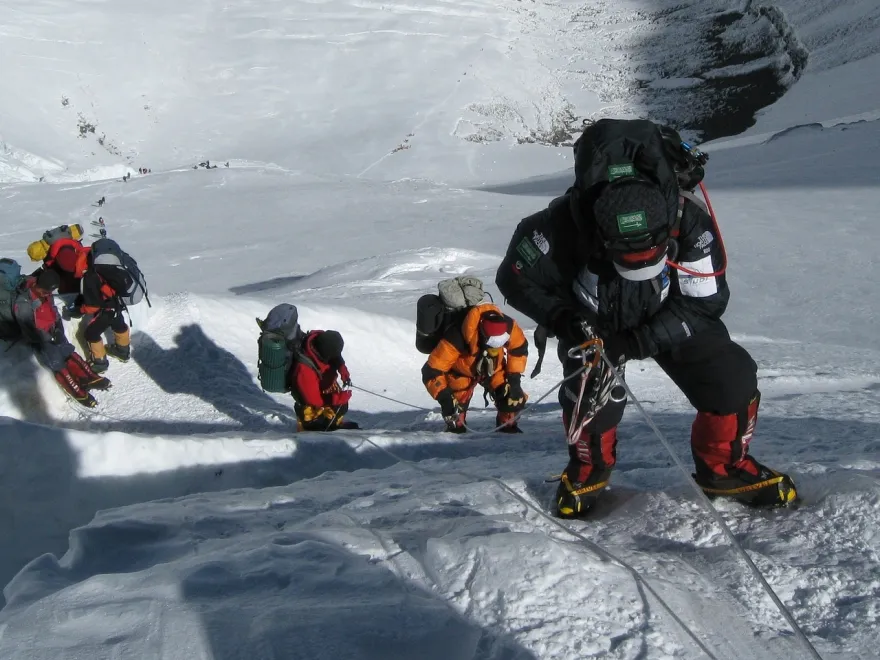
Experience an unforgettable Himalayan adventure with Everest Extreme Adventure on the Nirekha Peak Climb and Everest Three Pass Trek. Cross Renjo La, Cho La, and Kongma La, explore Gokyo Lakes, visit Everest Base Camp, and summit Nirekha Peak amid breathtaking mountain panoramas.
Nirekha Peak Climb & Everest Three Passes Adventures leads to an exciting Nirekha Peak Climb & Everest Three Passes Adventures leads to an exciting trek and climb. As well as covering all the picturesque places that high Khumbu and Everest have to offer.
A great way to enjoy the adventure of traversing from one end of the valley to another beautiful area. Truly a mind-blowing feat to experience, where all enthusiastic adventurers and trekkers can join on this wonderful adventure.
Nirekha Peak Climb & Everest Three Passes Adventure of a three week with never a boring moment. The trail follows from moderate trail to adventurous climb, facing glorious views of giant peaks, with majestic Mt. Everest.
The first of the journey takes you through nice lovely Sherpa villages lined with interesting religious monuments, and prayer walls. Following through the glacial Dudh River gorge and valley to enter Sagarmatha National Park, designated in World Heritage Sites. The walk then heads towards a long winding climb to the famous Namche Bazaar, the capital and major hub of Khumbu.
Located amidst the towering snow peaks of Kwangde-Ri, Tharmasarku with views of Mt. Everest from its high scenic View-Point. A favorite place for all trekkers to spend an extra day for a short hike, exploring local immense Sherpa cultures.
A perfect height for acclimatization and rest days, from Namche Bazaar adventure, follows the Old Trans Himalaya Salt Trade Trail. Which extends past quant Thame village to the high ridge of Nangpa-La the border between Nepal and Tibet / China. From Thame, the adventure leads to the first pass to cross over Renjo-La, close to the frontier of Tibet and Nepal.
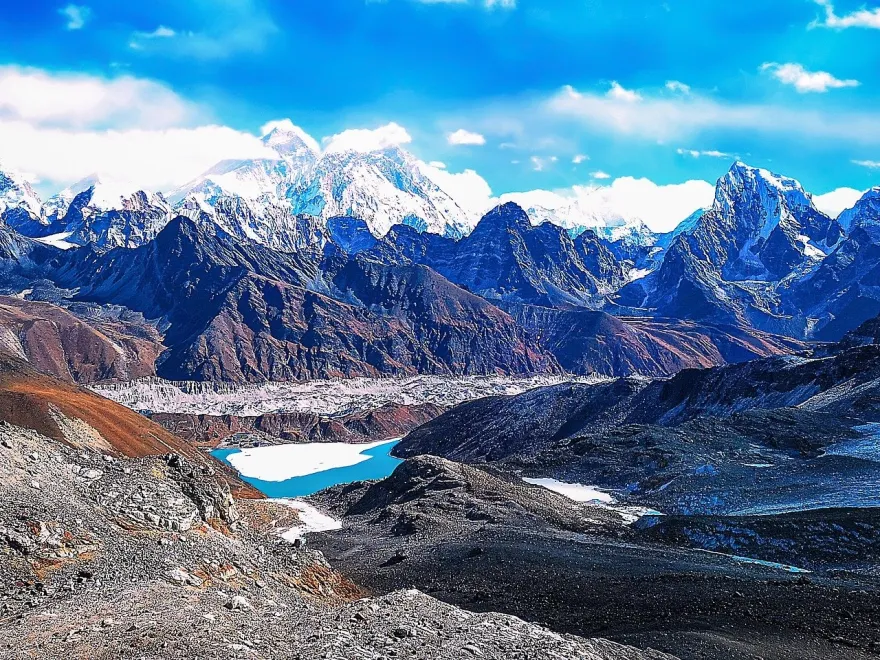
Enjoy crossing the first high pass over Renjo-La facing stunning panoramic views of the world’s four highest peaks. Overlooking Mt. Everest, Lhotse, Cho-Oyu and
Mt. Makalu towards the east with stupendous Gokyo lakes and Ngozumpa glacier. The longest glaciers in the Himalayas extend to 36 km or 22 miles.
From Renjo-la a long descent to Gokyo's main 3rd lakes, Gokyo is located on a magnificent valley. Encircled by towering peaks and lakes with close grand views of Mt. Cho-Oyu, the world's 6th highest peak.
Having time at Gokyo with the option to climb to Gokyo-Ri for stunning views of the surrounding giant mountain range. Adventure from Gokyo leads to Cho-La Pass the 2nd high pass of the trek, for a classic climb of Nirekha Peak.
Nirekha Peak towers high at 6,159 m / 20,208 feet, situated north of Cho-La Pass. Stands close to Lobuche East and West peaks with Cholatse peak towards the southeast. A newly opened trekking peak by NMA (Nepal Mountaineering Association); first ascent by American Matt Fioretti and Greg Valentine in 2003.
Nirekha peak due to its isolation, where few groups of climbers seldom venture for the climb. An opportunity for trekkers and adventures to enjoy climbing on less summited peaks of the Nepal Himalayas.
The climb of Nirekha Peak grade is “PD + means Per Difficule” a straightforward climb with some technical difficulty to tackle. The grading comes from French and Swiss Alpine Climbing Classification Systems which is popular and accepted worldwide.
A full day rest to scout the route for a safe climb, and preparation for staying overnights in a tent at base camp. Next early morning before the crack of dawn following the lead guide, encountering snow, ice, and rocky areas.
The guide fixed ropes, snow-bars on technical sections, for a safe climb to reach the top of Nirekha peak. Feeling in top spirits facing the breathtaking panorama of Mt. Everest, Cho-Oyu. Includes views of Nuptse, Lhotse, and Lhotse Shar.
Overlooking views as far as Mt. Makalu and Baruntse Himal, with other peaks of the Mahalangur range. After a successful triumph on top Nirekha Peak summit, descend to Base Camp and then descend to Dzongla.
After completing the main goal of the trip, trek towards other highlights of the trip. The walk leads on the main popular trail to Everest base camp past Lobuche and Gorakshep. Reaching the bottom of the world’s highest Mt. Everest and close to the massif Khumbu Ice-Fall and glaciers.
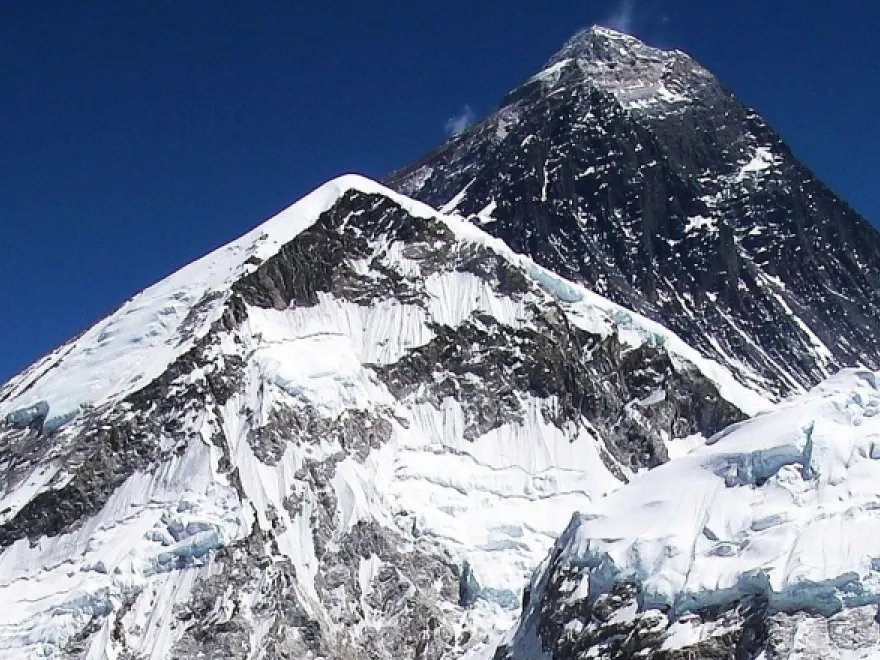
Enjoying exciting moments reaching Everest base camp, the next morning climb to Kalapathar, the highest point on the trek. From Kalapathar enjoy a jaw-dropping stunning panorama of giant peaks with Mt. Everest at a mere distance.
The next final adventure leads to crossing the last final 3rd Kongma-La, the highest of all passes. Kongma-La is well hidden in between Pokalde and Nuptse peaks, the climb leads across the Khumbu glacier to the top of Kongma-La.
From Kongma-La top, long descent to Imjatse valley at Dingboche settlements. The last leg of the trip continues walking on the main scenic route to Namche Bazaar. Our marvelous adventure ‘Nirekha Peak Climb & Everest Three Passes’ completes at Lukla.
The best seasons for Nirekha Peak Climb & Everest Three Passes Adventures: The right and best time for this wonderful adventure are spring starting from March to May. Where days are longer with enough sun shining, can get overcast with light snows at higher altitudes sometimes.
But most days are clear for views and adventurous walks, this is the time when wildflowers are in full bloom. The next best season is autumn/fall begins from the post-monsoon month of September to November. Most days are fine and crystal clear for views and treks, but much cold morning, late afternoon, and night times.
Expect snowfall sometimes during the trek and climb around higher altitudes. Interested people can trek and climb during the winter times of the Christmas and New Year holidays. Most days are fine and super clear, days are shorter due to sunlight hours, with freezing temperatures in the morning and night times.
Expect snow sometimes, but most days are clear where the sun hits in the late morning, and sunsets earlier by late afternoon.
In all seasons besides cold morning and nighttime as well in shade, away from sunlight. The wind chill factor adds extra cold around a high altitude above 4,000 m and on crossing passes.
This itinerary combines strenuous trekking with a technical climbing objective, making it especially suitable for experienced trekkers seeking a more challenging alternative to a standard Everest Base Camp trek.
Choosing the right season is essential for a successful and enjoyable Nirekha Peak Climb & Everest Three Pass adventure. The Everest region experiences significant seasonal variations in temperature, snowfall, visibility, and trail conditions. Because this itinerary includes three high mountain passes and a technical peak summit, stable weather is particularly important. Everest Extreme Adventure generally recommends spring and autumn as the most favorable seasons for undertaking this demanding Himalayan expedition.
Spring (March to May) is one of the best periods for trekking and climbing in the Everest region. Temperatures gradually become warmer, the days grow longer, and the weather often provides favorable conditions for high-altitude exploration. Lower elevations feature blooming rhododendrons and other alpine vegetation, while higher elevations offer impressive views of snow-covered Himalayan peaks. April and May are popular months for mountaineering, although conditions on Nirekha Peak and the high passes can still be cold, windy, and affected by fresh snowfall. Summit attempts must always depend on the actual weather forecast and mountain conditions.
Autumn (September to November) is another excellent season, particularly for trekkers who value clear mountain views and relatively stable weather. After the monsoon rains subside, the skies often become clearer, revealing spectacular panoramas of Everest, Lhotse, Makalu, Cho Oyu, and the surrounding Himalayan ranges. October and early November are especially popular for trekking, but temperatures decrease considerably as winter approaches. Snow and ice can make the high passes and summit route more challenging, so suitable equipment and experienced climbing support remain essential.
The monsoon season, generally from June to August, brings heavy rainfall, cloud cover, landslides, and possible flight disruptions. Winter, from December to February, can bring extreme cold, heavy snowfall, and difficult conditions on the high passes. These seasons are usually less suitable for this particular itinerary, especially for travelers without extensive winter mountaineering experience.
Everest Extreme Adventure can help travelers select suitable departure dates according to their experience, seasonal conditions, and climbing objectives.
The Nirekha Peak Climb & Everest Three Pass Trek is a challenging to very demanding high-altitude adventure that requires good physical fitness, endurance, and preparation. Unlike a conventional trekking holiday, the route involves repeated ascents and descents above 4,000 meters, three major mountain passes, and a technical climbing attempt on Nirekha Peak. The itinerary reaches Renjo La at approximately 5,465 meters, Cho La at approximately 5,367 meters, and Kongma La at approximately 5,535 meters. The summit of Nirekha Peak is around 6,159 meters, where the effects of altitude and low oxygen availability become particularly significant.
Trekkers should be comfortable walking for approximately four to seven hours on many days, sometimes longer depending on trail conditions, weather, pace, and individual fitness. The terrain includes steep stone steps, rocky trails, glacial moraine, snow-covered slopes, and potentially icy sections. The Nirekha Peak summit attempt may require mountaineering equipment and technical skills, depending on prevailing conditions and the route used. Previous high-altitude trekking experience is strongly recommended, and experience with crampons, an ice axe, ropes, and other climbing equipment is highly beneficial. Participants should train in advance through cardiovascular exercise, hill walking, stair climbing, and strength conditioning.
Transportation is an important part of the overall itinerary. The journey normally begins with arrival at Tribhuvan International Airport in Kathmandu, followed by a hotel transfer. Depending on flight operations and the expedition schedule, the group travels by road from Kathmandu to Ramechhap, a journey of approximately five hours under normal conditions. From Ramechhap, a short mountain flight takes trekkers to Lukla, where the trekking portion begins. After completing the circuit, the return flight from Lukla to Kathmandu is arranged according to airline schedules and weather conditions.
Travelers should be aware that mountain flights can be delayed or canceled because of poor visibility, wind, or other operational restrictions. Everest Extreme Adventure recommends maintaining a flexible schedule and arranging travel insurance that covers high-altitude trekking, mountaineering, emergency evacuation, and unexpected travel delays. Proper acclimatization, hydration, gradual ascent, and professional guidance are essential throughout the expedition.
Food and accommodation are important considerations during the Nirekha Peak Climb & Everest Three Pass expedition because the route passes through remote Himalayan settlements where facilities become increasingly basic at higher elevations. Everest Extreme Adventure arranges accommodation and meals according to the itinerary and selected package, helping trekkers maintain their energy while enjoying the remarkable landscapes of the Everest region. In Kathmandu, accommodation is generally provided in a tourist-standard hotel, with opportunities to explore local restaurants and experience Nepali cuisine before and after the trek.
During the trekking portion, accommodation is usually in traditional teahouses and mountain lodges in villages such as Phakding, Namche Bazaar, Thame, Lungden, Gokyo, Thagnak, Dzongla, Lobuche, Dingboche, Tengboche, and Monjo. Most teahouses offer basic twin-sharing rooms with beds, mattresses, pillows, and blankets. Facilities vary from village to village, and bathrooms may be shared. At higher elevations, hot showers, charging facilities, Wi-Fi, and other services may be available for an additional fee, depending on local conditions. Accommodation at Nirekha Peak Base Camp is more basic and may involve expedition tents, sleeping mats, and organized camp facilities.
Meals along the trail commonly include traditional Nepali dal bhat, rice, lentils, vegetable curry, noodles, fried rice, soups, potatoes, pasta, eggs, pancakes, porridge, bread, and other simple dishes. Dal bhat is especially popular among trekkers because it provides a substantial combination of carbohydrates and protein. As altitude increases, food choices may become more limited, so travelers should be prepared for straightforward meals rather than extensive menus. Drinking enough safe water and eating regularly are important for maintaining energy during long trekking days and the summit attempt.
Personal expenses such as alcoholic beverages, bottled drinks, snacks, hot showers, Wi-Fi, charging services, and meals outside the agreed package may not be included. Travelers with vegetarian, vegan, or other dietary preferences should inform Everest Extreme Adventure before departure. Bringing suitable snacks, water-treatment supplies, and any personally required nutrition products can also be helpful on remote sections of the route.
The Nirekha Peak Climb & Everest Three Pass expedition requires the appropriate trekking and mountaineering permissions for the regions and climbing objectives included in the itinerary. Since the route passes through the Khumbu region, explores the Gokyo Valley, visits Everest Base Camp, crosses high mountain passes, and attempts Nirekha Peak, travelers must ensure that all applicable permits and registrations are arranged before entering the relevant areas. Permit requirements, fees, and issuing procedures may change, so it is important to verify the current regulations before departure.
The Sagarmatha National Park entry permit is generally required for trekking within Sagarmatha National Park, which encompasses much of the Everest region. A local-area entry or registration requirement may also apply in the Khumbu Pasang Lhamu Rural Municipality. The exact documentation and fee arrangements should be confirmed for the planned route and the traveler's nationality. These permissions support conservation efforts, local administration, and the management of trekking activities in this internationally renowned mountain destination.
In addition to trekking-area permissions, Nirekha Peak requires the appropriate mountaineering climbing permit under the regulations administered by the relevant Nepalese authorities. The applicable authority, fee, and permit conditions should be confirmed for the intended season and expedition arrangements. Because Nirekha Peak is a technical climbing objective, travelers should not assume that ordinary trekking permits alone authorize a summit attempt. The expedition operator should verify the applicable climbing authorization and any required supporting documents before the climb.
Everest Extreme Adventure can assist with checking and coordinating the necessary paperwork, depending on the services included in the selected package. Travelers should prepare valid passports, photographs if requested, insurance documentation, emergency contact details, and any other documents required by the relevant authorities. It is advisable to confirm permit arrangements well before arrival in Nepal to avoid delays.
Permit costs are generally separate from personal expenses, although some or all permit fees may be included in a climbing package. Before booking, travelers should ask Everest Extreme Adventure for a written breakdown specifying which permits, government fees, climbing royalties, and administrative costs are included. This helps ensure transparency and allows participants to prepare an accurate expedition budget.
Choosing an experienced and dependable trekking and mountaineering operator is an important part of preparing for a challenging Himalayan expedition. The Nirekha Peak Climb & Everest Three Pass itinerary combines remote trekking, high-altitude acclimatization, technical climbing, and several demanding mountain crossings. Everest Extreme Adventure aims to help travelers organize these elements into a coordinated journey, with attention to route planning, logistics, safety considerations, and the practical needs of each participant.
One of the major attractions of this itinerary is the diversity of experiences it offers. Rather than following only the standard Everest Base Camp trail, travelers explore the quieter Thame and Lungden areas, visit the Gokyo Lakes, climb Gokyo Ri, cross Renjo La, Cho La, and Kongma La, and attempt the summit of Nirekha Peak. The journey also includes Everest Base Camp and Kala Patthar, two of the region's most recognizable destinations. This combination makes the itinerary appealing to experienced adventurers who want to combine classic Everest-region trekking with a technical climbing objective.
Proper preparation and experienced leadership are especially important at high altitude. A professional expedition team can help manage daily trekking arrangements, assess changing trail conditions, coordinate base-camp logistics, and provide guidance about acclimatization and summit preparation. Participants should confirm the qualifications and experience of their climbing guides, the guide-to-client ratio, emergency procedures, available communications, and the team's plans for altitude-related illness or unexpected weather. No operator can guarantee a summit, and a responsible team must be prepared to adjust the itinerary or abandon an attempt when conditions are unsafe.
Travelers considering Everest Extreme Adventure should also look for clear communication before departure, transparent pricing, appropriate equipment arrangements, and a detailed explanation of package inclusions and exclusions. Confirming these details in advance helps ensure that the expedition meets individual expectations and that travelers understand their responsibilities.
Ultimately, the Nirekha Peak Climb & Everest Three Pass Trek is an ambitious undertaking for travelers seeking a demanding Himalayan experience. With careful preparation, suitable experience, appropriate insurance, realistic expectations, and a qualified expedition team, the journey can provide a rewarding opportunity to explore the Everest region and attempt a challenging Himalayan summit with Everest Extreme Adventure.
The Nirekha Peak Climb & Everest Three Pass Trek with Everest Extreme Adventure is an exciting 25-day Himalayan expedition combining challenging trekking, technical peak climbing, spectacular mountain scenery, and authentic Sherpa culture. Beginning in Kathmandu, the journey continues to Lukla and through the beautiful villages of Phakding, Namche Bazaar, Thame, and Lungden. Cross the spectacular Renjo La, Cho La, and Kongma La passes while exploring the turquoise Gokyo Lakes and enjoying panoramic mountain views from Gokyo Ri.
The adventure includes an exciting summit attempt on Nirekha Peak (6,159 m), a visit to Everest Base Camp, and a breathtaking hike to Kala Patthar. With professional expedition support, gradual acclimatization, and unforgettable Himalayan landscapes, this challenging journey offers experienced trekkers a remarkable combination of adventure, culture, and mountaineering in Nepal's magnificent Everest region.
After landing at Kathmandu international airport via respective airlines, received by our staff and representative. A short drive to the hotel in the heart of Kathmandu city, after checking into your lovely rooms getting refreshed. Then join with other members of the trek at the hotel foyer. Our guide will provide briefing with full information of the hotel, Nepali’s culture, dos and don’ts, and details of Everest Three High Passes trekking with Nirekha Peak climb.
After breakfast options for sightseeing tour at places of interest around Kathmandu world heritage sites. Afternoon having lunch drive to Manthali town airport at Ramechap district, a 4-5 hour drives on 154 k.m. distance. Staying overnight in a simple local lodge at Manthali town close to the airport.
Morning as flight time for Lukla, a short walk to Manthali airport getting abroad a small aircraft. A 15 to 18 seated, as plane lifts off enjoy the superb panorama of Central and Eastern Himalayan peaks. As plane gets closer to Lukla, grand views of Mt. Everest, Lhotse and Makalu. After 20 / 25 mins flight a dramatic landing at Lukla airport runways. As the plane parks next to the air terminal, the airport is named in tribute to legendary mountaineers Tenzing & Hillary.
After getting organized and having rest for warm refreshment, start the walk downhill through nice Sherpa villages and farm lands. A pleasant walk with short ups and down to Phakding for overnight stop close to Dudh Koshi River.
From Phakding walk leads to famous Namche Bazaar a major town of Khumbu region. Morning walk on gradual path crossing bridges within pine and rhododendron forest. Then reaching the entrance of Sagarmatha National Park at Monjo and to the last village of Jorsalle. The walk continues to Dudh Koshi River banks, and then starts a long climb to Namche Bazaar for overnight stops.
At Namche, rest day for acclimatization, before heading higher elevation to cross high passes and climb of Nirekha Peak. Namche a large village or a small town having many shops, stores, banks and ATM with Cyber Café. Options for hike to Park museum provides great information of the area including grand views of Mt. Everest and majestic Ama-Dablam peak.
For energetic people can take a hike to Everest View hotel, Khumjung and Khunde village. Located on a glacial valley beneath holy Khumbila peak (patron god of Khumbu Sherpa’s).
From Namche, morning leads to pleasant walk through lovely forest of rhododendron, oaks and pines trees. The trail leads through farm villages to Thamo, a village with a small electricity plant that supplies all around main Khumbu villages. A possible lunch at Thamo, afternoon on gentle winding up and down to a small bridge. Looking at beautiful painting of Lord Buddha on a Rock Wall, a short climb brings you Thame for overnight stop. Thane a quant village least visited areas by trekkers. At Thame visit the famous 500 years old Monastery the oldest around Khumbu region.
Morning walk towards our first pass of the adventure, following the path to Marlung village. The trail leads along Bhote Koshi River, visiting villages of Thyangmoche and Hungmo. Walking on windswept terrain within complete wilderness only few houses and grazing land of yaks situated. As walk continues reaching a dry country with sparse for overnight stop at Marlung after walking Taranga a small yak herder settlement.
Morning walk to Lungden through old and authentic Himalayan villages blending well with natural surrounding landscapes. The trail also leads on the old Trans Himalaya Salt Trade route of Nepal and Tibet. The border of Tibet and Nangpa-La pass, diverts near before Lungden our overnight stop. After good climb on steep path then reaching Lungden for overnight stop. A small settlement with few simple basic tea houses and lodge, facing fantastic views of surrounding high snow mountains.
From Lungden, exciting day to cross over the first pass of the adventure, walk follows to a frozen ponds. A slow steep climb leads on top Renjo-La pass, offers superb views of Mt. Everest, Lhotse, Cholatse and Taboche. Includes Mt. Makalu and Baruntse Himal towards east direction. From the pass a steep descent to Gokyo main 3rd lake for overnight stop, where all nice lodges situated.
At most scenic and picturesque Gokyo valley for rest day to enjoy wonderful scenery and explore around. Overlooking stunning views of Mt. Cho-Oyu world 6th highest peaks reflects on the pristine Gokyo lakes. Nepal longest Ngozumpa glacier runs from Mt. Cho-Oyu to Gokyo valley, rest of the day relax and marvel the glorious views of snow peaks.
Option for early morning hike of few hours to Gokyo-Ri at 5,357 m, offers magnificent panorama of world’s highest mountains. The view is almost same as from the top of Renjo-la facing Mt. Cho Oyo, Gyachung Kang. Includes Mt. Everest, Mt. Lhotse and Mt. Makalu with an array of lesser peaks, after a glorious morning views. Downhill to Gokyo for breakfast and lunch, afternoon a short moderate walk to Thagnak for overnight stop. Located beneath Cho-La pass and Ngozumpa glacier, rest of the afternoon rest and preparation for a long steep climb up to Cho-La pass.
An early morning climb on steep slope, head towards rocky moraine as climb continues towards the top of Cho-La pass. Enclosed between massive staggering Cholatse with group of snow peaks includes Lobuche West and East and Nirekha peak. Having a refreshing break enjoying the grand surrounding views, a short descent over glacier and moraine, reaching the base of Nirekha Peak.
Base camp is set, on best available level ground free from rocks and icy glaciers and rivulets. Afternoon relax and enjoy the stunning dramatic location encircled by towering snow peaks.
At Nirekha base camp for rest and preparation for the climb, as well practice exercise with climb on rocks and ice. Our expert guide will scout the safest and best accessible route for the summit bid. At base camp practice using climbing gear, crampons, ice axe and other necessary tools, required for the climb.
Rest of the day separate the right gear for an early morning climb to Nirekha summit.
The Big Day! Adventure begins early morning before dawn, having short light breakfast and warm drinks. Follow our lead expert guide, heading towards ice and rocks over glaciers and moraine. The climb is straightforward with grade PD + as per French & Swiss Alpine style climbing classification. The ascent leads to some technical section to tackle, where our guides will maintain the route fixing ropes and snow bars where necessary. As you use your ice-axe crackling the icy sections then a big haul and push to the top of Nirekha Peak summit.
Having a short rest, enjoy the jaw-dropping incredible panorama of Snow Mountains that surrounds the top. Facing Mt. Everest, Lhotse and Makalu in the east with Cho-Oyu, Gyachung Kang towards North. Standing close to Lobuche East and West peaks with Cholatse in the south. After a glorious memorable views, making a safe descent to base camp for last overnight in tented camp.
From the base of Nirekha, a slow climb on moraine to the top of our second high Cho-La pass (Tsho-la). On reaching the top festooned with Buddhist prayer flags and rock cairns. Walk leads to a long descent to the base of Cho-La eastern side, then following a winding path to Dzongla for overnight stop.
An isolated small settlement with a small simple lodges to cater the needs of trekkers, traversing Cho-La pass from both ends.
A slow descend to a small lake on the way to Dzongla for overnight stop after a hard day walk.
Today’s walk to Lobuche is much easier following the path up to a terminal debris of Khumbu Glacier. Walk continues on a pleasant path to Lobuche for overnight stop. Lobuche a small settlement having about 10 lodges and teahouses.
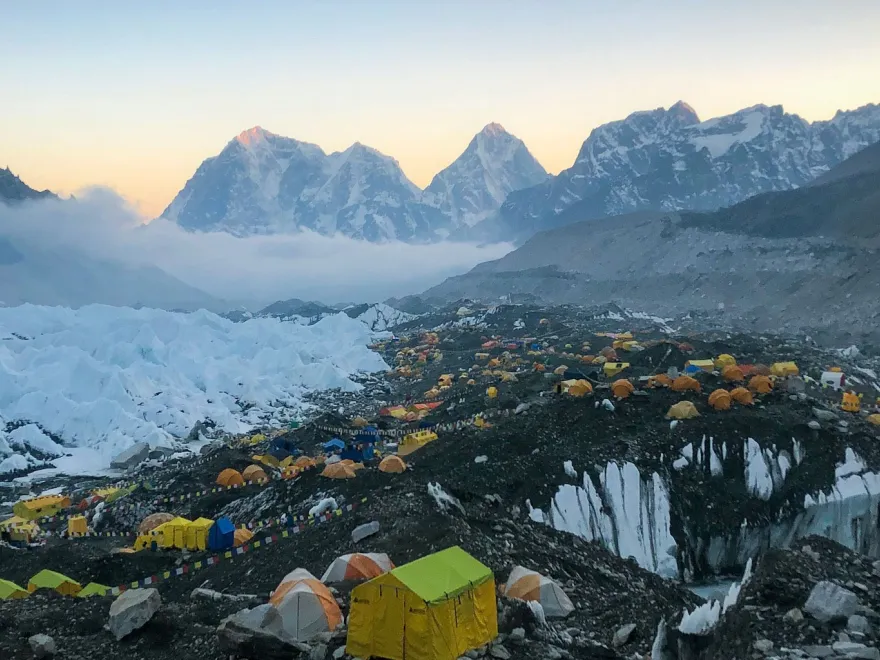
Morning a good walk towards Everest base camp, the trail follows over a moraine to Everest Base Camp. After a short refreshing stop at Gorakshep reaching at the bottom of Mt. Everest, enjoy the grand dramatic scenery of massif Khumbu Ice-Fall and glacier. Enjoying time at Everest base camp return walk to Gorakshep for the climb on top Kalapathar rocky hill.
Early morning before breakfast, climb to the top of Kalapathar for mind blowing views of surroundings giant peaks at 5,643 m. Kalapathar top the highest point of the adventure on trek beside climb of Nirekha Peak.
After a glorious moment downhill to Gorakshep and continue walk down to Lobuche for overnight halt and lunch stop. Rest of the afternoon at leisure and preparation to cross the last 3rd pass over Kongma-La.
Today the last big day of the adventure, crossing over Kongma-La, start the day at early morning before dawn. Walk leads to the top of moraine dunes and down to Khumbu glacier. After walking across the technical icy path, the climb leads to the top of Kongma-La at 5,535 m / 18,159 feet. After a good rest descend on a rocky path to Imjatse valley facing lovely views of Island peak, Ama-Dablam and other peaks. On reaching Bibre few hours of pleasant walk to Dingboche a large settlement houses with many good lodges. Completing the last high pass of the adventure check into a nice cozy lodge for overnight at Dingboche.
From Dingboche enjoying the morning spectacular views of Ama Dablam North Face with Island Peak. Walk down to a stream and short up, as walk follows down to Pangboche village and then to bridge. Crossing the bridge climb up to Tengboche amidst beautiful lush green forest of rhododendron and pine trees.
At Tengboche transfer to nice lodge, with time for tour of the interesting and famous monastery. Located on a beautiful scenic spot surrounded by green woods and snow-capped peaks facing views of Mt. Everest.
After a pleasant overnight at Tengboche along with spectacular views, morning down to Imjatse River. A short steep climb to Kyanjinma, a small settlement with wonderful views of snow peaks. As walk follows on a gradual winding trail to Namche Bazaar. Stopping for lunch at Namche, afternoon a long downhill to Dudh Koshi River. Walking into cool shade of forest with short steep climb to the entrance and exit post of Sagarmatha National Park. From the park a short walk to lovely Monjo village for overnight stop before Lukla.
Morning walk on pleasant winding trail most of the way to Phakding, the trail follows on nice path through village with last climb for an hour to Lukla.
At Lukla reaching for lunch as well to celebrate last night dinner with fellow trekkers and staff including porters.
From Lukla an early morning flight to Manthali airport at Ramechap. After a refreshing stop, transfer for an exciting drive back to Kathmandu, an interesting drive to Nepal’s rural farm villages and towns. Finally the drive ends reaching Kathmandu city and back to hotel. Rest of the evening free at leisure.
At Kathmandu, reserved a free day as contingency, in case of flight delay and cancellation at Lukla. Due to bad unfavorable weather condition might happen sometimes, as the Himalayan weather can be unpredictable. If all goes well have a free day or enjoy tour around Kathmandu-Patan and Bhaktapur.
Last day in amazing Nepal, after a wonderful time on “Nirekha Peak Climb & Everest Three high passes adventure. From the hotel our staff transfers you to the international flight as per your flight time. Then bid farewell to the staff and guide as you enter the departure terminal for homeward bound flight or next port of call.
The Nirekha Peak Climb & Everest Three Pass Trek takes approximately 25 days, including arrival and departure in Kathmandu, trekking, acclimatization, peak climbing, and sightseeing. Organized by Everest Extreme Adventure, the itinerary explores the Everest region, crosses Renjo La, Cho La, and Kongma La passes, and includes a summit attempt on Nirekha Peak. The actual duration may vary depending on weather, flight schedules, trail conditions, and the need for additional acclimatization or contingency days.
This expedition is considered very challenging because it combines demanding high-altitude trekking with technical mountaineering. Participants cross three high passes, including Renjo La, Cho La, and Kongma La, and attempt to climb Nirekha Peak at approximately 6,159 meters. The route involves steep ascents, rocky trails, glacial terrain, and potentially icy slopes. Everest Extreme Adventure recommends this trip for physically fit trekkers with previous high-altitude experience and suitable preparation for technical climbing.
Nirekha Peak is approximately 6,159 meters above sea level, making it a demanding Himalayan climbing objective. Previous mountaineering experience is strongly recommended because the summit route may involve glacier travel, crampons, ice axes, ropes, and other technical equipment, depending on conditions. Trekkers should understand basic mountaineering techniques and be comfortable operating in cold, high-altitude environments. Everest Extreme Adventure can advise prospective climbers about preparation, equipment, and the skills required for the planned expedition.
The three major passes on this itinerary are Renjo La, Cho La, and Kongma La. Renjo La, at approximately 5,465 meters, offers spectacular views of the Gokyo Lakes and surrounding Himalayan peaks. Cho La, around 5,367 meters, connects the Gokyo region with the Everest Base Camp trail. Kongma La, approximately 5,535 meters, is another demanding crossing with dramatic mountain scenery. Everest Extreme Adventure organizes the route to combine these challenging crossings with acclimatization and exploration of the Khumbu region.
Preparing for this expedition requires consistent physical training because the itinerary includes multiple long trekking days, steep ascents, high passes, and a technical summit attempt. Cardiovascular exercise, hill walking, stair climbing, strength training, and practice hikes with a backpack can help improve endurance. Previous multi-day trekking experience is highly beneficial. Everest Extreme Adventure recommends beginning preparation several months in advance and discussing any concerns about fitness or mountaineering experience with the expedition team before booking the trip.
Yes. Altitude sickness is a significant concern because the itinerary reaches elevations above 5,000 meters and includes a summit attempt above 6,000 meters. Symptoms can include headache, nausea, dizziness, fatigue, and difficulty sleeping. Proper acclimatization, gradual ascent, hydration, and awareness of symptoms are important, but no itinerary can eliminate the risk. Everest Extreme Adventure encourages travelers to follow their guide's instructions, communicate symptoms immediately, and descend when medically necessary. Suitable travel insurance should cover high-altitude trekking and emergency evacuation.
Everest Extreme Adventure offers travelers an opportunity to organize a comprehensive Himalayan expedition combining high-altitude trekking, three major mountain passes, Gokyo Lakes, Everest Base Camp, Kala Patthar, and a Nirekha Peak summit attempt. When selecting the company, travelers should confirm the qualifications of climbing guides, safety procedures, acclimatization arrangements, emergency communication, permit costs, and package inclusions. A well-organized expedition with experienced local support can help make this demanding journey more manageable, although summit success always depends on individual ability, weather, and mountain conditions.
The best seasons for this expedition are generally spring, from March to May, and autumn, from September to November. Spring offers longer daylight hours and potential climbing opportunities, while autumn often provides clear skies and excellent Himalayan panoramas. However, conditions on Nirekha Peak and the three high passes can change rapidly. Everest Extreme Adventure recommends choosing departure dates carefully and allowing flexibility for weather-related delays and safe summit planning.
The journey generally begins with an airport transfer in Kathmandu, followed by road transportation to Ramechhap when required and a flight to Lukla. After completing the trek, travelers normally fly from Lukla back to Kathmandu, subject to weather and airline operations. Flight arrangements may vary depending on the season and departure date. Everest Extreme Adventure can confirm whether domestic flights, road transfers, airport pickups, and any additional transportation costs are included in the selected package.
Travelers generally require a Sagarmatha National Park entry permit and applicable local-area entry or registration permissions for the Khumbu region. A separate mountaineering permit and associated documentation are also required for the Nirekha Peak climbing attempt under the applicable Nepalese regulations. Requirements and fees may change according to government rules and the climbing season. Everest Extreme Adventure can help coordinate the necessary permits and explain which fees are included in the selected package before departure.
Accommodation is generally provided in tourist-standard hotels in Kathmandu and teahouses or mountain lodges during the trekking stages. Most lodges offer basic twin-sharing rooms, beds, mattresses, and blankets, although facilities become simpler at higher elevations. At Nirekha Peak Base Camp, accommodation usually involves expedition tents and basic camping facilities. Everest Extreme Adventure can confirm the accommodation standard, room arrangements, and base-camp facilities included in the package before travelers finalize their booking.
Meals along the trekking route commonly include dal bhat, rice, vegetable curry, noodles, soups, potatoes, pasta, eggs, porridge, pancakes, and other simple dishes. Dal bhat is a popular option because it provides substantial energy for long walking days. Food choices may become more limited in remote locations and at higher elevations. Everest Extreme Adventure can clarify which meals are included in the package. Travelers should also budget for personal snacks, bottled drinks, specialty beverages, and other items not covered by their arrangements.
| No of people | Price per person |
|---|---|
| 1 - 1 | $1,999 |
| 2 - 4 | $1,775 |
| 5 - 9 | $1,755 |
| 10 - 15 | $1,735 |
| 16 - 20 | $1,715 |