Group Adventure Dates.  4.9 of 489 reviews
 4.8 of 232 reviews
4.9 of 489 reviews 4.8 of 232 reviews 
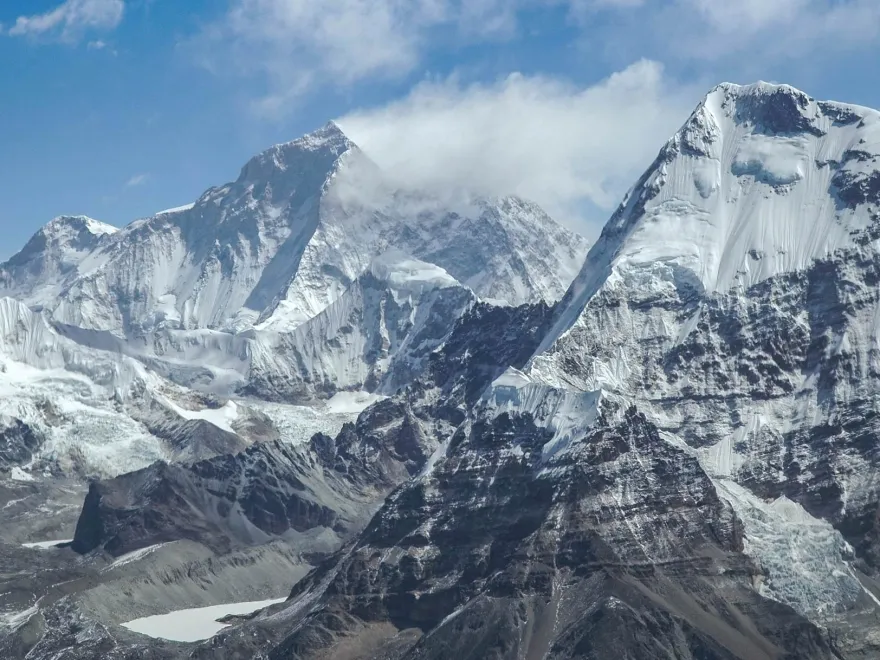
Experience an unforgettable Himalayan adventure with Everest Extreme Adventure on Island Peak Climbing. Trek through Sherpa villages, Sagarmatha National Park, and breathtaking Everest landscapes before reaching Island Peak Base Camp and conquering the spectacular 6,189-meter summit with expert guidance and support.
Island Peak is a mountain located to the eastern fringes of the Everest region among a sea of Himalayas. The Island Peak Climbing explores the beautiful Khumbu Valley, including the culture and traditions of the Sherpa community. Thus, this trip is one of the most adventurous ones in the vicinity of Mt. Everest (8848m). This trip also has exciting treks across the Sherpa villages and the Sagarmatha National Park. All in all, it is a complete journey that introduces the Everest Himalayas and ethnic culture.
Overview of the Island Peak Climbing
First, the trip begins in Kathmandu as you take off for the Lukla Airport. From here, the trek begins as you follow the Dudh Koshi River and descend to Phakding on the first day. Gradually, the trek will gain pace and enter the Sagarmatha National Park. As the trail ascends, you will quickly reach Namche Bazaar, which is also known as the gateway to Everest. Here, you spend an extra day and visit popular destinations like Khumjung, Khunde, and Everest View Hotel.
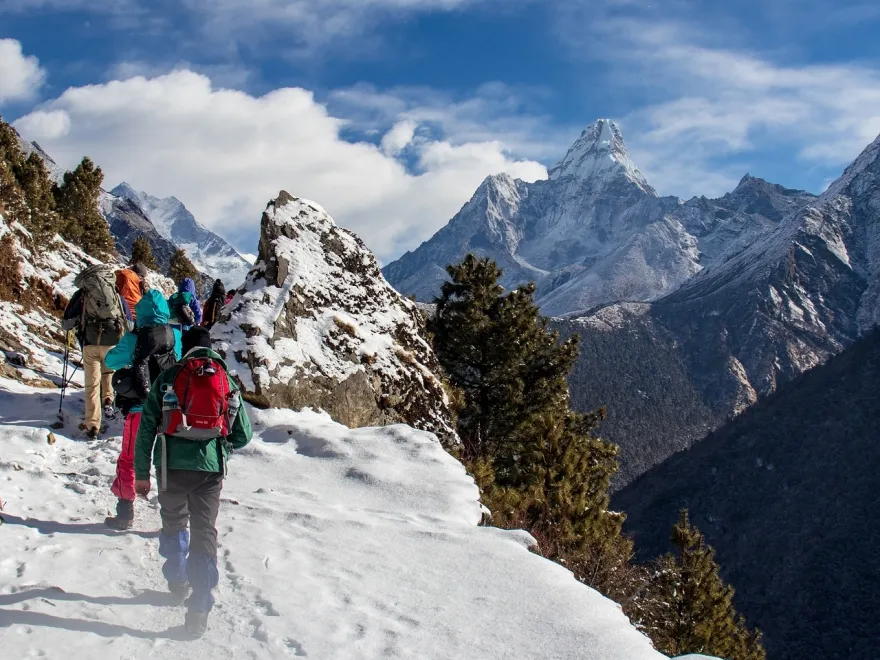
As the trail heads east, you head to Tengboche village. Then, trekking with the company of Mt. Ama Dablam (6856m), you will reach Dingboche. Further ahead, you travel to Chhukung and prepare for the climb.
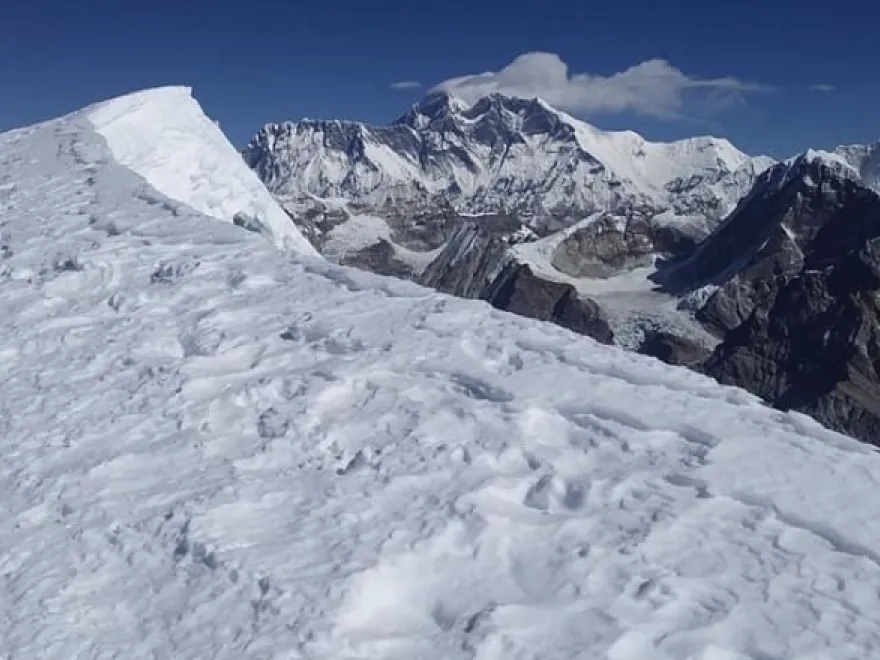
As the trip heads to the next phase, you will ascend to the Island Peak Base Camp. The Himalayan trail will offer plenty of challenges, including steep terrain and glacial moraines. Then, the final ascend will bring you to the top of the mesmerizing Island Peak (6189m). The view of the Everest ranges and the surrounding landscapes are surreal.
Then, you will begin the return trip and head back to Chhukung. Rejoining the Imja River, you descend past Pangboche and reach Tengboche. Further, the trek retraces its steps to Namche and makes a return to Lukla. A scenic flight back to Kathmandu brings the trip to a close.
Island Peak, also known as Imja Tse, stands at 6,189 meters (20,305 feet) in Nepal’s Everest region. Island Peak Climbing with Everest Extreme Adventure combines a classic Everest Base Camp-region trekking experience with a challenging Himalayan peak ascent. The journey begins in Kathmandu and includes a scenic flight to Lukla, followed by trekking through Phakding, Namche Bazaar, Tengboche, Dingboche, and Chhukung before reaching Island Peak Base Camp. Along the route, trekkers experience Sherpa villages, Buddhist monasteries, dramatic mountain scenery, and views of some of the world’s highest peaks.
The itinerary allows time for acclimatization at Namche Bazaar and Dingboche, which is important before ascending above 5,000 meters. From Chhukung, the trail continues to Island Peak Base Camp, where climbers prepare for the summit attempt. The summit day is the most demanding part of the adventure, requiring an early start and the use of mountaineering equipment such as crampons, harnesses, ropes, and an ice axe, depending on conditions and the climbing route.
With proper preparation and guidance, Island Peak is often considered an excellent introduction to Himalayan mountaineering. Everest Extreme Adventure provides experienced trekking and climbing support throughout the journey, helping climbers manage altitude, technical sections, logistics, and safety.
The best seasons for Island Peak Climbing are generally spring (March to May) and autumn (September to November). During these periods, the Everest region usually experiences more stable weather, better visibility, and comparatively favorable climbing conditions. Spring is particularly attractive because temperatures gradually become warmer and mountain views are often excellent. Autumn follows the monsoon and generally offers clear skies, fresh mountain scenery, and good trail conditions.
Although spring and autumn are the most popular seasons, Island Peak can be affected by rapidly changing high-altitude weather at any time. Summit conditions can include strong winds, freezing temperatures, snow, and poor visibility. Therefore, the actual summit attempt should always depend on the latest weather and mountain conditions rather than the calendar alone.
Everest Extreme Adventure can help organize the trek and climbing schedule around suitable weather windows. Building flexibility into the itinerary is important because flights to and from Lukla can also be affected by weather. Climbers should be prepared for possible schedule changes and should allow sufficient time in Nepal rather than arranging tight international connections.
Island Peak Climbing is a challenging high-altitude adventure that combines strenuous trekking with basic technical mountaineering. The trek reaches elevations above 5,000 meters before the summit of 6,189 meters, where reduced oxygen levels make physical exertion considerably harder. The summit route may involve snow and ice, steep sections, and glacier-related terrain. Climbers therefore need good cardiovascular fitness, endurance, mental preparation, and the ability to use mountaineering equipment safely.
The journey starts with transportation from Kathmandu to Lukla, normally by a short domestic flight of around 35–40 minutes, subject to airline operations and weather. From Lukla, the expedition continues primarily on foot through the Everest region. After reaching Island Peak Base Camp and completing the summit attempt, the route descends through Chhukung, Tengboche, Namche Bazaar, and Phakding before returning to Lukla for the flight back to Kathmandu.
Everest Extreme Adventure arranges the trekking and climbing logistics according to the selected itinerary. Because Lukla flights can be weather-sensitive, travelers should maintain some flexibility. Porters and guides can also assist with carrying equipment and navigating the route, allowing climbers to concentrate more on acclimatization and the climbing experience.
Food and accommodation are important parts of maintaining energy and recovery during Island Peak Climbing. During the trekking section, accommodation is generally provided in teahouses or mountain lodges, where rooms are basic but comfortable enough for rest after long days on the trail. Facilities become increasingly simple as the elevation increases. At Island Peak Base Camp, accommodation is typically provided in a camping setup, allowing climbers to stay close to the climbing route and prepare for the summit attempt.
Meals along the trekking route commonly include a mixture of local and familiar options. Dal bhat, rice, vegetables, noodles, soups, potatoes, pasta, eggs, bread, and other simple dishes are commonly available in the Everest region. Adequate hydration and sufficient calorie intake are especially important at high altitude, where trekking and cold temperatures increase energy requirements.
Everest Extreme Adventure organizes the necessary trekking and climbing logistics while helping travelers understand what meals and accommodation are included in their particular package. Since facilities at higher elevations are limited compared with Kathmandu, climbers should expect a basic mountain experience rather than hotel-style accommodation.
Island Peak Climbing requires appropriate trekking and mountaineering permissions because the peak lies within Nepal's regulated Everest region. The required permits and fees can vary according to the season, route, and applicable Nepalese regulations. Climbers should ensure that all required permissions are obtained before attempting the peak, particularly because climbing a permitted Himalayan peak without the appropriate authorization is not allowed.
For a professionally organized expedition, Everest Extreme Adventure assists with the necessary permit and administrative arrangements as part of the climbing preparation. Depending on the itinerary and current regulations, travelers may also need applicable conservation-area, national-park, local-area, or other trekking-related permits in addition to the Island Peak climbing permit.
Permit fees and regulations can change, so climbers should confirm the current requirements when booking their expedition. A reputable climbing company can help ensure that the documentation is completed correctly and that the expedition complies with Nepal's current tourism and mountaineering regulations.
Choosing Island Peak Climbing with Everest Extreme Adventure provides an opportunity to experience both the cultural richness of the Everest region and the excitement of Himalayan mountaineering. The 17-day itinerary provides progressive altitude gain, including acclimatization days at Namche Bazaar and Dingboche before moving toward Chhukung and Island Peak Base Camp. This gradual approach is designed to give climbers time to adapt to increasing elevation while experiencing the villages, monasteries, valleys, and spectacular mountain landscapes along the way.
Another major advantage is having organized support for the expedition's logistics. From the Kathmandu preparation stage and Lukla flight to trekking, accommodation, climbing arrangements, and the return journey, a professional operator helps coordinate the different components of the trip. Experienced guides can provide route guidance, assist with acclimatization decisions, and support climbers during the technical portions of the ascent.
Island Peak is particularly appealing to adventurous travelers who want to progress beyond ordinary high-altitude trekking and gain experience in Himalayan peak climbing. With appropriate training, preparation, equipment, and professional guidance, the expedition can become a memorable milestone for aspiring mountaineers.
About Us
At Everest Extreme Adventure, we are a team of highly professional staff with great resources. Also, we have various trips similar to the Island Peak Climbing across Nepal. Moreover, we also allow you to modify the itinerary as per your travel wishes.
The Island Peak Climbing itinerary with Everest Extreme Adventure is a thrilling 17-day Himalayan journey combining scenic trekking, Sherpa culture, acclimatization, and high-altitude mountaineering. The adventure begins in Kathmandu with a flight to Lukla, followed by trekking through Phakding, Namche Bazaar, Tengboche, Dingboche, and Chhukung. Along the way, trekkers enjoy magnificent views of Everest, Ama Dablam, Lhotse, Nuptse, and surrounding peaks while experiencing traditional Sherpa villages and monasteries.
After proper acclimatization, the journey continues to Island Peak Base Camp at 5,200 meters. The major highlight is the challenging summit attempt of Island Peak (6,189m), followed by a descent through Tengboche and Namche Bazaar to Lukla. The trip concludes with a flight back to Kathmandu, a free day, and departure from Nepal.
As per your scheduled flight, you arrive at Tribhuvan International Airport, Kathmandu. Our representatives will be waiting for you to welcome you warmly. After brief introductions, you head to the hotel and refresh. You meet our representatives again for dinner and discussion about the details of the trip.
After an early breakfast, you head to the domestic airport and board the plane heading to Lukla, the gateway to the Everest region. En flight, you get to see amazing views of the hill landscape and mountains like Langtang, Manaslu, and Everest. Once you land at Lukla, you will meet the local guides who will accompany you in the climb. After resting for a while, you start the trek and head to Phakding, where you stay overnight.
After a hearty breakfast, you trek along the banks of the Dudh Koshi River. You cross the river several times through suspension bridges. You pass by several villages and reach Monjo, from where you enter Sagarmatha National Park. After showing your permits and official documents, you start to ascend towards Namche. En route, you will get the first glimpses of Everest, Lhotse, and Nuptse. Overnight stay at the lodge.
You need to acclimatize to higher altitudes so that you won’t face any severe problems like altitude sickness. To adapt to increasing elevations, you need to walk around. So, after breakfast, you head to the Sherpa Culture Museum to know more about this unique ethnic community. Then, you explore the lively Namche Bazaar, and, in the afternoon, you can hike to the nearby areas of your choice.
After breakfast, you descend to the Dudh Koshi River and cross it. Then, you arrive at Phunke and ascend towards Tengboche. The Tengboche Monastery lies in this village and is the largest monastery of the Everest region. It is also a sacred place for the locals as they celebrate the Mani Rimdu festival here. Before dinner, you explore the monastery. Overnight stay at the lodge.
After breakfast, you walk through dense forests filled with pine, rhododendron, and birch. Then, you descend to Deboche, and from there, you cross the Imja River. After a short while, you reach Pangboche, where you do a quick tour of the Pangboche Monastery. After the tour, you enter Imja Valley as you continue to trek. Then, you ascend towards Dingboche for an overnight stay at the lodge.
Today will be the last day for acclimatizing because you’ll be climbing to an altitude higher than 5,000 m. After breakfast, you hike to the nearby peak to see the panoramic views of Ama Dablam, Lhotse, and even Island Peak. You can also explore other neighboring areas if you like. Before nightfall, you head back to the lodge.
You walk along stone-walled fields after breakfast. Slowly the Imja Valley widens up, and you get to see amazing views of the landscape. Ama Dablam and Lhotse also come into view as you progress with the trek. Walking along moraines, you reach Bibre village. From this village, climb a gentle slope and reach Chhukung for an overnight stay at the lodge.
After breakfast, you head towards the Island Peak Base Camp. The trail is a bit steep, so you need to follow the path carefully. You walk along glacier moraines and a stream, which eventually opens up to a wide valley on the south side of the peak. You find a suitable place to set tents for an overnight stay and prepare for it. With the help of the guides, you will check the conditions of your gears needed for the summit.
You wake up before dawn (around 1-2 a.m.) and start to prepare for the climb. Starting early is crucial as the midday winds can be powerful, hampering your climb. On average, it takes about 10-11 hours to summit, but this duration will depend on your pace as well. The guides will make safe paths, so you need to hear their instructions carefully and follow them. After a strenuous and adventurous climb, you arrive at the top of Island Peak. The reward is the breathtaking views of the mountains like Lhotse Ama Dablam and even Everest. You get to rejoice in the triumph for a while you soak in the light. Then you head back to Island Peak Base Camp for overnight stay.
Today, you clean the camping area, have breakfast, and start to retrace your steps. You head to the trail you used to ascend to Island Peak Base Camp. You pass along many settlement areas and dense rhododendron forests. You then leave Imja Valley and then head towards Pangboche. From there, you make your way towards Debouche and finally descend to Tengboche for an overnight stay at the teahouse.
Today, you trek back to the Sherpa town, Namche, after breakfast. You again retrace your steps and walk along the path you took in the earlier days. En route, you get to see spectacular views of Lhotse and Ama Dablam. Before nightfall, you reach Namche for an overnight stay at the lodge.
You head to Phakding after a hearty Sherpa style breakfast. The trek is relatively easy as there is no steep ascends and descends. You reach to Phakding during lunchtime.
Today is the last day of the trek, so make sure to savor every moment of it. En route, you pass by small settlement areas and then walk along the Dudh Koshi River. After crossing it, you arrive at Lukla. You will have a farewell dinner with the local guides at the hotel you’ll stay overnight.
Today is the last day in the Everest region. At breakfast, you bid farewell to the local guides and head to the airport. You then board the plane heading to Kathmandu. During the flight, enjoy the spectacular views of the mountains. In Kathmandu, our staff will pick you up from the airport and take you to the hotel. Remaining time of the day, you can give time to yourself to rest.
Today is your free day so you can spend it however you like. If you want to go souvenir shopping, we can recommend some good places. You can also choose to relax at a café or spa. If you want to visit a particular site, let us know, and we can arrange transportation for you. At dinner, you will meet the team who accompanied you in the trek.
Today is the last day of the trip. After breakfast, our staff will drop you off at the airport about 3 hours before your scheduled flight. Please make sure that you have all your belongings with you. Thank you for traveling with us, and I hope to see you again during your next trip to Nepal!
Island Peak Climbing is an exciting Himalayan mountaineering adventure that takes you to the summit of Island Peak (6,189m) in Nepal’s Everest region. The journey combines trekking through Sherpa villages, acclimatization in Namche Bazaar and Dingboche, and a technical summit ascent. With Everest Extreme Adventure, climbers receive organized trekking, climbing, and logistical support throughout the expedition.
Island Peak Climbing is considered a challenging adventure requiring good physical fitness, endurance, and mental preparation. The itinerary involves long trekking days, high elevations, cold temperatures, and technical climbing sections. The final summit attempt can involve snow, ice, steep terrain, and mountaineering equipment. Previous high-altitude trekking experience is helpful, although suitable beginners can attempt the peak with proper preparation and professional guidance.
Island Peak, also known as Imja Tse, rises to approximately 6,189 meters (20,305 feet) above sea level. Its considerable altitude makes acclimatization an essential part of the expedition. The itinerary organized by Everest Extreme Adventure includes acclimatization stops before reaching the climbing zone, allowing your body time to adjust gradually to the decreasing oxygen levels at higher elevations.
The itinerary presented by Everest Extreme Adventure takes 17 days, beginning and ending in Kathmandu. It includes the flight from Kathmandu to Lukla, trekking through Phakding, Namche Bazaar, Tengboche, Dingboche, and Chhukung, followed by the Island Peak Base Camp and summit attempt. The return journey continues through Tengboche and Namche to Lukla before flying back to Kathmandu.
Previous mountaineering experience is beneficial but not always essential for Island Peak. However, climbers should have strong trekking fitness and be comfortable with strenuous activity at high altitude. Because the summit involves technical terrain, participants need to learn appropriate climbing techniques and equipment use. Everest Extreme Adventure provides professional guidance to help climbers prepare for the demanding summit section.
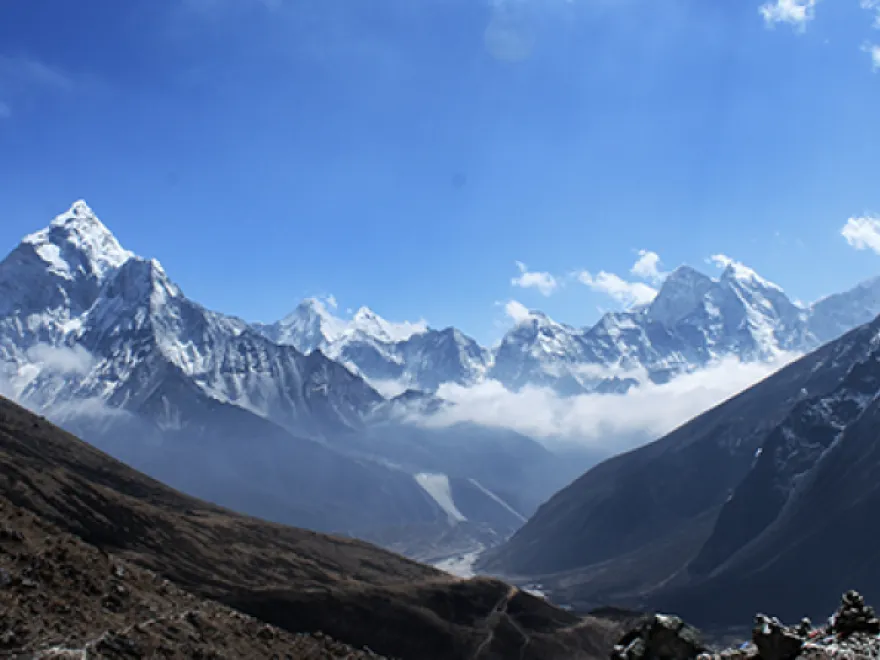
The trek provides spectacular views of some of Nepal’s most famous Himalayan peaks. Depending on weather and visibility, climbers can enjoy views of Mount Everest, Lhotse, Nuptse, Ama Dablam, Makalu, and numerous surrounding peaks. The landscapes change from lush lower valleys to rugged alpine terrain, making the journey with Everest Extreme Adventure as memorable for its scenery as it is for the Island Peak summit.
Everest Extreme Adventure offers organized support for the complete Island Peak journey, from Kathmandu preparations and Lukla transportation to trekking, acclimatization, base camp arrangements, and the summit attempt. A professional team can assist with route planning, climbing logistics, equipment guidance, and high-altitude safety. Choosing an experienced local operator also allows travelers to experience the Everest region with knowledgeable support throughout the expedition.
The best seasons for Island Peak Climbing are generally spring (March to May) and autumn (September to November). These months typically provide more favorable weather, clearer mountain views, and better trekking and climbing conditions. However, Himalayan weather can change rapidly, so the final summit attempt with Everest Extreme Adventure always needs to consider actual weather, snow, and mountain conditions.
The standard itinerary begins with a short domestic flight from Kathmandu to Lukla, which takes roughly 35–40 minutes under normal operating conditions. From Lukla, the journey continues on foot through the Everest region. After completing the Island Peak adventure and descending to Lukla, travelers take a return flight to Kathmandu. Flight schedules can be affected by mountain weather.
Island Peak Climbing requires the appropriate climbing permit and relevant trekking or regional permissions. Requirements and fees can vary depending on the season and current Nepalese regulations. Everest Extreme Adventure assists with the necessary permit arrangements and administrative procedures, helping ensure that the expedition follows the applicable rules for climbing in the Everest region and accessing Island Peak.
Accommodation varies according to the location and altitude. In Kathmandu, travelers normally stay in a comfortable hotel, while trekking days are generally spent in mountain teahouses or lodges. At Island Peak Base Camp, camping is normally required. Facilities become increasingly basic at higher elevations, so climbers should be prepared for simple rooms, shared facilities, and limited services.
Meals during the trek generally include nutritious and filling options such as dal bhat, rice, vegetables, noodles, pasta, potatoes, eggs, bread, and soups. Food choices can vary between teahouses depending on availability and altitude. Maintaining adequate hydration and consuming enough calories are particularly important during high-altitude trekking. Everest Extreme Adventure helps coordinate the planned meals and expedition logistics throughout the journey.
| No of people | Price per person |
|---|---|
| 1 - 1 | $6,050 |
| 2 - 4 | $5,700 |
| 5 - 9 | $5,650 |
| 10 - 15 | $5,600 |
| 16 - 20 | $5,550 |
| No of people | Price per person |
|---|---|
| 1 - 1 | $2,595 |
| 2 - 4 | $2,455 |
| 5 - 9 | $2,435 |
| 10 - 15 | $2,415 |
| 16 - 20 | $2,395 |