Group Adventure Dates.  4.9 of 489 reviews
 4.8 of 232 reviews
4.9 of 489 reviews 4.8 of 232 reviews 
Explore the hidden kingdom of Upper Mustang with Everest Extreme Adventure on an unforgettable 18-day Himalayan journey. Discover ancient monasteries, mysterious caves, traditional Tibetan-influenced villages, dramatic desert landscapes, and the historic walled city of Lo-Manthang while experiencing Nepal’s unique cultural heritage and breathtaking mountain scenery.
In the Annapurna region lies the Upper Mustang, which is also known as “the Forbidden Kingdom.” Ruled by a king, the Raja of Mustang, the region opened its gate to the public in the late 90s. Filled with ancient history and culture that is similar to the Tibetans, the region has minimal contact with the modern world.
Located in the Tibetan plateau, the geography and culture feel similar to that of Tibet, but in many ways, it is distinct and unique. The trek starts from Kathmandu, where you need to get special permits as the Upper Mustang is a restricted area. Then, you drive to Pokhara and fly to Jomsom, where your trek officially begins. The trail goes along the barren, yet the charming landscape of Mustang. You trek to beautiful villages like Kagbeni and Syangmochen.
Trekking deep into the Kali Gandaki Valley, you ascend to Lo Manthang, which is the capital of Mustang. Here, you get to see the palace where the king used to reside. The historic caves like Luri Cave give meaningful insight into the history of the region. There are many monasteries as well, like Ghar Gompa and Thubchen Gompa that provide more understanding of the region.
Enjoying the arid landscape with barley fields here and there, you head to Muktinath, a holy place for many Hindu and Buddhist pilgrims. Since the Upper Mustang lies in the rain-shadow area, it is favorable to trek in this region during the monsoon season as well.
With Everest Extreme Adventure, you get the best transportation and accommodation of your choice. Along with it, you can also customize the itinerary with places you want to visit. To make your trip memorable and eventful, we have the best and experienced guides and staff to accompany you.
With Everest Extreme Adventure, the Upper Mustang Trek offers an opportunity to discover a remote Himalayan destination where natural beauty, cultural heritage, and spiritual traditions come together in an unforgettable experience.
Choosing the right season is important for enjoying the Upper Mustang Trek comfortably and safely. Upper Mustang is located in the rain-shadow region of the Himalayas, making it one of Nepal's best trekking destinations during the monsoon season. While much of Nepal experiences heavy rainfall between June and August, Upper Mustang generally remains comparatively dry, making it an excellent alternative for travelers who want to trek during the summer months. However, weather conditions, wind, temperatures, and flight operations can still affect the itinerary.
Spring (March to May) is one of the best seasons for the Upper Mustang Trek. During this period, temperatures gradually become warmer, the skies are often clear, and the mountain scenery is particularly impressive. The trails are suitable for exploring traditional settlements, monasteries, caves, and the surrounding desert landscapes. Spring is also a good time for travelers who prefer moderate temperatures and longer daylight hours for walking.
Autumn (September to November) is another excellent season, with generally stable weather, clear mountain views, and comfortable trekking conditions. This period is especially popular among trekkers visiting Nepal. The dry trails and pleasant daytime temperatures make it a favorable time to explore Lo-Manthang, Chhosar, Yara, Tangye, and the surrounding villages.
Summer and monsoon (June to August) are particularly attractive for Upper Mustang because of its relatively dry climate. This season may also provide opportunities to experience local cultural traditions and festivals, depending on the dates. The Tiji Festival in Lo-Manthang is a well-known cultural event, but its dates vary each year, so travelers should confirm the schedule before planning their trip around it.
Winter (December to February) is possible for experienced and well-prepared trekkers, but it is generally more challenging. Temperatures can fall significantly below freezing, strong winds may occur, and some teahouses or local services may close during the colder months.
Recommended seasons:
Everest Extreme Adventure can help you select suitable travel dates according to your interests, available time, weather conditions, and preferred cultural experiences.
The Upper Mustang Trek is generally considered a moderate to challenging trekking adventure. Although the route does not require technical climbing skills or mountaineering equipment, it involves several consecutive days of walking through remote, high-altitude terrain. Most trekking days require approximately five to seven hours of walking, while the journey from Dhakmar to Lo-Manthang via Ghar Gompa may take seven to eight hours. The trail passes through dry valleys, rocky paths, dusty tracks, steep ascents, and descents, requiring reasonable physical fitness and endurance.
Altitude is another important factor to consider. The trek starts in Kathmandu at approximately 1,400 meters and gradually reaches elevations above 3,800 meters around Syangmochen, Dhakmar, Lo-Manthang, and Muktinath. Although the itinerary includes time to explore Lo-Manthang and surrounding villages, trekkers should still allow their bodies to adjust to the increasing altitude. Walking at a comfortable pace, staying hydrated, eating regularly, and recognizing symptoms of altitude sickness are essential. Anyone experiencing symptoms that worsen at altitude should stop ascending and seek appropriate medical advice.
Transportation is an important part of this 18-day itinerary. Your journey begins with arrival in Kathmandu, followed by a tourist bus drive to Pokhara, which generally takes six to seven hours depending on traffic and road conditions. From Pokhara, a short domestic flight takes you to Jomsom, the starting point for the trekking section. Flights in the Mustang region are weather-dependent and may be delayed or canceled because of strong winds, visibility, or other operational conditions.
After completing the trek, you return to Jomsom and fly to Pokhara before taking a tourist bus back to Kathmandu. The walking route includes the traditional villages of Kagbeni, Tsaile, Syangmochen, Dhakmar, Lo-Manthang, Yara, Tangye, Chhusang, and Muktinath, with a return journey through Lubra village.
Difficulty and transportation considerations:
Everest Extreme Adventure can assist with transportation arrangements, trekking logistics, and practical preparation so that you can approach this remote Himalayan journey with greater confidence.
Food and accommodation are essential parts of the Upper Mustang Trek experience. The region is remote, and facilities are generally simpler than those found in larger trekking destinations such as the Annapurna Base Camp or Everest regions. Nevertheless, local teahouses and lodges provide welcoming hospitality and opportunities to experience traditional Himalayan lifestyles. During the 18-day itinerary, accommodation is generally arranged in Kathmandu and Pokhara hotels and local teahouses or lodges along the trekking route, depending on availability and the agreed service package.
In Kathmandu and Pokhara, travelers can usually choose from a wider variety of meals, including Nepali, Indian, Tibetan, Asian, and international dishes. During the trekking portion, common meals include dal bhat, rice, vegetable curry, noodles, fried rice, soups, potatoes, eggs, Tibetan bread, and momos. Dal bhat, a traditional meal of rice, lentil soup, and vegetables, is a popular choice because it provides energy for long walking days. Some teahouses also offer meat dishes, pancakes, porridge, and simple breakfast options, although menus may become more limited in smaller villages.
Accommodation in the mountain villages is usually basic but comfortable. Most teahouses provide twin-sharing rooms with beds, mattresses, pillows, and blankets. Bathroom facilities may be shared, and hot showers or charging services may cost extra. Facilities vary between villages, and travelers should not expect the same level of comfort or availability as in city hotels. At higher and more remote settlements, accommodation options may be limited, particularly during the colder months or busy trekking periods.
It is advisable to carry some personal snacks, such as energy bars, nuts, and dried fruit, for longer walking days. Drinking enough water is especially important because the dry climate and increasing altitude can contribute to dehydration. Use treated, filtered, or otherwise safe drinking water throughout the journey. Travelers with dietary restrictions should inform Everest Extreme Adventure in advance so that suitable arrangements can be discussed with the available lodges.
Food and accommodation highlights:
Everest Extreme Adventure can help coordinate meals and accommodation throughout the trek, explaining what is included in your package and which additional expenses you should budget for before departure.
The Upper Mustang Trek is a restricted-area trekking adventure, meaning that travelers must obtain the appropriate permits before entering the designated restricted region. These regulations help protect the area's unique cultural heritage, fragile environment, and traditional communities. Unlike many popular trekking routes in Nepal, independent trekking in Upper Mustang is not permitted under the standard restricted-area rules. Foreign trekkers generally need to arrange the trip through a registered trekking agency, travel with a licensed guide, and comply with the applicable minimum group requirements.
For the planned itinerary, the restricted-area permit procedure is included on Day 2 in Kathmandu. Everest Extreme Adventure can help coordinate the necessary paperwork and explain the documents required before the trekking journey begins. Travelers should prepare a valid passport, the appropriate Nepal visa documentation, passport-sized photographs if required, and any other information requested by the agency or relevant authorities. Permit applications and fees should be confirmed before travel because regulations, documentation requirements, and charges can change.
The main permit for this itinerary is the Upper Mustang Restricted Area Permit (RAP). Foreign visitors generally pay a restricted-area fee calculated according to the number of days spent in the restricted region, subject to the current official rules. The precise number of chargeable days depends on the approved itinerary and the applicable permit conditions. A minimum number of trekkers may be required under current regulations, so solo travelers should consult the agency about joining an eligible group or arranging a compliant trip.
Other trekking permits may also be required depending on the route and the current regulations. The Annapurna Conservation Area Project (ACAP) permit is commonly relevant for trekking itineraries through the Annapurna region, including routes associated with Jomsom and Muktinath. The exact permit combination should be verified for the planned entry and exit route before departure.
Important permit information:
Everest Extreme Adventure can assist with permit arrangements, itinerary documentation, and coordination with the relevant authorities. Since regulations and fees may change, travelers should confirm all requirements with the company before finalizing their trip.
Choosing the right trekking company is an important part of planning a successful Himalayan adventure. Upper Mustang is a remote destination with restricted-area regulations, limited transportation options, changing weather conditions, and challenging high-altitude trails. Traveling with an experienced local trekking operator can make the journey more organized and help you focus on discovering the region's culture, landscapes, and history. Everest Extreme Adventure offers an opportunity to plan the Upper Mustang Trek with attention to trekking logistics, permit arrangements, accommodation, transportation, and local experiences.
One of the main attractions of this itinerary is its combination of cultural exploration and wilderness trekking. Rather than simply visiting Lo-Manthang and returning along the same trail, the 18-day journey includes a broader exploration of Upper Mustang's remote settlements and distinctive landscapes. You can walk through Kagbeni, Tsaile, Syangmochen, Dhakmar, and Lo-Manthang before discovering Chhosar village and its ancient caves. The route continues toward Yara and Luri Cave, then through Tangye and Chhusang before reaching Muktinath and returning to Jomsom via Lubra village. This varied route provides a deeper appreciation of the region's traditional communities and dramatic trans-Himalayan environment.
Another advantage of arranging the trek with Everest Extreme Adventure is having assistance with the practical details that can otherwise be difficult to coordinate independently. These include planning the restricted-area permit procedure, organizing domestic flights and road transportation, arranging teahouse accommodation, and coordinating trekking support. A local team can also provide cultural context about Buddhist monasteries, traditional settlements, historic trade routes, and local customs, helping travelers appreciate more than just the scenery.
Responsible travel is particularly important in Upper Mustang because its cultural traditions and natural environment are distinctive and vulnerable to unnecessary disturbance. Travelers should respect local customs, ask permission before photographing people, follow guidance at monasteries and sacred sites, minimize waste, and support local businesses whenever possible. A carefully planned itinerary should also account for altitude, weather-related transportation delays, and the limited services available in remote villages.
Why travel with Everest Extreme Adventure?
The Upper Mustang Trek is more than a walking holiday; it is a journey into one of Nepal's most distinctive Himalayan regions. With thoughtful preparation and support from Everest Extreme Adventure, you can discover ancient traditions, dramatic desert landscapes, remote mountain villages, and remarkable cultural heritage while creating lasting memories of the Nepal Himalayas.
The Upper Mustang Trek with Everest Extreme Adventure is an unforgettable 18-day Himalayan adventure exploring Nepal’s hidden kingdom, rich Tibetan-influenced culture, ancient monasteries, mysterious caves, and dramatic desert landscapes. The journey begins in Kathmandu, followed by a scenic drive to Pokhara and a short flight to Jomsom. From Kagbeni, the gateway to Upper Mustang, the trek continues through traditional villages, colorful cliffs, and remote valleys toward the historic walled city of Lo-Manthang.
Explore the ancient caves of Chhosar and Luri, visit Ghar Gompa, and discover the cultural treasures of Yara, Tangye, and Dhakmar. The adventure continues to Muktinath before returning to Jomsom via Lubra village. With breathtaking Himalayan scenery, authentic local experiences, and fascinating historical landmarks, this trek offers a remarkable journey into Mustang’s unique heritage with Everest Extreme Adventure.
You arrive at the lap of Himalayas, per your scheduled flight. Our representatives will be waiting to welcome you warmly. After brief introductions, you head to the hotel where you refresh and rest. Again, you meet our representatives for a welcome dinner where you can discuss the details of the trip.
Since you’ll be trekking to a restricted area, you must have the necessary permits for entry. After filling in necessary personal details, our staff will look after the rest of the procedure. In the meantime, you can sightsee some of the famous landmarks of Kathmandu Valley. You head to explore the Kathmandu Durbar Square, Boudhanath Stupa, Pashupatinath Temple, and end the day at Swayambhunath Temple, where you can see a fantastic panorama of the valley.
You wake up early and head to the bus stop to catch the bus heading to Pokhara. The drive goes along the Prithivi Highway, where you can enjoy picturesque views of the Trishuli and Marsayangdi Rivers. The bus drives past many rustic villages and towns like Mugling and Malekhu, where you can enjoy authentic Dal Bhat for lunch. Enjoying the serene views, you arrive at Pokhara Bus Park by afternoon. Head to the hotel for an overnight stay.
Early in the morning, you head to the airport and catch the first flight to Jomsom. En flight, you get to see spectacular views of the landscapes. At the airport, the local guide and staff will be waiting for you. The guide can arrange a porter for you want. Then, you begin the trek and transverse into the beautiful valley. Enjoying the austere landscape, you arrive at Kagbeni, which is a village filled with stone-roofed houses. Overnight stay at the teahouse.
The trek starts after a hearty breakfast and en route; you need to show your permits to continue the trek. After that, you walk along the banks of the Kali Gandaki River, enjoying the scenic views. The route slowly ascends to a hill, and then you reach Tangbe Village. From here onwards, you trek through farmlands filled with barley and potatoes. You can also see apple orchards. After passing a few settlement areas, you cross the river and then trek to a ridge that leads you to Tsaile for overnight stay.
The trek starts early in the early as you need to cross two passes today. As you continue to walk through the landscape, you first arrive at Taklam La Pass and then ascend to the next pass, Dajori La. The trail then descends to scenic Ramchung Cave, and en route, you get to see spectacular views of Damodar Danda, Tilicho, and Yakawa Kang. The trail continues through to Samar village, and from there, you climb a ridge to descend to Syangmochen for overnight stay.
The trek resumes after breakfast, and you ascend to Nyi La Pass. From there, you can see breathtaking views of the barren landscape. Then, you start to descend to the lower elevations. You pass by settlement areas and arrive at the village of Ghami, which is located at the bottom of the hill. From there, you steeply ascend and descend again to reach Dhakmar for overnight stay.
The trek continues after breakfast. You walk along the barren landscape and slowly ascend towards Mulia Bhanjyang. From the top, you can see breathtaking panoramas of the region. Then, you descend towards the old monastery of the area, the Ghar Gompa. You explore the monastery and understand the history of the place through the guide. From there, you head to the villages of Marang and then reach Charang. Leaving the villages, you ascend to Lo-Manthang, the capital of Mustang, for overnight stay.
Today is dedicated to exploring the picturesque and rustic Lo Manthang. After breakfast, you head to the neighboring village of Chhosar and explore the ancient cave filled with the history of the region. Then, you can head to explore the village and interact with the locals. If you have time, you can also head onto the jeep ride to the Tibetan border.
The trek begins as you retrace the steps you took to arrive at Lo Manthang. Then, you head towards the valley of Yara as you trek along the banks of the Kali Gandaki River. You arrive at a rustic village called Dhi, and from there, you cross the river to trek to another valley. Following the Puyung Khola, you arrive at Yara village for overnight stay.
Today, you will explore the Yara region. After breakfast, you trek to the neighboring village of Ghara, and from there, you arrive at Luri Cave. It is said that Guru Rinpoche meditated in this cave for a long time. Thus, this place holds sacred value to the local people. If you have time left, then you can also head to explore other monasteries and caves like Yara Gompa.
The trek starts as you descend to cross the Kali Gandaki River. En route, you also cross smaller tributaries of the river. The route slowly goes uphill and gets more leveled as you proceed. Then, it again goes downhill, and at the end of the route, you arrive at Tangye for overnight stay.
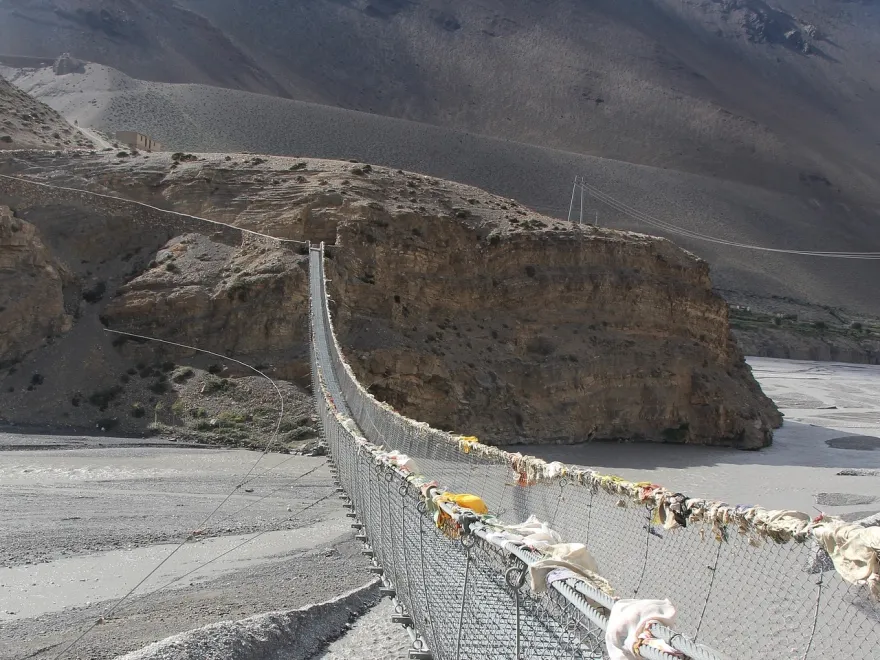
The route today goes through several small passes. After breakfast, you head to cross the river via a suspension bridge, and then transverse through the rocky and barren terrain. Then, you start to cross small passes. You then reach Chhusang for an overnight stay at the teahouse.
The route today goes uphill for a couple of hours, and when you arrive at a pass from where you can see amazing sceneries of the mountains like Annapurna, Dhaulagiri, and Tukuche ranges. From there, you descend while enjoying the picturesque views. Trekking through small settlement areas, you finally arrive at Muktinath for overnight stay
You wake up early and head to Muktinath Temple to pray. After praying and exploring, you head back to the lodge and have breakfast. Then, you trek towards Jomsom. Since this the last day of your trek in the Mustang region, enjoy your walk as much as you can, soaking in the unique views of the region. The trail leads you to the Thakali village of Lubra, where you enjoy an authentic Thakali lunch. Then, you arrive at Jomsom from where you can enjoy the views of the mountains.
You head to the airport early in the morning to catch the first flight back to Pokhara. There might be chances of delay, so it is best to catch an early flight. Enjoying the picturesque views of the mountains one last time, you arrive at Pokhara Airport, and from there, you head to the hotel for overnight stay. You join the local staff for a farewell dinner at Lakeside.
You need to reach the bus park before 7 a.m., so wake up early and have a light breakfast. After checking all your items, you board the bus heading back to Kathmandu. You again drive along the Prithvi Highway and enjoy the landscapes along with the meandering rivers. After a long drive, you arrive at Kathmandu and head to the hotel to refresh. Then, you join our representatives for a farewell dinner.
The trek has finally come to an end, and now it’s time for you to head back home. Please check if you have packed all your items with you. Our staff will make sure that you arrive at the airport as per your scheduled flight. Thank you for choosing to travel and making unforgettable memories with us. Have a safe flight!
The Upper Mustang Trek is an extraordinary Himalayan adventure in the remote trans-Himalayan region of Nepal, famous for its ancient monasteries, mysterious caves, colorful cliffs, traditional villages, and Tibetan-influenced culture. With Everest Extreme Adventure, you can explore the historic walled city of Lo-Manthang, visit Chhosar and Luri Cave, and experience the unique landscapes of Nepal’s former forbidden kingdom. This trek combines cultural exploration, natural beauty, and authentic Himalayan hospitality.
The standard itinerary offered here takes 18 days, beginning with your arrival in Kathmandu and ending with your departure from Nepal. The journey includes permit arrangements, transportation to Pokhara, a flight to Jomsom, and trekking through traditional Mustang villages. You will explore Lo-Manthang, Chhosar, Yara, Tangye, and Muktinath before returning to Kathmandu. Everest Extreme Adventure can help organize the itinerary according to your available time, travel preferences, and transportation requirements.
The Upper Mustang Trek is generally considered moderate to challenging because it involves several consecutive days of walking at elevations above 3,000 meters. Most trekking days require approximately five to seven hours of walking, with some longer days depending on the route and conditions. The trail includes rocky paths, steep ascents, descents, and dry valleys. Although technical climbing skills are not normally required, good physical fitness and preparation are important. Everest Extreme Adventure recommends regular walking, cardiovascular exercise, and gradual acclimatization before departure.
Yes, foreign trekkers visiting Upper Mustang generally must trek with a licensed guide and arrange their restricted-area permits through a registered trekking agency. A guide helps you navigate remote trails, understand local customs, learn about Buddhist monasteries, and appreciate the history of traditional Mustang villages. Having professional trekking support is also valuable when dealing with changing weather, altitude concerns, and transportation delays. Everest Extreme Adventure can coordinate a suitable guide and provide information about the trekking arrangements before your journey begins.
The Upper Mustang Trek reaches elevations of approximately 3,800 meters at places such as Syangmochen, Dhakmar, Lo-Manthang, and Muktinath, depending on the exact route and overnight stops. At these elevations, some trekkers may experience symptoms of altitude sickness, including headaches, nausea, dizziness, or unusual fatigue. Walking slowly, staying hydrated, and allowing sufficient time for acclimatization can help reduce risk but cannot eliminate it. Everest Extreme Adventure encourages trekkers to communicate any symptoms promptly and avoid ascending when experiencing signs of altitude illness.
The major highlights include exploring the ancient walled city of Lo-Manthang, visiting the caves of Chhosar and Luri, discovering Ghar Gompa, and walking through traditional villages such as Kagbeni, Dhakmar, Yara, and Tangye. The route also features dramatic red cliffs, deep canyons, barren mountain landscapes, ancient chortens, and Tibetan Buddhist cultural heritage. A visit to Muktinath adds an important spiritual dimension to the journey. Everest Extreme Adventure organizes this itinerary to combine cultural discoveries, remote landscapes, and memorable Himalayan trekking experiences.
The Upper Mustang Trek can be suitable for beginners who have good general fitness, prepare adequately, and are comfortable walking for several hours on consecutive days. Previous high-altitude trekking experience is helpful but not always essential. However, the remote terrain, dry conditions, long walking days, and elevations above 3,000 meters make this trek more demanding than an ordinary hiking holiday. Beginners should prepare through regular walking, hill training, and cardiovascular exercise. Everest Extreme Adventure can help explain the itinerary, expected walking hours, and preparation needed before booking.
Yes, Upper Mustang is renowned for its Tibetan-influenced Buddhist traditions, traditional architecture, ancient monasteries, prayer flags, and distinctive local customs. Depending on your travel dates, you may also have an opportunity to experience cultural celebrations such as the Tiji Festival in Lo-Manthang. Festival dates vary each year, so travelers should check the schedule before arranging their trip. Everest Extreme Adventure can help plan your itinerary around cultural interests where possible. Visitors should respect local customs, seek permission before photographing people, and follow appropriate practices at religious sites.
Everest Extreme Adventure helps travelers plan the Upper Mustang Trek by coordinating essential arrangements such as restricted-area permits, licensed guides, transportation, accommodation, and trekking logistics according to the selected package. The company can assist you in exploring Lo-Manthang, ancient caves, traditional villages, monasteries, and the remarkable landscapes of the Mustang region. Before booking, travelers should confirm the services included, exclusions, cancellation terms, and additional costs. With careful preparation and a well-organized itinerary, you can enjoy a rewarding Himalayan adventure while discovering the unique cultural and natural heritage of Upper Mustang.
For the Upper Mustang Trek, you should pack layered clothing, a warm jacket, trekking trousers, moisture-wicking shirts, comfortable hiking boots, warm socks, gloves, a sun hat, sunglasses, and sunscreen. A sleeping bag suitable for cold conditions, a reusable water bottle, water purification supplies, personal medication, a first-aid kit, and a headlamp are also useful. The region can be sunny, dusty, windy, and cold, especially at higher elevations and in the evenings. Everest Extreme Adventure can provide a practical packing checklist based on the season and your planned itinerary.
The best seasons for the Upper Mustang Trek are generally spring, from March to May, and autumn, from September to November. Upper Mustang lies in the rain-shadow region of the Himalayas, making it a popular trekking destination during Nepal’s monsoon season from June to August. Winter trekking is also possible but can be challenging because of freezing temperatures and possible service closures. Everest Extreme Adventure recommends selecting your travel dates according to weather conditions, cultural interests, and personal comfort.
The 18-day itinerary begins in Kathmandu, followed by a tourist bus journey to Pokhara that typically takes six to seven hours. From Pokhara, a short domestic flight takes you to Jomsom, where the trekking portion begins after continuing toward Kagbeni. At the end of the trek, you return to Jomsom and fly to Pokhara before traveling by tourist bus to Kathmandu. Flights in the Mustang region are weather-dependent and may be delayed or canceled. Everest Extreme Adventure recommends keeping additional time available before international departure.
The Upper Mustang Trek requires a Restricted Area Permit (RAP) because the region is protected under Nepal’s restricted-area regulations. Foreign trekkers generally need to arrange their trip through a registered trekking agency, travel with a licensed guide, and meet applicable group requirements. An Annapurna Conservation Area Permit may also be required for the route. Everest Extreme Adventure can assist with permit applications and documentation. Permit fees, minimum group requirements, and other regulations should be confirmed before booking because official requirements may change.
Accommodation during the Upper Mustang Trek generally includes hotels in Kathmandu and Pokhara and local teahouses or lodges along the trekking route. Teahouses usually provide basic rooms with beds, mattresses, pillows, and blankets, although facilities vary between villages. Bathrooms may be shared, and hot showers or charging facilities may incur additional charges. In remote settlements, accommodation choices can be limited, particularly during winter. Everest Extreme Adventure can arrange accommodation according to availability and the services included in your selected trekking package.
Food along the Upper Mustang trekking route typically includes traditional Nepali dal bhat, rice, vegetable curry, noodles, fried rice, soups, potatoes, eggs, and Tibetan-influenced dishes such as momos and Tibetan bread. Meal options are generally more varied in Kathmandu and Pokhara than in remote mountain villages. Because trekking requires considerable energy, regular meals and adequate hydration are important. Everest Extreme Adventure can explain the meal arrangements included in your package and help communicate dietary preferences to accommodation providers, although specialized food options may be limited in remote areas.
| No of people | Price per person |
|---|---|
| 1 - 1 | $1,999 |
| 2 - 4 | $1,775 |
| 5 - 9 | $1,755 |
| 10 - 15 | $1,735 |
| 16 - 20 | $1,715 |