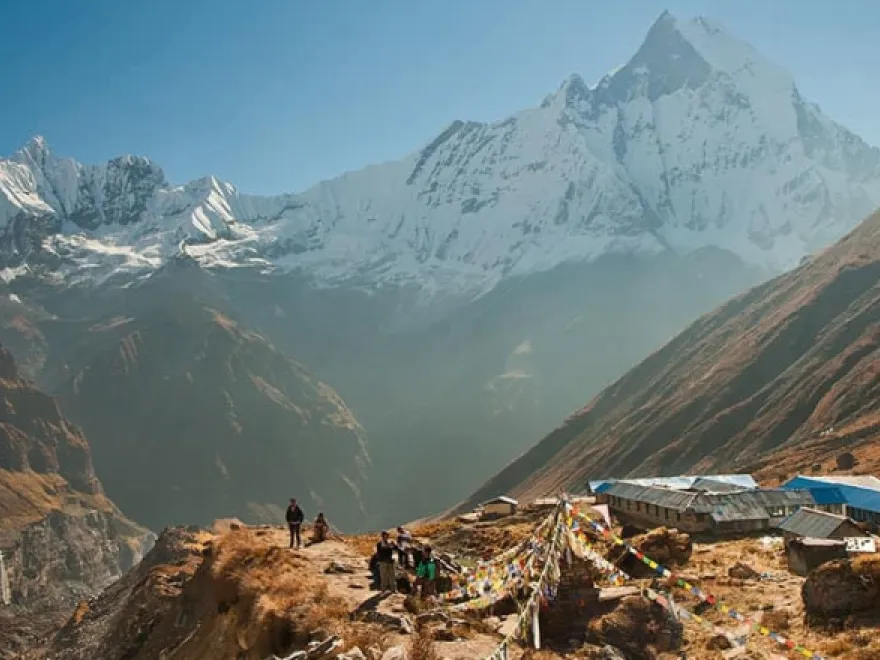
Group Adventure Dates.  4.9 of 489 reviews
 4.8 of 232 reviews
4.9 of 489 reviews 4.8 of 232 reviews 
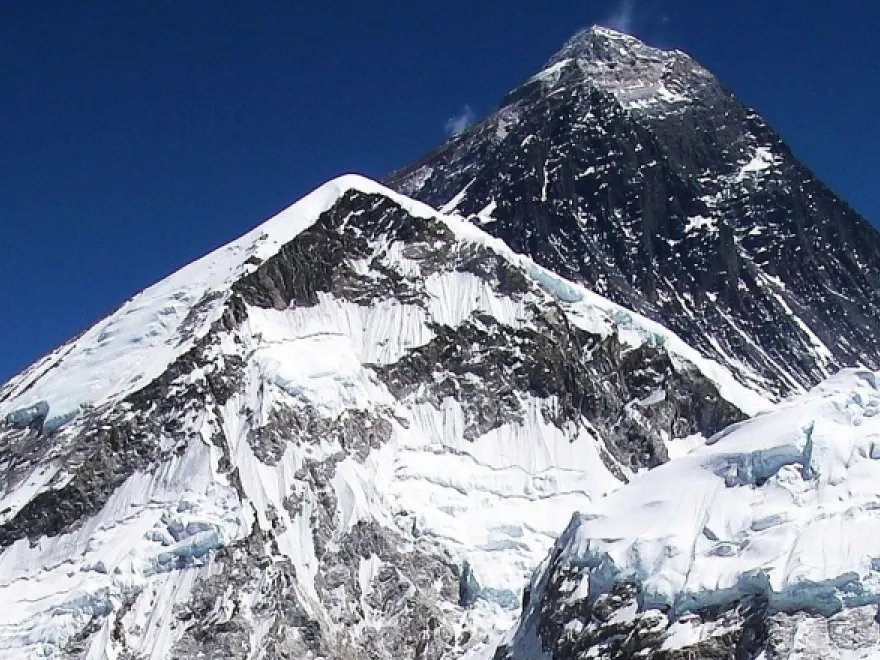
Experience the ultimate Himalayan adventure with Everest Extreme Adventure on the Everest Base Camp with Island Peak Trek. Trek through legendary Sherpa villages, reach Everest Base Camp, witness stunning Kala Patthar sunrise views, and conquer Island Peak amid breathtaking Himalayan scenery.
If you’re looking for a thrilling experience that regular treks can’t provide, the Everest Base Camp with Island Peak Trek is the right one for you. In the Khumbu region, you can head out to various landmarks along with conquering the Everest Base Camp. Designed for the energetic adventure seekers, this trek is bound to amaze you.
One of the main climbing peaks of the region, Island peak, lies at 6189m between the Lhotse and Imja glaciers. Whether you’re a beginner or a professional, it is recommended that you attend the one-day training on learning how to climb the Island Peak. Starting your trek from Lukla via flight from Kathmandu, you head towards Namche Bazaar through Phakding.
You head over the Tengboche monastery to offer your prayers and get blessings. Continue the trek towards Gorakshep via Dingboche and Lobuche. To make yourself familiar before climbing the Island peak, the steep hike towards Kalapatthar will be of help. The sunrise over the majestic Everest range is truly a view you cannot find anywhere else. You trek over to Chhukung and camp at Island Peak Base camp to attend the training.
Depending on the weather, the ascent to Island Peak starts early in the morning. Your guides will assist you along the summit. Following the ridgeline will expose the steep snow slope to the summit ridge. The view from the summit will surely take your breath away. Take photos of the Himalayas and descend back the same way to Chhukung.
Trekking in this region is recommended during spring (March-May) and autumn (September-November). Monsoon and winter seasons are not suitable for trekking due to bad weather.
At Everest Extreme Adventure, we offer affordable and reasonable prices for our tour packages. This is what makes us stand out from the crowd. Along with it, you can change or add places you want to visit on your desired trip. We provide the best services for transportation and accommodation to make your trip go smoothly. You are accompanied by the best guides and staff.
The Everest Base Camp with Island Peak Trek is an adventurous Himalayan journey that combines the legendary Everest Base Camp experience with the exhilarating challenge of climbing Island Peak (6,189m). Organized by Everest Extreme Adventure, this 18-day itinerary is designed for trekkers who want to experience the spectacular Khumbu region while adding a genuine Himalayan climbing experience to their adventure. The journey begins with a scenic flight from Kathmandu to Lukla, followed by trekking through famous Sherpa settlements including Phakding, Namche Bazaar, Tengboche, Dingboche, Lobuche, and Gorakshep before reaching Everest Base Camp at 5,364m.
The itinerary also includes important acclimatization days in Namche Bazaar and Dingboche, helping trekkers gradually adjust to increasing altitude. After visiting Everest Base Camp and hiking to Kala Patthar (5,545m) for exceptional views of Everest and the surrounding peaks, the route heads toward Chhukung and Island Peak Base Camp. Climbers receive preparation and climbing training before attempting the Island Peak summit. The return journey follows the beautiful Khumbu trail back toward Lukla, concluding with a flight to Kathmandu.
The best seasons for the Everest Base Camp with Island Peak Trek are generally spring and autumn, when weather and mountain conditions are most favorable. Spring, particularly from March to May, offers relatively stable weather, clear mountain views, and warmer daytime temperatures compared with the colder months. The trails become lively with trekkers and climbers, and the lower valleys can be especially beautiful as vegetation begins to bloom. May is also an important climbing period in the Everest region, although conditions on Island Peak can vary considerably from year to year.
Autumn, especially from late September through November, is another excellent period for this adventure. Following the summer monsoon, the atmosphere often becomes clearer, providing impressive views of Everest, Lhotse, Ama Dablam, Nuptse, and other Himalayan peaks. Temperatures at higher elevations remain cold, particularly early in the morning and at night, but daytime trekking conditions are generally favorable. Winter and monsoon-season trips are possible for experienced adventurers, but they can involve more challenging weather, snow, flight disruptions, and trail conditions.
Everest Extreme Adventure recommends selecting the trekking season carefully because the Island Peak summit section is more demanding than the standard Everest Base Camp trek. Weather, snow conditions, wind, and route conditions can change quickly at high altitude. A suitable itinerary, experienced climbing staff, appropriate equipment, and adequate acclimatization are therefore essential for a successful journey.
The Everest Base Camp with Island Peak Trek is a challenging Himalayan adventure that requires good physical fitness, endurance, and mental preparation. The Everest Base Camp portion involves several days of walking at high altitude, while the Island Peak section adds technical climbing elements. Trekkers should be comfortable walking approximately 5–8 hours on many trekking days over uneven mountain terrain, with some sections involving steep ascents and descents. The highest point of the itinerary is Island Peak at 6,189m, where altitude, cold, wind, snow, and reduced oxygen can make the climb considerably more demanding.
Transportation begins with the flight from Kathmandu to Lukla, which takes approximately 35 minutes under normal operating conditions. From Lukla, most of the journey is completed on foot along established mountain trails. Porters and support staff can assist with luggage, allowing trekkers to concentrate on walking and acclimatizing. At the end of the trek, the group returns to Lukla for the flight back to Kathmandu. Flights to and from Lukla are highly dependent on weather and operational conditions, so travelers should maintain some flexibility in their schedule.
Everest Extreme Adventure places strong emphasis on acclimatization and responsible mountain travel. The rest days in Namche Bazaar and Dingboche are important parts of the itinerary rather than optional breaks. Trekkers should understand that altitude sickness can affect anyone, regardless of age or previous fitness, and the climbing schedule may need to be adjusted according to individual health and mountain conditions.
Food and accommodation are important parts of maintaining energy throughout the Everest Base Camp with Island Peak Trek. During the trekking section, accommodation is generally provided in local teahouses or trekking lodges. These establishments offer simple but comfortable rooms, commonly with twin beds and shared bathroom facilities. As the route climbs higher into the Khumbu, facilities become more basic because of the remote environment and difficult transportation of supplies. The teahouse experience also provides an opportunity to interact with local families and experience the hospitality of the Himalayan communities.
Meals during the trek are designed to provide sufficient carbohydrates, protein, and energy for long days of walking. Common menu choices can include dal bhat, noodles, rice, pasta, potatoes, soups, vegetables, eggs, Tibetan-style bread, porridge, pancakes, and other simple dishes. Hot drinks such as tea and coffee are widely available, although availability and menu variety can decrease at higher elevations. Trekkers should also drink sufficient fluids throughout the day and carry appropriate water purification or treatment options when necessary.
Everest Extreme Adventure can help travelers prepare for the practical realities of eating and sleeping at high altitude. Luxury facilities should not be expected in remote sections of the route, but the simplicity of teahouse accommodation is an important part of the Himalayan experience. Travelers with vegetarian, vegan, gluten-free, or other dietary requirements should inform the company before departure so suitable arrangements can be discussed.
The Everest Base Camp with Island Peak Trek requires several permits and official permissions because the journey passes through the protected Everest region and includes a climbing expedition to Island Peak. The exact permits and fees can change according to regulations issued by the relevant Nepalese authorities and local government bodies. Travelers should therefore confirm the current requirements before departure rather than relying on outdated permit information.
For the Everest Base Camp trekking route, trekkers generally require the appropriate entry permit for Sagarmatha National Park and the applicable local-area trekking permit. Island Peak climbing also requires a separate climbing permit, with fees and regulations potentially varying according to season. Everest Extreme Adventure can assist with arranging the required permits and administrative formalities so travelers can concentrate on preparation and the trek itself.
Because Island Peak is a mountaineering objective rather than simply a trekking destination, climbers should make sure their travel insurance specifically covers high-altitude activities and emergency evacuation where applicable. Permit requirements, fees, climbing regulations, and local procedures can change, so Everest Extreme Adventure should be consulted for the latest requirements when making the booking. Proper documentation is essential for a smooth and responsible Himalayan expedition.
Choosing the Everest Base Camp with Island Peak Trek means experiencing two major Himalayan achievements within one carefully structured adventure: reaching the legendary Everest Base Camp and attempting the summit of Island Peak. Rather than stopping at the traditional Everest Base Camp trek, travelers continue toward a true Himalayan climbing objective. The itinerary provides time for acclimatization, exploration of the Khumbu region, preparation at Island Peak Base Camp, and a summit attempt under the guidance of an experienced climbing team.
Everest Extreme Adventure offers local knowledge and experience in organizing trekking and climbing journeys in Nepal. The company can assist with logistics, permits, accommodation, trekking support, climbing preparation, and route management. The itinerary also allows travelers to experience important cultural and natural highlights, from Sherpa villages and Buddhist monasteries to spectacular views of some of the world's highest mountains. Namche Bazaar, Tengboche, Dingboche, Everest Base Camp, Kala Patthar, Chhukung, and Island Peak each provide a different perspective of the Everest region.
For travelers looking for more than a conventional trek, this journey offers a memorable combination of trekking, mountaineering, culture, and high-altitude adventure. With appropriate preparation, realistic expectations, proper acclimatization, suitable equipment, and professional support, the Everest Base Camp with Island Peak Trek can become one of the most rewarding adventures in the Nepal Himalayas.
The Everest Base Camp with Island Peak Trek by Everest Extreme Adventure is an exhilarating 18-day Himalayan journey combining the legendary Everest Base Camp trek with the thrilling ascent of Island Peak (6,189m). The adventure begins with a scenic flight from Kathmandu to Lukla, followed by trekking through Phakding, Namche Bazaar, Tengboche, Dingboche, Lobuche, and Gorakshep. Along the way, trekkers experience spectacular mountain scenery, authentic Sherpa culture, Buddhist monasteries, and beautiful Himalayan landscapes.
After reaching Everest Base Camp and enjoying sunrise views from Kala Patthar, the journey continues toward Chhukung and Island Peak Base Camp. Climbers receive essential preparation and training before attempting the summit. With carefully planned acclimatization days, experienced support, and scenic trails, Everest Extreme Adventure provides an unforgettable combination of trekking, climbing, culture, and Himalayan exploration.
As per your flight schedule, you arrive at the country of mountains and diverse cultures, Nepal. At Tribhuvan International Airport, our staff will be eagerly waiting to welcome you warmly. After brief introductions, our team will take you to the hotel where you rest and refresh. You join them again at dinner for a formal welcome. During this time, you can discuss the details of the trek.
After an early breakfast, you head to the airport and board the first flight to Lukla. During the flight, you get to see amazing sceneries of the hill landscape. As you head north, the mountains like Everest, Makalu, Langtang, Kanchenjunga, etc. come into view. Enjoying the fantastic views, you land at Lukla, where you meet the local staff who will accompany you throughout your time in the Khumbu region. After brief introductions, you ascend to Phakding for overnight stay.
After breakfast, you make your way through the forest filled with rhododendron, oak, and pine trees. After crossing several suspension bridges, you arrive at Monjo, where you show your permits and complete the official procedures to enter Sagarmatha National Park. After that, you ascend through the forest and arrive at the lively town of Namche Bazaar. Overnight stay at a lodge.
Since you’ll be trekking to higher elevations, it is crucial to make your body familiar to the surrounding. Thus, this day is separated to acclimatize and adapt to higher elevations. After breakfast, you hike to the Sherpa Culture Museum to learn more about the Sherpa culture and their ties with mountaineering. You can also head to explore the nearby village of Khumjung.
After breakfast, you head to the trail that consists of a series of ascends and descends. En route, you get to see spectacular views of Everest, Nuptse, Ama Dablam, Lhotse, and Thamserku. Enjoying the sights, you arrive at Sanasa and then descend to Phungi Tenga. From there, the trail goes steeply upwards through rhododendron and pine forests. After ascending, you arrive at Tyangboche for the overnight stay. Before dinner, you can head to explore the Tyangboche Monastery, which is sacred to the local people.
After breakfast, you walk through a pine forest towards Dingboche. Along the way, you can enjoy the views of mountains like Ama Dablam, Thamserku, and Kangtega. Walking uphill through the forest, you reach Debouche and then arrive at Pangboche after crossing several Chortens. You arrive at Dingboche after walking past potato fields and cross Mani Stupa. Overnight stay at a lodge.
This is the second acclimatization day separated for you in this trek. It is better to keep your body active to acclimatize. After breakfast, you head to explore the valleys of Imja and Chhukung. Then you head to the Amphu Lapcha pass to enjoy the grand views of the landscape. If you want, you can also head to explore the nearby villages.
The trail starts with a descent to Pheriche village. The trail then takes you to Dughla. To reach there, you follow the river formed by the Khumbu Glacier. En route, you get to see amazing views of Lobuche Peak, Pumori, and Nuptse. After arriving at Dughla, the views of the mountains get more magnificent. Then, you ascend through the rugged terrain and arrive at Lobuche for the overnight stay. The village is located at the foothills of Lobuche Peak.
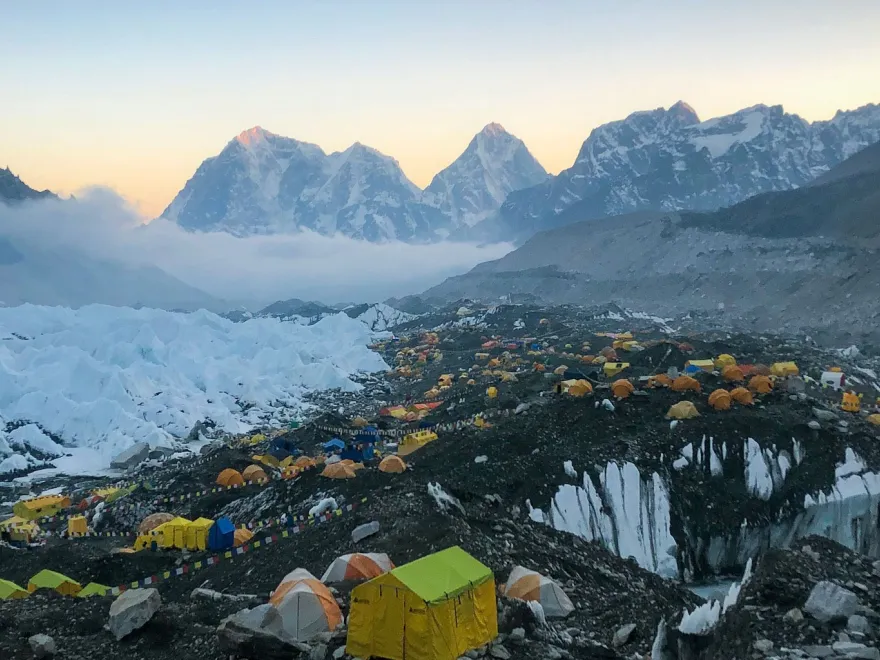
Today, you’ll be trekking through a relatively more comfortable trail. The rocky yet the straight path to Gorakshep takes a couple of hours. Once you arrive at Gorakshep, you prepare for the climb to the Everest Base Camp. The trail takes you pass rocky dunes and moraines. As you gain altitude, you begin to see the Khumbu Glacier and Icefall. Once you reach Everest Base Camp, you get to see a fantastic view of the landscape, and if possible, you will meet some mountaineers. Overnight stay in a tent.
You wake up before dawn and hike to Kalapatthar to see one of the best views of the mountains. Once you reach there, enjoy the picturesque sunrise views over Everest, Ama Dablam, Nuptse, Lhotse, Cho Oyu, etc. Then, you descend back to the base camp, pack up, and then retrace your steps back to Dingboche. Overnight stay at a lodge.
From here onwards, you leave the classic Everest Base Camp Trail and head towards Island Peak. After breakfast, you ascend through the rugged mountain terrain. En route, you get to enjoy splendid views of Everest, Cho Oyu, and Nuptse. You pass by several rustic villages and small settlement areas. The trail is relatively short, so you arrive at Chhukung in no time. Overnight stay at a lodge.
After enjoying a hearty breakfast, you head to the Island Peak Base Camp. The route is filled with moraines and gets steep as you gain altitude. Once you reach the base camp, you find a suitable spot to set up tents. It is essential to prepare your body before the climb, especially if it is your first time. So, with the help of the guides and staff, you will prepare for the climb. They will give you the basic guidelines for safety during the climb as well.
You wake up at 1-2 a.m. and start to prepare for the climb. It is better to start early because the midday winds can hamper the climb. With the help of the guides, you make your way through the snow and crevasses. Once you reach the summit, you get to see amazing views of the Khumbu region. After soaking in the view, you head back to the base camp and pack up. Then, you descend back to Chhukung for the overnight stay.
You have successfully climbed to the summit, and now it’s time to head back to lower elevations. From Chhukung, you walk past chortens and rustic villages. The terrain slowly changes, and you see the vegetation growing back. A steep descent takes you to Tyangboche for the overnight stay.
After breakfast, you head to pray in the Tyangboche Monastery. After that, you resume your trek. Most of the trail goes downhill, but there are some sections where you need to climb uphill as well. Enjoying the pleasant views of the mountains, you arrive at Namche Bazaar for overnight stay. Before dinner, you can explore the market area.
Today is your last day of trekking in the Khumbu region, so enjoy the surroundings as much as possible. You descend through the mixed forest of rhododendron, pine, and oak. Following the Dudh Koshi River, you walk past several villages. Once you cross Monjo, you have officially left the Sagarmatha National Park. After crossing a few suspension bridges, you arrive at Phakding. From Phakding, a sharp descent leads you to Lukla for overnight stay.
After a hearty breakfast, you head to the airport and board the plane that will take you back to Kathmandu. During the flight, enjoy the majestic aerial views of the mountains one last time. Once you arrive at the domestic airport in Kathmandu, our staff will take you to the hotel where you rest. Later, you join the team and staff for a farewell dinner.
Today is the last day of the trip. After the successful climb to Island Peak, you now head back to your home. As per your scheduled flight, our staff will drop you off at the airport. Make sure that you have all your belongings with you. Thank you for choosing to travel with us, and hope to see you soon. Have a safe flight!
The Everest Base Camp with Island Peak Trek is an 18-day adventure combining the classic Everest Base Camp journey with the exciting ascent of Island Peak at 6,189m. Organized by Everest Extreme Adventure, the itinerary takes trekkers through Namche Bazaar, Tengboche, Dingboche, Lobuche, and Gorakshep before reaching Everest Base Camp. The journey then continues toward Chhukung and Island Peak Base Camp for climbing preparation and the summit attempt.
This is a challenging trek and climbing expedition requiring good physical fitness, endurance, and mental preparation. The Everest Base Camp section involves several days of walking at high altitude, while Island Peak adds technical climbing, steep terrain, cold temperatures, and possible snow and ice conditions. Everest Extreme Adventure includes acclimatization days and climbing preparation to help participants adapt gradually and approach the summit safely.
Island Peak, also known as Imja Tse, reaches approximately 6,189 meters (20,305 feet) above sea level. It is significantly higher than Everest Base Camp and requires additional preparation and climbing skills. The ascent can involve steep sections, snow, ice, and the use of climbing equipment depending on current conditions. Everest Extreme Adventure provides appropriate guidance and training before the summit attempt.
Previous mountaineering experience is highly beneficial but does not necessarily mean you must have climbed a major Himalayan peak before. However, participants should be comfortable with strenuous trekking and high-altitude environments. Basic climbing techniques can be learned during the preparation period at Island Peak Base Camp. Everest Extreme Adventure provides climbing guidance, but participants should arrive with good fitness and a willingness to learn and follow professional instructions.
Daily trekking hours vary according to the route, altitude, terrain, and acclimatization schedule. Most trekking days involve approximately 3 to 8 hours of walking, while some sections can be longer. The itinerary includes rest and acclimatization days in Namche Bazaar and Dingboche. The Island Peak summit day is considerably more demanding and requires an early start, sustained effort, and careful pacing under the guidance of the climbing team.
Yes, acclimatization is an important part of the Everest Base Camp with Island Peak Trek. The itinerary includes dedicated rest and acclimatization days in Namche Bazaar and Dingboche, allowing trekkers time to adjust to increasing altitude. These days may include short exploratory hikes rather than complete inactivity. Everest Extreme Adventure follows a gradual ascent strategy, although individual responses to altitude vary and safety remains the priority.
Everest Extreme Adventure combines the Everest Base Camp experience with an exciting Island Peak climbing objective in one carefully structured itinerary. The company provides support with trekking logistics, permits, accommodation, acclimatization planning, climbing preparation, and local mountain guidance. Travelers also have the opportunity to experience Sherpa villages, Buddhist monasteries, dramatic Himalayan landscapes, and iconic viewpoints such as Kala Patthar while undertaking a memorable high-altitude adventure.
Spring and autumn are generally considered the most favorable seasons for this adventure. March to May usually offers good trekking and climbing conditions, while late September through November often provides clear skies and excellent mountain visibility after the monsoon. Weather at high altitude can change quickly, however, so the exact climbing conditions cannot be guaranteed. Everest Extreme Adventure can recommend suitable departure periods based on seasonal conditions.
The adventure starts with a flight from Kathmandu to Lukla, which normally takes around 35 minutes, subject to weather and flight operations. From Lukla, the majority of the journey is completed on foot along established Himalayan trails. At the end of the trek, the group returns to Lukla for the flight back to Kathmandu. Flight schedules can be affected by mountain weather, so some flexibility is recommended.
The Everest Base Camp with Island Peak Trek requires the relevant permits for entering the Everest region, including the Sagarmatha National Park entry permit and applicable local-area permit. Island Peak also requires a separate climbing permit. Requirements and fees may change according to government regulations and climbing seasons. Everest Extreme Adventure assists clients with the necessary permit arrangements and documentation as part of the expedition planning process.
Accommodation during the trekking portion is generally provided in local teahouses and trekking lodges. Rooms are usually simple, clean, and commonly arranged on a twin-sharing basis, while bathrooms may be shared, particularly at higher elevations. Facilities become more basic as the route climbs. During the Island Peak climbing section, camping arrangements may be required depending on the climbing plan and current mountain conditions.
Meals are available at teahouses and lodges along the trekking route, with common choices including dal bhat, rice, noodles, pasta, potatoes, soups, vegetables, eggs, porridge, pancakes, and other simple dishes. Food options can become more limited at higher elevations. Since trekkers need considerable energy, maintaining regular meals and hydration is important. Everest Extreme Adventure can also discuss dietary requirements before the trip.
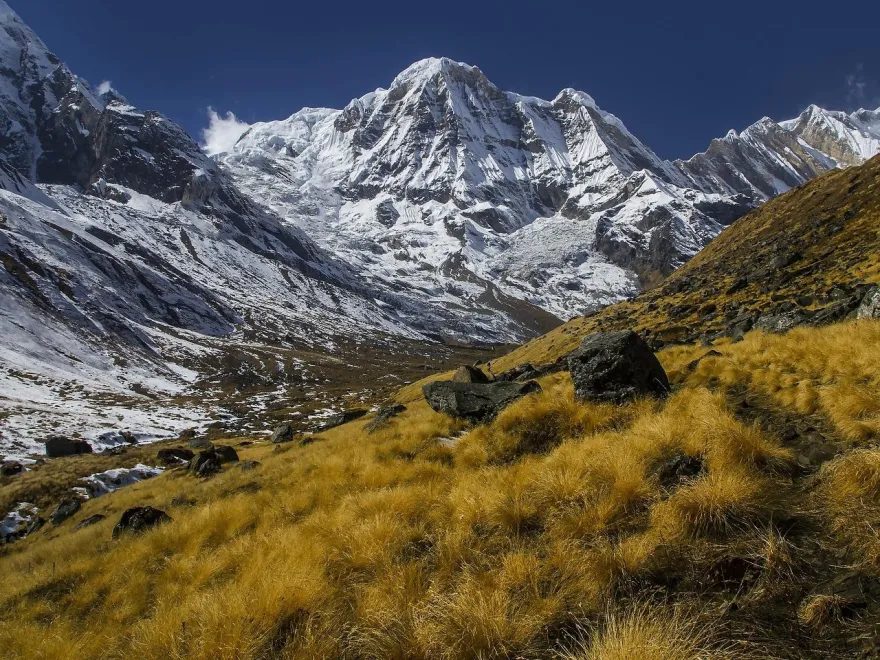
| No of people | Price per person |
|---|---|
| 1 - 1 | $1,999 |
| 2 - 4 | $1,775 |
| 5 - 9 | $1,755 |
| 10 - 15 | $1,735 |
| 16 - 20 | $1,715 |