Group Adventure Dates.  4.9 of 489 reviews
 4.8 of 232 reviews
4.9 of 489 reviews 4.8 of 232 reviews 
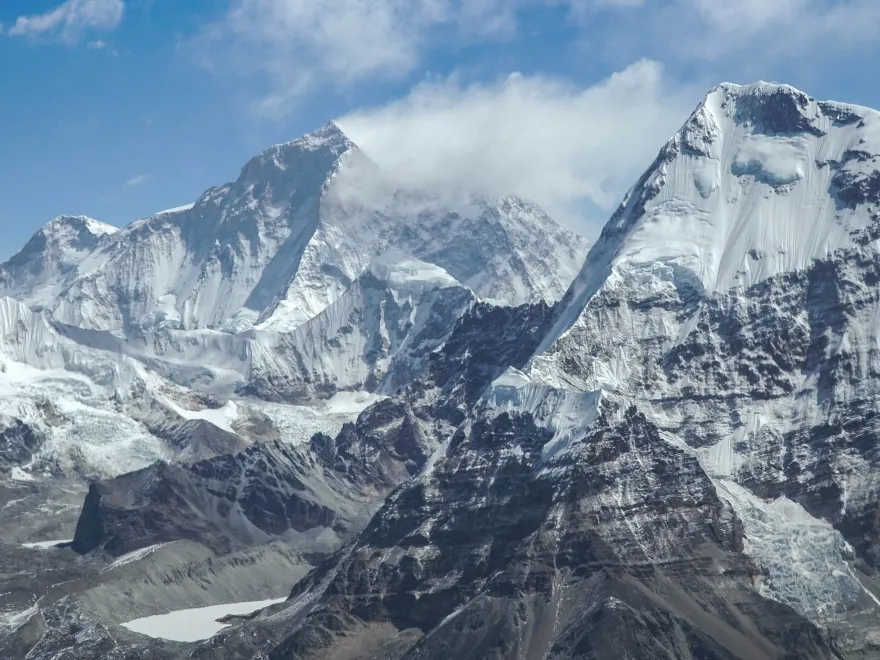
Join Everest Extreme Adventure for the thrilling Mt. Makalu Expedition, climbing the world's fifth-highest mountain at 8,463 meters. Experience remote Himalayan trekking, spectacular mountain scenery, challenging technical climbing, high-altitude acclimatization, and an unforgettable adventure in Nepal's magnificent Makalu Barun region.
Makalu is the most difficult Himalayan peak to climb. Among the Eight-Thousanders in Nepal, Makalu at 8,643 meters ranks as the fourth-highest mountain. Take on the PD+ (Scottish Grade III/IV) peak with many technical ascents such as steep pitches, knife-edge ridges, and rock/ice climb. Catch the majestic panorama some of the highest mountains on Earth Mount Everest, Lhotse, and Kanchenjunga.
Although an isolated peak, Makalu has two notable subsidiary summits, Kangchungtse or Makalu II (7678m) and Chomo Lonzo (7804m). You will climb the main mountain that was first summited on1955 by a French Expedition. The standard climb route follows the Northeast ridge that goes between the main summit and Kangchungtse peak. The 31-day window offers enough days for acclimatization, training, and ascent.
Mt. Makalu Expedition begins with a beautiful sightseeing tour of Kathmandu City. Prepare your documents and embark on a scenic flight to Tumlingtar City in Eastern Nepal. Indulge in an adventurous trek through the village of Mane Bhanjyang, Chichila, and Numa and enter Makalu Barun National Park. Witness the unique Himalayan flora and fauns inside the Park as you make your way towards Makalu Base Camp (4870m).
The high-altitude settlements of Tashigaon, Yangle Kharka, and Langmale Kharka comprise of the indigenous Rai, Sherpa, and Shingsawa (Bhotia) people. Spend a few days acclimatizing at the base camp. Your Sherpa guide will conduct intensive climbing training for days before actually embarking on the climb.
The first leg of the climb begins with an easy ascent to Camp I (6,100m). The trail leading from Camp I to Camp II (6600m) encounters many technical ascents. Camp III (7200m) to Camp IV (7600m) may need the use of ice-ax and Carabiner to walk through rock and ice. The approach for the summit begins at Camp IV using a fixed rope. Standing at 8,643 meters, you can catch the panoramic view of some of the highest peaks on Earth, Everest (8848m), and Lhotse (8516m) in the west and Kanchenjunga (8586m) in the east. Retrace your path and descend to Makalu Base Camp. After clearing the base camp, you’ll begin falling towards Tumlingtar and then head back to Kathmandu.
Book your Mt. Makalu Expedition with Everest Extreme Adventure. Our Sherpa guides and expedition staff have experience of over 15 years. Join our all-inclusive expedition package and enjoy the best service.
With careful preparation, experienced mountaineering leadership, and a strong commitment to safety, Everest Extreme Adventure aims to make the Mt. Makalu Expedition a professionally organized and memorable Himalayan climbing experience.
Choosing the right season is essential for a successful Mt. Makalu Expedition. At 8,463 meters, Makalu presents extreme environmental challenges, including powerful winds, freezing temperatures, heavy snowfall, and rapidly changing weather. The most suitable climbing periods generally occur during the spring season (April to May) and, less commonly, the autumn season (September to October). Spring is generally the preferred season for major Himalayan 8,000-meter expeditions because it offers a more favorable combination of weather patterns, climbing conditions, and summit opportunities.
During spring, temperatures gradually become more manageable at lower elevations, while longer daylight hours provide additional time for trekking and climbing activities. The expedition usually begins in Kathmandu before progressing through the Makalu Barun region toward Base Camp. Climbers use the early weeks to complete the approach trek, acclimatize to increasing altitude, and prepare equipment and supplies. The principal summit period is generally planned around May, although actual summit opportunities depend on weather forecasts, snow conditions, wind speed, route preparation, and the decisions of the expedition leadership.
Autumn can also offer clear skies and excellent visibility, particularly during the early part of the season. However, colder temperatures and changing snow conditions can make high-altitude climbing more difficult. Autumn expeditions therefore require careful assessment of seasonal conditions and the availability of a suitable climbing window. The remoteness of the Makalu region also makes weather forecasting, supply management, and contingency planning particularly important.
For the best possible experience, Everest Extreme Adventure recommends planning the expedition around a carefully selected climbing window rather than relying solely on fixed calendar dates. The itinerary includes several weeks for acclimatization, load ferries, route opening, and summit attempts, allowing the team to adapt its schedule to mountain conditions.
By choosing an appropriate season and maintaining a flexible climbing schedule, climbers can improve their chances of experiencing Makalu under suitable conditions. Nevertheless, no season can guarantee a summit, and the final decision to climb must always be based on safety.
The Mt. Makalu Expedition is an extremely demanding mountaineering undertaking intended for climbers with substantial experience on high-altitude mountains. Reaching 8,463 meters requires much more than physical fitness; participants must possess technical climbing skills, strong endurance, sound judgment, and the ability to function under severe environmental stress. The route involves prolonged exposure to thin air, sub-zero temperatures, steep snow and ice slopes, crevassed glacier terrain, and potentially dangerous weather. Climbers must also be prepared for the physical and psychological challenges of spending several weeks in a remote mountain environment.
The itinerary begins with a flight from Kathmandu to Tumlingtar, followed by a long road journey to Num at approximately 1,560 meters. The trekking approach then proceeds through Sedua, Tashi Gaon, Khongma, Mumbuk, Yangle Kharka, and Shershon before reaching Makalu Base Camp at approximately 4,870 meters. The route continues to Advanced Base Camp at around 5,600 meters, where the team prepares for the higher-altitude climbing phase. Scheduled acclimatization days are essential because ascending too quickly can increase the risk of altitude-related illness.
The main climbing phase occupies a substantial portion of the itinerary, allowing time for acclimatization rotations, carrying equipment to higher camps, preparing the route, and attempting the summit during an appropriate weather window. The descent follows the trekking route back toward the lower valleys before the team returns to Tumlingtar and flies to Kathmandu. Road conditions, flight schedules, weather disruptions, and the remote location of the expedition can affect the overall travel plan, so flexibility is important.
Everest Extreme Adventure can coordinate the planned transportation and expedition logistics according to the agreed package. Climbers should confirm exactly which flights, road transfers, porter services, climbing equipment, and personal expenses are included before booking.
Because Makalu is an 8,000-meter peak, participants should ideally have prior experience on technical Himalayan mountains and successful high-altitude climbing experience. Training should include cardiovascular endurance, strength, glacier travel, rope techniques, and familiarity with crampons, ice axes, and fixed-line systems. Appropriate medical screening and comprehensive travel and evacuation insurance are also essential. The itinerary is a planning framework, not a guarantee of reaching the summit or returning on an exact date.
Food and accommodation are important components of the Mt. Makalu Expedition because climbers need adequate nutrition, hydration, rest, and shelter throughout a prolonged period of trekking and high-altitude mountaineering. Everest Extreme Adventure coordinates the expedition's food and accommodation arrangements according to the itinerary, location, altitude, and services available along the route. The facilities range from hotels in Kathmandu to basic mountain teahouses and organized tented camps in the more remote areas.
In Kathmandu, climbers generally stay in a tourist-standard hotel, where private rooms, bathrooms, hot showers, and access to restaurants are usually available according to the selected package. This period allows participants to recover from international travel, complete sightseeing, check equipment, attend expedition briefings, and purchase any remaining supplies. During the trekking approach, accommodation is typically provided in local teahouses or lodges where available. These facilities offer a valuable opportunity to experience the hospitality and culture of mountain communities, although room standards and amenities become more basic as the trail moves farther into the wilderness.
Beyond the established trekking settlements, tented accommodation is generally necessary. Makalu Base Camp and Advanced Base Camp serve as the expedition's principal staging areas, with camping arrangements supporting the longer acclimatization and climbing period. During higher-camp rotations, climbers may use specialized mountaineering tents and expedition equipment designed for severe weather and extreme temperatures. Facilities at higher elevations are necessarily limited, and privacy, heating, electricity, and washing facilities should not be expected to match hotel standards.
Meals are planned to provide energy for demanding trekking and climbing activities. Along the trekking route, commonly available dishes may include dal bhat, rice, lentils, noodles, soups, potatoes, vegetables, eggs, bread, and other locally available foods. At Base Camp, expedition cooks or the designated catering team can prepare meals according to the agreed service arrangement. Higher up the mountain, climbers generally depend on compact, high-energy foods that are practical to prepare in cold conditions.
Climbers should inform Everest Extreme Adventure about allergies, dietary restrictions, and medical dietary requirements before departure. It is also advisable to carry personal snacks, electrolyte products, and any specialized nutrition needed during summit rotations. The precise number of included meals, accommodation category, and catering arrangements should be confirmed in the written package details.
Climbing Mt. Makalu requires official permits and administrative arrangements because the mountain lies in a protected Himalayan region and is among Nepal's regulated high-altitude climbing destinations. Permit requirements are an essential part of expedition planning, and all climbers must follow the applicable rules established by the Government of Nepal and the relevant authorities. Everest Extreme Adventure can assist with coordinating the required applications and documentation as part of the expedition's administrative preparation.
The principal authorization is the Mt. Makalu climbing permit, issued through the applicable Nepalese mountaineering authorities. The permit fee may vary according to the season, the regulations in force, and the current fee structure for the mountain. Additional arrangements may be required for trekking and access through the Makalu Barun National Park and its designated conservation area. The applicable park entry documentation, local administrative requirements, and any other mandatory permissions should be confirmed before the expedition begins.
The expedition operator generally coordinates the submission of climber details, passport information, photographs, required forms, and other supporting documents. Climbers should ensure that their passport remains valid for the required period and that their personal information matches the documents submitted for permits. Processing timelines can vary, so providing accurate documentation well before departure helps reduce the risk of administrative delays.
Because regulations and permit fees can change, climbers should obtain written confirmation of the current requirements for their specific expedition dates. They should also establish whether the package price includes climbing permits, national park entry fees, government royalties, liaison or administrative services, and other mandatory charges. Not every expedition package includes every expense, so checking these details before making a payment is important.
Everest Extreme Adventure can help climbers understand the documentation process and coordinate required arrangements in accordance with the applicable regulations. However, official authorization remains subject to approval by the relevant government authorities. Climbers should also arrange comprehensive insurance covering high-altitude climbing, emergency rescue, and medical evacuation, as these are separate from climbing permits.
Choosing a suitable expedition operator is an important decision when planning an ascent of Mt. Makalu. An 8,000-meter expedition involves complex logistics, substantial equipment requirements, extensive preparation, and careful decision-making in a potentially hazardous environment. Everest Extreme Adventure aims to support climbers through the different stages of the expedition, from initial planning and arrival in Kathmandu to the approach trek, Base Camp organization, higher-camp operations, summit attempt, and return journey.
One of the main advantages of a well-organized expedition is having a structured itinerary that allows time for acclimatization, preparation, and changes in climbing conditions. The 57-day program provides an extended schedule for the approach trek, rest periods, equipment checks, acclimatization rotations, load ferries, route preparation, and summit attempts. These activities are important on a remote mountain where climbers may need to wait for a suitable weather window or adjust their plans because of snow conditions and other environmental factors.
Everest Extreme Adventure can coordinate essential logistical services, including domestic transportation, trekking arrangements, accommodation, food provisions, permit administration, and the movement of expedition supplies. Depending on the selected package, additional services may include experienced climbing personnel, high-altitude support, specialized equipment, communication facilities, and emergency planning. Prospective climbers should review the written itinerary and service inclusions to understand exactly what support is provided.
Another important consideration is the operator's approach to safety and communication. Makalu demands disciplined climbing practices, suitable acclimatization, realistic summit planning, and the willingness to turn around when conditions become unsafe. Before booking, climbers should ask about the expedition leader's experience on 8,000-meter peaks, staff qualifications, oxygen systems, emergency evacuation procedures, weather forecasting, and the availability of medical and communication support.
Ultimately, the Mt. Makalu Expedition is an exceptional challenge for experienced mountaineers who want to attempt one of the world's highest and most technically demanding mountains. With careful preparation, realistic expectations, and well-coordinated logistical support, Everest Extreme Adventure aims to help climbers undertake this remarkable Himalayan journey with confidence. The summit can never be guaranteed, and the success of an expedition should always be measured by responsible decisions, team safety, and a successful return from the mountain.
The Mt. Makalu Expedition with Everest Extreme Adventure is a challenging 57-day Himalayan mountaineering journey to the summit of Mt. Makalu (8,463 m), the fifth-highest mountain in the world. The adventure begins in Kathmandu with sightseeing, expedition briefings, and equipment preparation, followed by a flight to Tumlingtar and a drive to Num. The trekking route passes through Sedua, Tashi Gaon, Khongma, Mumbuk, and Yangle Kharka before reaching Makalu Base Camp and Advanced Base Camp.
The expedition includes essential acclimatization days, high-altitude load carries, higher-camp preparations, route opening, and a summit attempt depending on weather and climbing conditions. After the climbing phase, the team descends through the beautiful Makalu Barun region and returns to Kathmandu via Tumlingtar. Everest Extreme Adventure coordinates expedition logistics, supporting climbers throughout this remarkable Himalayan adventure.
On arrival at Kathmandu Tribhuvan International Airport received by our staff and guide for transfer to your hotel in the heart of Kathmandu city. At the hotel check into your room, after getting refreshed join with other member of the group for briefing, provided by our guide and leader information of all important things that one should know to make your stay enjoyable. Includes information regarding the trek, climb, local cultures do's and don’ts.
Evening a group dinner in a nice Nepalese restaurants with folk culture program while you enjoy the dinner.
A day in Kathmandu, options for guided sightseeing tour around Kathmandu at places of interest. As the city is steeped with old monuments listed in World Heritage Sites, rest of the day preparation for the trek and climb to Phari Lapcha peak.
Today, you buy/rent the necessary items needed for the expedition at Thamel. If you want, we can arrange a short session where you can meet professional mountaineers, so that you know what to do.
Today we will fly to Tumlingtar from Kathmandu. This flight takes about 25 minutes. You will enjoy the scenic aerial views of mountains such as Ganesh Himal, Everst, Makalu and Kanchenjunga. Upon arrival at Tumlingtar Airport, we will descend towards Shawa Khola (a small river) from where you will view Chamolang Mountain at a distance while driving towards Mane Bhanjyang climbing uphill you will pass through terraced fields and local villages of Pangma and reach Bhotebas. This pretty village offers spectacular mountain views towards the north. Driving throug tiny local settlements and the rhododendron forest, we will reach Sakurate, where we will spend the night in a teahouse.
Another exciting trek begins today. We will trek downhill from Num and walk through a forest enjoying the birds chirping and finally we reach Lumbang. Further, we descend down to Arun River. Walking along the slippery path, we go across a suspension bridge and start climbing uphill and trek until we reach Sedua. For your kind information, Sedua is an entry point to Makalu Barun National park. Overnight in Sedua.
Today, we will continue our journey through the farmlands and mani walls. We will climb again the uphill above Ipsuwa and Kasuwa Rivers passing through Sherpa village of Navagaon and finally we will arrive in Kharsing Kharka. Today’s trek ends when we reach Tashi gaon. Overnight in Tashigaon.
Our trek begins early in the morning today. Leaving Tashigaon, we will walk through rhododendron and oak forest. The trail takes us through different pastures and lush green vegetation where we can see local animals grazing. The zigzag trail passes through stone steps and finally we reach Khongma, located atop the hill. Overnight in Khongma.
Leaving Khongma, we will pass through colourful forest and reach to the ridge with mani walls and prayer flags. You will be thrilled with the panoramic views of Kanchenjunga. We will trek past the Keke La pass (4,230m) and Tutu La pass (4,200m) before descending down through rhododendron forest to Mumbuk. Overnight at Mumbuk.
Today’s trek remains a bit challenging as we have to walk through the landslide prone area for about 3 hours after we leave Mumbuk. You will oversee Barun river from most of the points of this trek. Nevertheless, the panoramic views of mountains such as peak 6 (6,739m) and peak 7 (6,185m) will enthral you and you will not realize that you are trekking through the difficult trails. We continue walking until we reach Yanglekharka. Overnight in Yanglekharka.
Today, there is no trek. We need to acclimatize and prepare for the upcoming treks. YangleKharka is one of the best places to take rest. The view of mountains from YangleKharka is unbeatable. Explore around YangleKharka for proper acclimatization and prepare yourself for the challenging climb to Makalu summit. Overnight at YangleKharka.
Another exciting trek begins today. We walk upstream until we reach Nglekharka. You will be captivated by the views from NgleKharka. Further trek, leads you to the alpine meadow of RupakKharka and JhakKharka. Walking past waterfall, we will reach summer grazing land of Yak Kharka from where we will head west and walk through gravel area with breath-taking view of Lower Barun glacier and finally arrive in Sherson. Overnight at Sherson.
Walking along the eastern side of the valley today, we will enjoy the panoramic view of Mount Makalu. We will further descend to a small pass and further down to Makalu Base Camp walking through boulders. You will really feel blessed by the breathtaking view of the south face of Makalu Base Camp. Overnight at Makalu Base Camp.
The hardest part of our journey is about to begin and therefore, you will have to rest and acclimatize today. There are many view points to the right of our camp from where you will have a closer look of Mt. Makalu, Barun Pokhari, Lhotse and Everest. Those who still want to hike, can take a short hike to the green vegetation around and return to the Base Camp. Overnight in Makalu Base Camp.
Walking through the desolate area from lower Makalu Base Camp, we will reach to Advance Makalu Base Camp that exists at the snout of Barun glacier. We will place our camp nearby the glacial pond. We can climb a little higher than our camp for better view of Makalu. Return to Advanced Camp to spend the night.
We will spend the first couple of days at Advanced Base Camp. The guide will share Makalu Climbing strategy with us. We will climb to High Camp I and lower down to Base Camp. Rotation of camps help us in acclimatization.
through day 50 are dedicated in climbing Mt. Makalu. We will choose the normal route that progresses through southeast ridge. We will place 3 High Camps.
High Camp I and High Camp II
High Camp I is located at 6500m and High Camp II exists at 7300m. These two Camps are founded at the base of southeast ridge. We will cross glacier and pass through snow field and hanging ice fall. Basic Alpine climbing technique is enough to reach up to Camp II. We need to climb 35 to 45 degree slope.
High Camp III
High Camp III is located at the beginning of southeast ridge at 7900m.We need to climb 50 to 55 degree slope till we reach High Camp III.
Climb to Makalu Summit and Descend to Base Camp
Expect to climb 70 to 75degree slopes to reach to the summit. We will need help of fixed ropes. After enjoying spectacular views of mountains and surrounding from summit, we will return to base camp where we will celebrate successful climbing of Makalu.
Return trip begins today. We will clean Makalu Base Camp and return to YangleKharka via Sherson. The path is scenic with panoramic views of several mountains. Overnight at YangleKharka.
Return trail from YangleKharka to Mumbuk is easier as we will be following descending trail for most of the day. We will walk past rock fall and then the trail takes us through rock gully all the way to Mumbuk. Returning to Mumbuk, we will be greeted with green sceneries. Overnight at Mumbuk.
Leaving Mumbuk early in the morning, we will walk through rhododendron and fir forest. We need to cross Keke La, Shipton La Pass and Ghurung La Pass so that we can reach Khongma. The trail takes sharp descend from Khongma to TashiGaon where we will stay overnight.
From TashiGaon, we will lower down to Arun River and retrace the route to Seduwa. Walking through forest, we will lower down once again to river and climb through the opposite side of valley to reach Num where we will stay overnight.
After early morning tea, we will drive back to Tumlingtar through Mane Bhanjyang and stay there a overnight.
We will take flight back to Kathmandu from Tumlingtar. Once we reach domestic airport in Kathmandu, you will be transferred to hotel. Take rest. Stay overnight at your hotel.
A free and reserve day in Kathmandu as a contingency in case of flight delay and cancellation due to unfavorable bad weather conditions for flight to operate.
Which happens quite often even at the best time of the year, as Himalayan weather can be unpredictable sometimes, if all goes well according to our itinerary days enjoy the free day at leisure for individual activities and shopping souvenirs or join for an interesting tour of Patan and Bhaktapur cities well worth a visit.
Last day in Kathmandu and Nepal, as per your international flight schedule our staff transfer you to the airport for final departure homeward bound, after a wonderful adventure and great experience on Makalu Expedition
The Mt. Makalu Expedition is a challenging high-altitude mountaineering adventure to the summit of Mt. Makalu (8,463 m), the fifth-highest mountain in the world. Located in eastern Nepal, near the border with Tibet, Makalu is famous for its steep pyramid-shaped summit, technical climbing routes, and remote Himalayan landscapes. Everest Extreme Adventure organizes this expedition for experienced mountaineers seeking an extraordinary challenge involving trekking, acclimatization, glacier travel, and high-altitude climbing.
The Mt. Makalu Expedition itinerary organized by Everest Extreme Adventure is approximately 57 days long, including arrival in Kathmandu, preparation, trekking, acclimatization, climbing, descent, and departure. The schedule allows time to travel from Kathmandu to Tumlingtar, trek to Makalu Base Camp, establish Advanced Base Camp, and prepare for the summit attempt. The climbing period can vary depending on weather, route conditions, and individual acclimatization, so additional flexibility may be necessary.
The Mt. Makalu Expedition is extremely difficult and is intended for experienced mountaineers with strong physical fitness, technical climbing skills, and previous high-altitude experience. Climbers must be prepared for steep snow and ice slopes, glacier travel, crevasses, extreme cold, thin air, and prolonged periods at high altitude. Everest Extreme Adventure encourages participants to develop endurance, strength, and technical proficiency before departure. Successful completion requires careful preparation, responsible decision-making, and a willingness to abandon a summit attempt when conditions become unsafe.
The journey begins in Kathmandu, where climbers complete expedition briefings, equipment checks, and final preparations. The team then takes a domestic flight to Tumlingtar, followed by a road journey to Num, the starting point of the trekking route. The approach continues through mountain villages and increasingly remote landscapes before reaching Makalu Base Camp at approximately 4,870 meters. Everest Extreme Adventure coordinates planned transportation and trekking logistics, while recognizing that weather, road conditions, and flight disruptions can affect the schedule.
Makalu Base Camp is located at approximately 4,870 meters, while Advanced Base Camp is generally established at around 5,600 meters, depending on expedition conditions and camp placement. These locations provide essential staging areas for acclimatization, equipment management, and preparation for higher-altitude climbing. Everest Extreme Adventure incorporates these camps into the expedition itinerary to support the transition from trekking to mountaineering. Climbers must remember that altitude-related illness can occur at these elevations and that symptoms should never be ignored.
Yes, substantial previous mountaineering experience is strongly recommended for anyone considering Mt. Makalu. This is not a beginner's climbing expedition, as the mountain requires technical competence, excellent endurance, and experience managing the challenges of extreme altitude. Familiarity with crampons, ice axes, fixed ropes, glacier travel, and high-altitude camping is important. Everest Extreme Adventure recommends that prospective participants assess their experience honestly and discuss their climbing history with the expedition team before booking to determine whether they are adequately prepared.
Supplemental oxygen is commonly considered for expeditions to mountains above 8,000 meters because the oxygen available in the atmosphere decreases significantly with altitude. Its use, quantity, delivery systems, and backup arrangements depend on the climbing plan and individual requirements. Everest Extreme Adventure should confirm the oxygen strategy, regulator systems, and emergency provisions with prospective climbers before the expedition. Supplemental oxygen does not eliminate the risks of altitude-related illness, and climbers must continue to follow appropriate acclimatization procedures and the guidance of qualified expedition personnel.
The inclusions depend on the specific package offered by Everest Extreme Adventure. Depending on the agreed arrangements, services may include airport transfers, hotel accommodation, domestic flights, ground transportation, trekking and camping logistics, meals, climbing permits, expedition staff, and selected group equipment. Certain expenses, such as international flights, personal climbing equipment, insurance, personal purchases, tips, or additional accommodation, may be excluded. Before booking, climbers should request a detailed written itinerary and cost breakdown to understand which services are included and which expenses must be covered separately.
The Mt. Makalu Expedition is not recommended for beginners because it involves extreme altitude, technical climbing, prolonged exposure to harsh weather, and potentially life-threatening mountain hazards. Participants should ideally have successful experience on demanding high-altitude peaks and be comfortable using technical mountaineering equipment. Everest Extreme Adventure encourages aspiring climbers without sufficient experience to build their skills through progressive mountaineering objectives before attempting an 8,000-meter summit. Appropriate preparation improves readiness but cannot remove the inherent risks of climbing such a challenging mountain.
Following the summit attempt, climbers descend through the established high camps toward Advanced Base Camp and Makalu Base Camp, depending on the route and prevailing conditions. The expedition then retraces the trekking route through the Makalu Barun region toward Yangle Kharka, Mumbuk, Tashi Gaon, and Num, before traveling to Tumlingtar for the return flight to Kathmandu. Everest Extreme Adventure coordinates the planned return arrangements. Weather, fatigue, health concerns, and transportation disruptions may affect the schedule, so climbers should allow flexibility before onward international travel.
Everest Extreme Adventure offers expedition planning and logistical coordination for climbers preparing to attempt Mt. Makalu. Organizing an expedition of this scale requires attention to permits, transportation, accommodation, food supplies, acclimatization schedules, climbing equipment, and communication arrangements. The company can explain the proposed itinerary, discuss available services, and help participants prepare for the demanding journey. Before making a booking, climbers should confirm the expedition leader's experience, staff qualifications, safety procedures, oxygen arrangements, emergency plans, and package inclusions to ensure the expedition meets their expectations and requirements.
Climbers require specialized equipment suitable for an 8,000-meter Himalayan expedition. Essential items generally include insulated high-altitude clothing, mountaineering boots, crampons, an ice axe, a climbing harness, a helmet, suitable gloves, goggles, a sleeping bag rated for extreme cold, and a technical backpack. Depending on the package, some group equipment and climbing supplies may be provided by the operator. Everest Extreme Adventure can advise participants about equipment requirements, but climbers should confirm the complete gear list and personal equipment responsibilities before departure.
Comprehensive travel and mountaineering insurance is essential for the Mt. Makalu Expedition. The policy should explicitly cover high-altitude mountaineering up to the planned elevation, emergency medical treatment, helicopter evacuation where available, and repatriation. Ordinary travel insurance may exclude climbing above certain altitudes or participation in technical mountaineering activities. Everest Extreme Adventure recommends verifying policy conditions carefully before traveling to Nepal. Climbers should also understand that rescue operations depend on weather, location, available resources, and operational feasibility, so evacuation cannot always be immediate.
Spring, particularly April and May, is generally the preferred season for attempting Mt. Makalu because conditions may provide a suitable window for high-altitude climbing. Autumn, particularly September and October, can also be considered, although colder temperatures and changing snow conditions may affect the expedition. Everest Extreme Adventure recommends selecting expedition dates carefully and maintaining flexibility throughout the climbing period. Weather forecasts, wind speeds, snowfall, and route conditions determine when a summit attempt is appropriate.
Weather conditions on Mt. Makalu can change rapidly, with strong winds, snowfall, extreme cold, and poor visibility affecting climbing safety. The expedition schedule includes an extended climbing period to allow time for acclimatization, load carries, route preparation, and potential summit opportunities. If conditions become unsuitable, the team may postpone the summit attempt or decide not to climb. Everest Extreme Adventure emphasizes that safety must take priority over reaching the summit. Climbers should understand that no operator can guarantee favorable weather or summit success.
Climbers need an official Mt. Makalu climbing permit and applicable entry authorization for Makalu Barun National Park. Additional administrative requirements may apply according to current Nepalese regulations and the expedition arrangements. Everest Extreme Adventure can assist with coordinating permit applications, collecting necessary documentation, and explaining the relevant fees. Climbers should provide valid passport details and other requested documents in advance. Permit costs and inclusions should be confirmed in writing because government regulations, fees, and administrative requirements may change.
Accommodation varies throughout the Mt. Makalu Expedition because the route travels from developed urban areas into remote mountain terrain. In Kathmandu, climbers generally stay in hotels according to the selected package. During the trekking approach, local teahouses or lodges may be available in established settlements. At Makalu Base Camp, Advanced Base Camp, and higher camps, tented accommodation is generally necessary. Everest Extreme Adventure can coordinate accommodation according to the agreed itinerary, but facilities become increasingly basic at higher elevations.
Food arrangements depend on the location and the services included in the expedition package. In Kathmandu and along the trekking route, climbers may enjoy meals such as dal bhat, rice, noodles, soups, potatoes, vegetables, eggs, and bread. At Base Camp, expedition catering may provide meals designed to support high-altitude activity. During higher-camp rotations, compact and energy-rich foods are typically required. Everest Extreme Adventure can discuss dietary preferences and restrictions in advance, although specialized food availability depends on transportation and supply limitations.