Group Adventure Dates.  4.9 of 489 reviews
 4.8 of 232 reviews
4.9 of 489 reviews 4.8 of 232 reviews 
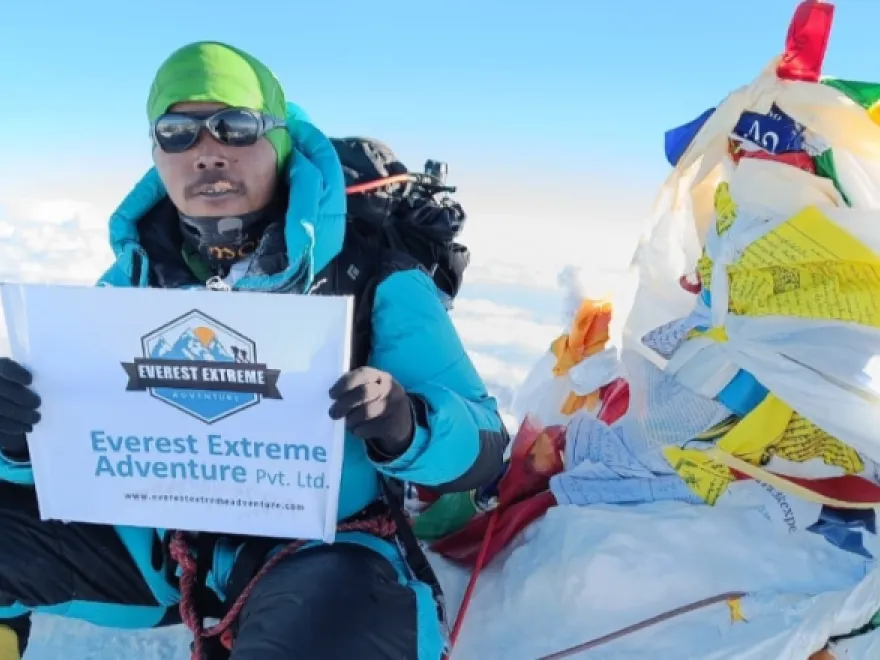
The Mount Everest Expedition with Everest Extreme Adventure is an extraordinary journey through the Himalayas, combining scenic mountain trekking, Sherpa culture, acclimatization, and technical climbing. Experience breathtaking landscapes, Everest Base Camp, and the ultimate challenge of reaching the world’s highest summit.
The trip begins in Kathmandu as you prepare for the Everest Expedition, including gears and other equipment. A short and scenic flight takes you to Lukla Airport. Then, your trek begins as you trek past Phakding and enter the Sagarmatha National Park. Further, you reach Namche and visit nearby villages to adapt to the altitude. The trek continues as you go past Tengboche and Pangboche to reach Dingboche. Here, you will spend an extra day and head north to Thukla. Then, you continue along the Khumbu Glacier and reach the Everest Base Camp.
As the ascent to reach the top of Mt. Everest begins, you head to the Camp 1 at 6400 meters. As you climb across snowy walls and crevasses, you head to the Camp 2. This camp is located at the foot of Mt. Lhotse at an altitude of 6750 meters. As you begin to use mountaineering gears, you ascend to 7100 meters. Next, you head to the final camp before reaching the top of Mt. Everest at Camp 4. Wind, snow, unpredictable weather, and low oxygen are prevailing as you head to the top of the world. Finally, the top offers a sublime view of the Everest and Makalu ranges. The return trip sees you retrace your steps back to Lukla.
Mount Everest Expedition is one of the most challenging trips in Nepal. Thus, it is a must that climbers have ample training and excellent physical condition. Autumn and spring are the ideal time for Everest Expedition.
The best season for a Mount Everest Expedition is generally the spring climbing season, particularly April and May, when climbers traditionally benefit from a comparatively favorable combination of weather, temperatures, and high-altitude climbing conditions. The famous spring summit period usually follows months of preparation and acclimatization, with teams waiting for suitable weather and route conditions before making their summit attempts. For this reason, the expedition itinerary includes a long climbing period rather than guaranteeing a particular summit day.
Autumn, especially October and November, is another important period for trekking in the Everest region because the weather is often stable and mountain visibility can be excellent. However, Everest's primary commercial summit season is generally spring, while the higher mountain becomes considerably more challenging outside established climbing windows. Conditions at extreme altitude can change rapidly, so even during the preferred season, climbers must be prepared for cold temperatures, strong winds, snowfall, and delays caused by weather.
Choosing the right season is only one part of expedition planning. Climbers should also consider their previous mountaineering experience, physical conditioning, acclimatization strategy, personal schedule, and tolerance for prolonged exposure to extreme altitude. Everest Extreme Adventure can incorporate the appropriate season into the overall expedition planning, while climbers should remain flexible because mountain conditions ultimately determine safe movement and summit opportunities.
Mount Everest is an extremely difficult and technically demanding expedition and should not be considered an ordinary trekking adventure. Climbers face extreme altitude, low oxygen levels, severe cold, strong winds, crevasses, steep terrain, unpredictable weather, and prolonged physical and psychological stress. The route from Lukla to Base Camp provides progressive acclimatization, but reaching Base Camp is only the beginning of the actual high-altitude climbing challenge. The expedition's long climbing period allows teams to prepare for higher elevations and wait for appropriate conditions.
A successful Everest expedition requires substantially more than physical fitness. Climbers need previous experience with high-altitude mountaineering, familiarity with crampons, ice axe techniques, fixed ropes, glacier travel, and appropriate expedition equipment. Transportation also plays a significant role. The standard itinerary begins with a scenic flight from Kathmandu to Lukla, followed by trekking on foot through the Khumbu region. After completing the expedition, climbers retrace much of the route back to Lukla and take a flight to Kathmandu.
Because of the expedition's difficulty, proper preparation is essential. Climbers should undertake endurance and strength training well before departure and obtain appropriate high-altitude climbing experience. Everest Extreme Adventure can help coordinate the logistical side of the expedition, but every participant should understand that Everest remains a serious undertaking in which conditions can change rapidly, and no summit outcome can be guaranteed.
Food and accommodation are important components of maintaining energy, recovery, and morale throughout the Everest Expedition. During the trekking approach, climbers typically stay in teahouses or lodges in settlements along the Khumbu route, including Phakding, Namche Bazaar, Thyangboche, Dingboche, Lobuche, and Gorakshep. Accommodation at these elevations is generally simple and designed for trekkers rather than luxury travelers. As the expedition moves higher, facilities become increasingly basic because transportation and supplies become more difficult and expensive.
During the Base Camp and climbing phases, accommodation changes from teahouse-style lodging to expedition camps. At Base Camp, climbers normally stay in organized tents and use designated dining and common areas. Meals are planned to provide adequate calories and carbohydrates while also offering protein, fats, fluids, and other nutrients needed for strenuous activity. Food availability can become more limited at higher camps, making careful logistical planning essential.
Everest Extreme Adventure can coordinate expedition food and accommodation according to the planned itinerary and climbing logistics. Nevertheless, climbers should expect simple facilities rather than hotel-level comfort, particularly in the upper Khumbu and at high camps. Personal preferences, dietary restrictions, and special nutritional requirements should be communicated during expedition preparation so that suitable arrangements can be considered in advance.
Permits and official documentation are essential for climbing Mount Everest in Nepal. Unlike a normal Everest Base Camp trek, a summit expedition involves specialized mountaineering permissions, environmental and administrative requirements, and other documentation applicable to an organized expedition. The exact permits, fees, regulations, and procedures can change, so climbers should confirm the current requirements with the relevant Nepalese authorities and their expedition operator before departure.
In addition to the Everest climbing permit, expedition members generally need the appropriate documentation for entering Nepal and traveling through the Everest region. The approach to Base Camp also passes through the protected Khumbu area, where applicable trekking or conservation-related fees and registrations may be required. Expedition operators normally assist with the administrative process, ensuring that required applications and documentation are prepared before the team begins its journey.
Everest Extreme Adventure can support climbers with expedition logistics and permit-related coordination as part of the preparation process. Because government regulations, fees, procedures, and seasonal requirements can be updated, climbers should request the latest permit information when booking their expedition. Proper documentation should be completed before entering the climbing phase so that administrative issues do not unnecessarily disrupt the expedition schedule.
Choosing an Everest expedition operator is an important decision because the journey involves complex logistics, high-altitude planning, transportation, accommodation, food, permits, climbing support, acclimatization, and emergency preparedness. Everest Extreme Adventure focuses on organizing the expedition around a structured itinerary that allows climbers to progress gradually from Kathmandu to Everest Base Camp before entering the extended summit-climbing period. The 64-day program provides considerable time for preparation, acclimatization, climbing activities, weather-related flexibility, and descent.
The itinerary also provides a balanced progression through the Khumbu region rather than attempting to reach high elevations too quickly. Rest and acclimatization days at Namche Bazaar and Lobuche are incorporated before the Base Camp and summit phases. Following the climbing period, the itinerary includes a controlled descent through Dingboche, Tyangboche, Namche Bazaar, and Lukla, followed by a return to Kathmandu. This structure is intended to give the expedition sufficient time for the realities of high-altitude mountaineering rather than treating Everest as a short, fixed-date trip.
An Everest expedition demands commitment, patience, preparation, and respect for the mountain. Everest Extreme Adventure aims to make the logistical side of this extraordinary journey more organized so climbers can focus on preparation, acclimatization, teamwork, and the climbing challenge itself. The mountain ultimately determines the outcome, however, and safety should always take priority over reaching the summit. With appropriate experience, training, equipment, preparation, and a responsible expedition strategy, climbing Mount Everest can become one of the most remarkable achievements of a mountaineer's life.
About Us
At Everest Extreme Adventure, we are a team of highly professional staff with great resources. Also, we have various trips similar to the Mount Everest Expedition across Nepal. Moreover, we also allow you to modify the itinerary as per your travel wishes.

The 64-day Mount Everest Expedition with Everest Extreme Adventure begins in Kathmandu with preparation, briefing, and expedition arrangements before a scenic flight to Lukla. The journey continues through Phakding, Namche Bazaar, Tyangboche, Dingboche, Lobuche, and Gorakshep, following the classic Everest route while allowing essential acclimatization and rest days. Climbers gradually gain altitude and prepare physically and mentally for the demanding summit phase.
From Everest Base Camp, the expedition enters an extended climbing period, allowing flexibility for acclimatization, route preparation, weather conditions, and summit attempts. After completing the climbing period, the team descends through Lobuche, Dingboche, Tyangboche, Namche Bazaar, and Lukla before flying back to Kathmandu. The final days include leisure and sightseeing before international departure.
The expedition starts with your arrival at Tribhuvan International Airport, Kathmandu. Our staffs will warmly you greet you and guide you to your hotel. You refresh and meet them again for dinner. Over dinner, you will discuss the details of the trip.
We will need at least two days to prepare documents and proper briefing regarding the expedition. After filling out the necessary personal details, our staff will handle the rest of the administrative work. Then licensed mountaineers will instruct you on the dos and don’ts for the trip. They will also share crucial tips.
After an early breakfast, you head to the domestic airport to catch a first flight to Lukla. The plane heads east, and you get to see spectacular views of the landscape. The 40 minutes flight will be entertaining as you view the hills and mountains. In Lukla, you meet the local guides and porters who will accompany this expedition. After resting for a while, you start your trek along the banks of the Dudh Koshi River. After crossing it, you ascend to Phakding for an overnight stay at the teahouse.
Today, you head to the famous Sherpa town, Namche Bazaar. The trek starts after breakfast, and you start to cross several suspension bridges. After passing several settlement areas, you arrive at Monjo. From Monjo, you enter Sagarmatha National Park, so you need to show your permits here. The trail then starts to go uphill, and after crossing Namche Hill, you arrive at Namche Bazaar for an overnight stay at the lodge.
Since you’ll be going to higher elevations, it is essential to acclimatize to it. The best way is the actively spend the day walking around. After breakfast, you hike up to Sherpa Culture Museum and learn more about the ethnic community and their culture. Then, you head to Tenzing Norgay Memorial and then hike to Syangboche hill from where you can see beautiful panoramas of Everest, Cho Oyu, Lhotse, and Nuptse.
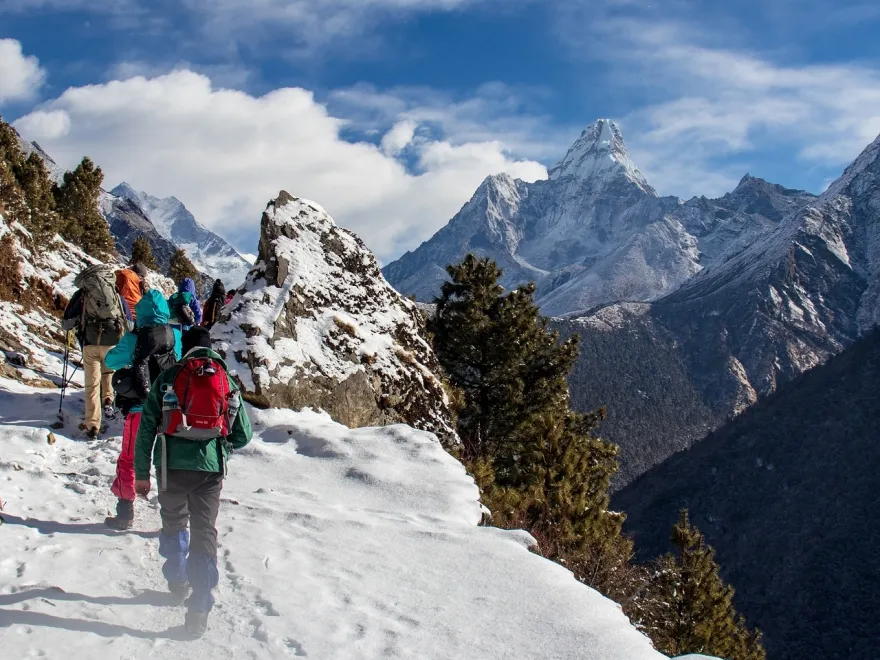
After breakfast, you walk the trail that goes along the Dudh Koshi River. En route, you get to see amazing views of Everest, Ama Dablam, Lhotse and many more. The trail winds through the various village, and once you arrive at Phunke Tenga, you descend sharply and cross the Dudh Koshi River. The path then goes through a forest filled with rhododendron and pines, and you finally reach Tyangboche. You visit the famous monastery here and stay overnight at lodge.
After breakfast, you descend to Imja Khola and slowly go uphill towards Pangboche. The trail today has stunning views of Ama Dablam. You walk past many Mani walls and monasteries. Then the trail goes through the thick forest of pine and thorny juniper bushes. Once you see signs of agriculture, you know that Dingboche is near. Overnight stay at the teahouse.
The trail goes north, and you walk past Mani walls. Today, you can see spectacular views of Ama Dablam, Nuptse, Kongma Tse, and Pheriche village. Once you arrive at this village, you head to Dughla. Enjoying the views of Everest and Mt. Pumori, you arrive at Lobuche for overnight stay.
Today is the last day to acclimatize. After breakfast, you hike up to the nearby hills and enjoy the panorama of the mountains and terrain. You can also interact with the local people to know more about Sherpa culture and traditions.
Finally, you start to head towards Everest. The trail today goes along rocky and steep terrain. Walking along icy ponds and glaciers of Khumbu Glacier, you trek to Gorakshep, which is the relatively flat land right below Kala Patthar. After a few hours of ascending the route, you find a suitable place to set up tents. Then, you head to Kala Patthar to observe the scenic views of the Khumbu region. Overnight stay at Gorakshep.
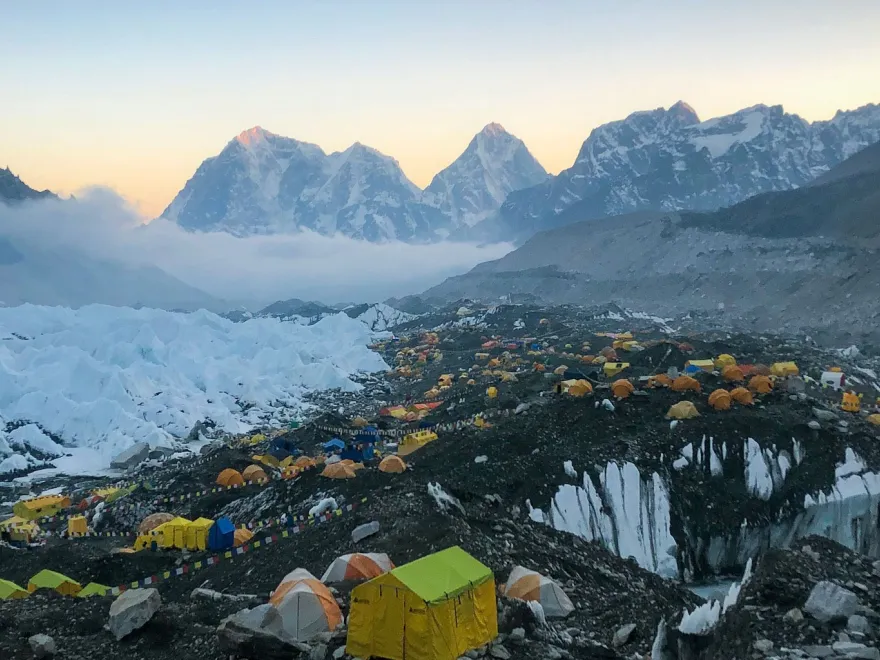
After breakfast and cleaning up, you head to the Base Camp. The route is filled with crevasses of Khumbu Glacier, so you need to be careful. Walking along icy trails and moraines, you arrive at the Base Camp and set up tents for overnight stay.
Today, your journey to the top of the world will start. It will take about one and a half months for you to reach to the top and return to the Base Camp. There will be four camps ( Camp 1, 2,3 and 4 )on the journey to the summit. Atop the mountain, view the majestic sight of the surroundings as you celebrate your victory. Get ready for your return trek.
After the vigorous and exciting climb, you head back to the Base Camp. There, you rest for a while and then descend to Dingboche via the route you took to ascend. Overnight stay at the lodge at Dingboche.
Today, you head to Tyangboche. En route, you can see amazing views of the mountain you summited. Once you reach Tyangboche, you can visit the local yak cheese factory. Overnight stay at the lodge.
Today, you head back to the hustle and bustle of Namche Bazaar. The descend takes lesser time in comparison to the time you took to ascend. After passing by several villages, you arrive at Namche Bazaar for overnight stay.
Today is the last day you trek in the Khumbu region. You retrace your steps and arrive at Lukla by afternoon. Then, you join the local staff for a farewell dinner and celebrate your success. Overnight stay at the lodge.
After a long journey, you finally head back to Kathmandu. You board the early flight and enjoy aerial views of the snow-clad mountains for the final time. In Kathmandu, our staff will receive you warmly and congratulate you on your great feat. Then, you head to the hotel and rest.
Today is your free day so you can spend it however you like. You can either go for souvenir shopping or relax at a café/spa. We can also arrange sightseeing to place you want to visit. For this, you need to inform us of one-day prior. In the evening, you join our staff and enjoy the farewell dinner.
After the successful ascent to the top of the world, Mount Everest ( 8848.86 m) you will return to your own country with the great memories that lasts long.
The Mount Everest Expedition with Everest Extreme Adventure is a long-duration Himalayan mountaineering adventure designed for experienced climbers aiming to reach the summit of Mount Everest. The journey follows a gradual route from Kathmandu to Lukla, through Phakding, Namche Bazaar, Tyangboche, Dingboche, Lobuche, and Gorakshep before reaching Everest Base Camp. The itinerary includes acclimatization, preparation, climbing, and descent.
The planned Mount Everest Expedition itinerary with Everest Extreme Adventure takes approximately 64 days, beginning with arrival in Kathmandu and ending with international departure. The schedule includes preparation and briefing days, trekking to Everest Base Camp, an extended summit-climbing period, descent to Lukla, and return to Kathmandu. The long duration provides valuable flexibility for acclimatization, weather conditions, route preparation, rest, and summit opportunities.
The Mount Everest Expedition is an extremely challenging high-altitude mountaineering adventure requiring excellent physical fitness, mental preparation, technical climbing ability, and previous high-altitude experience. Climbers encounter low oxygen, freezing temperatures, steep terrain, glaciers, crevasses, strong winds, and rapidly changing weather. Participants should be properly trained and equipped before joining the expedition with Everest Extreme Adventure.
The expedition reaches extreme elevations, with Everest Base Camp situated at approximately 5,364 meters, while the summit of Mount Everest is approximately 8,848.86 meters above sea level. As altitude increases, oxygen availability decreases significantly, making acclimatization essential. Everest Extreme Adventure incorporates acclimatization and rest periods into the itinerary to help climbers gradually adapt to the increasing elevation.
The expedition begins in Kathmandu, where climbers complete preparation, documentation, equipment checks, and expedition briefings. After the initial arrangements, the team takes a scenic flight toward Lukla and begins trekking through the Khumbu region. This gradual approach passes through important settlements such as Phakding, Namche Bazaar, Tyangboche, Dingboche, Lobuche, and Gorakshep before reaching Everest Base Camp.
The approach to Everest Base Camp combines air travel and trekking. Climbers generally fly from Kathmandu to Lukla, then continue on foot through the Khumbu Valley. The trekking route passes through scenic mountain villages, suspension bridges, forests, valleys, and high-altitude landscapes. Everest Extreme Adventure follows a gradual itinerary that includes rest and acclimatization days before climbers reach the higher elevations.
Yes, substantial mountaineering and high-altitude experience is strongly recommended for anyone attempting Mount Everest. Everest is not a beginner-level climbing destination. Climbers should be familiar with crampon use, ice axe techniques, fixed ropes, glacier travel, climbing equipment, and high-altitude conditions. Everest Extreme Adventure can provide expedition coordination and support, but participants are responsible for arriving with the required experience, training, fitness, and preparation.
Everest Extreme Adventure offers a structured expedition itinerary covering preparation in Kathmandu, the trek to Everest Base Camp, acclimatization, an extended climbing period, and the descent back through the Khumbu Valley. The company focuses on expedition logistics, accommodation, food arrangements, transportation, documentation, and overall trip coordination. With careful preparation and responsible decision-making, climbers can focus on their ultimate Everest goal while respecting the mountain and prioritizing safety throughout the expedition.
The primary climbing season for Mount Everest is generally spring, especially April and May, when conditions can provide suitable opportunities for summit attempts. Autumn is also a popular season for trekking in the Everest region. However, mountain weather is unpredictable, and summit success cannot be guaranteed. Everest Extreme Adventure plans the expedition with flexibility because climbers may need to wait for an appropriate weather window.
Climbing Mount Everest requires official permits and documentation under Nepal's prevailing mountaineering regulations. Depending on current government requirements, climbers may also need appropriate Nepal entry documentation, regional registrations, conservation-related fees, and expedition paperwork. Everest Extreme Adventure assists with the necessary expedition arrangements and permit coordination. Since regulations, fees, and procedures can change, climbers should confirm the latest requirements before departure.
During the trekking section, climbers generally stay in teahouses or mountain lodges along the Everest route. Accommodation becomes increasingly basic as the altitude rises. During the Base Camp and climbing phases, expedition members stay in organized tents and expedition camps. Everest Extreme Adventure coordinates accommodation according to the expedition itinerary, while climbers should understand that facilities at high altitude are considerably more basic than standard hotels.
Food during the expedition is arranged to provide the energy required for demanding trekking and climbing activities. Meals generally include carbohydrate-rich foods, protein sources, vegetables, soups, hot drinks, and other suitable items available along the route. At higher elevations, food choices become more limited because of transportation and logistical challenges. Everest Extreme Adventure coordinates expedition meals while considering the requirements of high-altitude activity.
| No of people | Price per person |
|---|---|
| 1 - 1 | $1,999 |
| 2 - 4 | $1,775 |
| 5 - 9 | $1,755 |
| 10 - 15 | $1,735 |
| 16 - 20 | $1,715 |
| No of people | Price per person |
|---|---|
| 1 - 1 | $6,050 |
| 2 - 4 | $5,700 |
| 5 - 9 | $5,650 |
| 10 - 15 | $5,600 |
| 16 - 20 | $5,550 |