Group Adventure Dates.  4.9 of 489 reviews
 4.8 of 232 reviews
4.9 of 489 reviews 4.8 of 232 reviews 
Discover the remote beauty of Nepal with the 19-day Dolpa Trek by Everest Extreme Adventure. Explore turquoise Phoksundo Lake, traditional Tibetan-influenced villages, ancient monasteries, and breathtaking Himalayan landscapes while crossing challenging high mountain passes for an unforgettable cultural and wilderness adventure.
Dolpo Trek takes you to the off-beaten trail of the Dolpa Region located in Western Nepal. Shadowed by Mt. Dhaulagiri (8163m), the sixth-highest peak in Nepal, most of the Dolpa region falls under the rain-shadow area. Explore the unique confluence of Tibetan-Buddhism and Bon cultures, and witness the ancient traditions of the Dolpali tribe.
Dolpa divides into two geographical regions: Upper Dolpo and Lower Dolpo. Lower Dolpo connects to other cities of Nepal through air transportation. However, Upper Dolpo remains utterly secluded from the rest of the world. One of the remote regions, it was opened for trekking as recent as 1989. Indulge in two weeks of real trekking experience inside a distant destination of Nepal. Enjoy a rare opportunity to witness the turquoise-colored lake of Phoksundo.
Unearth the mysteries of Dolpo beginning with the arrival in Kathmandu. After preparing necessary documents, you’ll travel 367km west to the Terai town of Nepalgunj. A short air commute will take you up north to Juphal Town that connects the Dolpo region with the rest of Nepal. You’ll embark on an hour-long flight to Nepalgunj and then catch a short flight north to Juphal. Begin trekking along the mud-houses towards Dunai. After getting your permits checked, you’ll advance through scenic Lower Dolpo and walk past Tarakot, Laina Odar, Nawarpani, and Dho Tarap to Numa La Base Camp. Most of the trail lies inside the pristine Shey Phoksundo National Park. If you’re lucky, you will witness some of the rare wildlife, including snow leopard, Himalayan Thar, Himalayan Blue Sheep, and Musk Deer.
Begin climbing the treacherous Numa La Pass (5310m), followed by another high pass of Baga La (5170m). The trail descends along the lush forested path towards Phoksundo Lake. Phoksundo is an alpine freshwater lake located at the heart of Shey Phoksundo Park. Witness the turquoise-colored lake and the surrounding Buddhist stupas. Make a short hike to the Monastery located atop the cliff. Retrace your path back to Juphal via Chhepka village. Fly back to Kathmandu via Nepalgunj.
Indulge in a scenic 18 days Dolpo Trek with Everest Extreme Adventure. We run successful treks throughout Nepal and Tibet. Consider joining our fixed departure or book a private trip. Our full-board package offers meals, transportation, guide, staff, and logistical support.
Choosing the right season is essential for enjoying the Dolpa Trek safely and comfortably. Because the itinerary crosses high-altitude passes above 5,000 meters and includes remote mountain trails, weather conditions can significantly influence the trekking experience. The best periods are generally spring, from March to May, and autumn, from September to November. During these seasons, trekkers can often enjoy clearer mountain views, relatively stable weather, and favorable conditions for exploring the rugged landscapes of Dolpo.
Spring is an attractive season for trekkers who appreciate changing mountain scenery, fresh vegetation at lower elevations, and increasingly pleasant daytime temperatures. As winter conditions gradually ease, trekking routes become more accessible, although snow may remain on the higher passes, particularly early in the season. Trekkers should be prepared for cold mornings and evenings, changing temperatures, and possible delays on domestic flights to Juphal.
Autumn is another excellent period, particularly from late September through October. The monsoon season has generally passed, visibility can be excellent, and the surrounding mountains often appear especially dramatic beneath clear skies. Autumn is a popular choice for travelers seeking panoramic Himalayan views and suitable conditions for crossing Numa La and Baga La passes. However, temperatures can fall considerably at higher elevations as the season progresses, and early snow is possible.
Dolpo lies in the rain-shadow region of the Himalayas, meaning that some parts receive less monsoon rainfall than many other trekking destinations in Nepal. Nevertheless, this does not guarantee completely dry conditions or reliable flights. Weather at high passes and in remote airstrips can change quickly, so flexibility remains important.
At Everest Extreme Adventure, we recommend selecting departure dates according to current trail conditions, local weather forecasts, and domestic flight availability. Our team can help travelers choose a suitable trekking window and prepare for the environmental challenges of this remote Himalayan adventure.
The Dolpa Trek is a challenging high-altitude adventure designed for trekkers with good physical fitness, endurance, and a willingness to travel through remote Himalayan terrain. The 19-day itinerary includes several consecutive days of walking, steep ascents and descents, rocky trails, and two demanding high mountain passes. Numa La Pass reaches approximately 5,310 meters, while Baga La Pass reaches approximately 5,170 meters. At these elevations, oxygen availability is significantly reduced, making acclimatization, a steady walking pace, and proper preparation essential.
Daily trekking durations vary throughout the itinerary, with many stages requiring approximately four to seven hours of walking. Some sections may take longer depending on weather, trail conditions, individual fitness, and altitude. The trek includes an acclimatization day around Dho Tarap before proceeding toward Numa La Base Camp. Although this rest day is valuable, it does not eliminate the risk of altitude sickness. Trekkers should recognize symptoms such as headaches, nausea, dizziness, unusual fatigue, and breathlessness at rest, and must inform their guide if they feel unwell.
The journey also involves several domestic flights. Travelers initially fly from Kathmandu to Nepalgunj, generally staying overnight before taking a flight to Juphal, the principal gateway for the trek. Flight schedules are highly dependent on weather and operating conditions. After completing the trekking route, travelers return to Juphal and fly to Nepalgunj, followed by a connecting flight to Kathmandu when available. The itinerary includes a buffer day in Kathmandu to help accommodate delays or cancellations.
Ground transportation and baggage arrangements should be confirmed before departure. Small aircraft serving remote mountain airports may have strict baggage-weight limits, and flight schedules can change at short notice. Everest Extreme Adventure can assist with coordinating flights, trekking logistics, guides, porters, and necessary equipment arrangements.
Everest Extreme Adventure encourages trekkers to arrive physically prepared, follow the guide’s instructions, carry suitable clothing, and allow enough flexibility for high-altitude conditions.
Food and accommodation during the Dolpa Trek reflect the remote character of the Dolpo region. Unlike popular trekking destinations with extensive lodge facilities, many sections of this route pass through isolated settlements where services are basic, and supplies can be limited. Everest Extreme Adventure coordinates food and accommodation arrangements according to the availability of local facilities, the trekking season, and the needs of the group. Travelers should expect a comfortable but relatively simple trekking experience rather than luxury accommodation in the mountains.
In Kathmandu and Nepalgunj, trekkers generally stay in hotels with more developed facilities. Accommodation during the trekking portion is usually in local teahouses, guesthouses, or basic lodges where available. In more remote sections, camping may be necessary depending on the selected route, local accommodation capacity, and the operator’s arrangements. Rooms are often simple, with shared bathrooms and limited heating. Hot showers, charging facilities, Wi-Fi, and other conveniences may be unavailable or offered for an additional charge.
Meals typically include traditional Nepali dishes and locally available food. Dal bhat, consisting of rice, lentil soup, vegetables, and sometimes additional accompaniments, is a common and filling option. Other possible meals include noodles, soups, potatoes, rice dishes, Tibetan-style bread, porridge, eggs, and simple vegetable dishes. Food choices may become more limited at higher elevations because ingredients must be transported over long distances.
Eating sufficient carbohydrates, maintaining hydration, and consuming regular meals can help support energy levels during long trekking days. Trekkers with vegetarian, vegan, or other dietary requirements should communicate their needs in advance. Although guides and cooks may be able to accommodate some requests, highly specialized diets can be difficult to maintain in remote locations.
Everest Extreme Adventure aims to arrange practical meals and suitable accommodation throughout the itinerary while recognizing the limitations of a remote Himalayan environment. Travelers should bring a sleeping bag suitable for cold mountain conditions and maintain realistic expectations about facilities along the trail.
The Dolpa Trek takes place in a remote and environmentally significant part of western Nepal, where trekking permits and conservation regulations must be followed. The exact permits required depend on the final route, the areas visited, and the regulations in force at the time of travel. Because the Dolpo region includes protected areas and routes that may fall under restricted-area rules, it is important to confirm the permit requirements before making final travel arrangements.
For the itinerary described here, which includes Dho Tarap, the Numa La and Baga La passes, and Phoksundo Lake, trekkers should expect to require the relevant protected-area entry authorization and may also need a restricted-area permit if the confirmed route enters a designated restricted zone. The applicable requirements should be checked against the current regulations of Nepal’s Department of Immigration, the Department of National Parks and Wildlife Conservation, and the relevant authorities.
Depending on the route and current rules, permits may involve the Shey Phoksundo National Park entry permit and other authorizations where applicable. Restricted-area permits, when required, can have specific conditions concerning licensed trekking agencies, guide arrangements, minimum group sizes, designated entry points, and permitted itineraries. Requirements and fees can change, so travelers should not rely on outdated information or assume that a permit used for one Dolpo itinerary automatically covers another.
Everest Extreme Adventure assists travelers in identifying the necessary permits and preparing the documentation required for the confirmed itinerary. Trekkers should provide accurate passport details, valid visa information where applicable, passport photographs if requested, and other documents needed for processing. Completing the paperwork before traveling into remote areas helps reduce administrative delays and supports compliance with local regulations.
With Everest Extreme Adventure, travelers can receive assistance with permit planning and administrative coordination, helping them prepare for the Dolpa Trek with greater confidence. Final permit categories, fees, and eligibility requirements should always be verified before booking, as these depend on the confirmed route and the regulations in effect at the time of travel.
Choosing the right trekking company is an important part of preparing for a remote Himalayan journey. The Dolpa Trek requires careful logistical planning, an understanding of high-altitude trekking, coordination of domestic flights, appropriate equipment, and attention to changing weather conditions. Everest Extreme Adventure offers a dedicated approach to organizing Himalayan adventures, helping trekkers prepare for the challenges of remote trails while experiencing the natural and cultural highlights of Dolpo.
One of the main attractions of this itinerary is its combination of wilderness, high mountain passes, traditional settlements, and the spectacular Phoksundo Lake. Unlike busier trekking routes, Dolpo offers a more secluded atmosphere, opportunities to observe distinctive Himalayan cultural traditions, and landscapes that change dramatically from river valleys to barren high-altitude terrain. With a thoughtfully organized itinerary, trekkers can explore these remarkable surroundings while benefiting from logistical support throughout the journey.
The 19-day program includes key travel arrangements and trekking stages, from arrival in Kathmandu to the return flights from Juphal. It also provides time for sightseeing, acclimatization around Dho Tarap, exploration of Phoksundo Lake, and a buffer day for potential flight delays. This structure helps balance trekking objectives with the practical challenges of reaching and leaving a remote mountain region.
Everest Extreme Adventure can assist with organizing guides, permits, accommodation, meals, transport coordination, and trekking logistics according to the selected package. Travelers should confirm the exact inclusions, group size, guide arrangements, porter support, insurance requirements, and emergency procedures before booking. These details are especially important for a trek that crosses passes above 5,000 meters and travels through areas with limited infrastructure.
Why travel with Everest Extreme Adventure?
By choosing Everest Extreme Adventure, trekkers can plan an experience that combines adventure, cultural discovery, and the extraordinary natural beauty of the Dolpo region. With appropriate preparation, realistic expectations, and careful attention to altitude and weather, the Dolpa Trek can become a memorable journey into one of Nepal’s most fascinating and remote Himalayan landscapes.
The 19-day Dolpa Trek with Everest Extreme Adventure offers an unforgettable journey into the remote Himalayan wilderness of western Nepal. The adventure begins in Kathmandu, followed by scenic flights to Nepalgunj and Juphal before trekking through traditional villages, dramatic river valleys, and rugged mountain landscapes. Along the way, explore Dunai, Tarakot, Laina Odar, and the culturally rich settlement of Dho Tarap, experiencing the unique Tibetan-influenced traditions and lifestyles of the Dolpo people.
The trek continues across the spectacular Numa La Pass (5,310 m) and Baga La Pass (5,170 m), leading to the breathtaking turquoise waters of Phoksundo Lake. Enjoy an acclimatization day, explore the surrounding natural beauty, and discover the region's remarkable cultural heritage. The journey concludes with a trek to Juphal and flights back to Kathmandu, with a buffer day for potential weather delays.
Dolpo Trek begins upon your arrival in Kathmandu. You will stay in the most excellent hotel in Kathmandu. Upon your arrival at the hotel, you’ll meet your trek guide and visit our office to discuss the trip. We’ll exchange the necessary documents. Your trek guide will visit the appropriate government office to get a restricted area permit for the trek. In the evening, we’ll take you for a delicious welcome dinner. Overnight in Kathmandu.
Begin the day with a delicious breakfast. You can indulge in a brief sightseeing tour of the city today while your guide is preparing your permits. You will head out to sightsee some of the important UNESCO World Heritage Sites like Boudhanath, Swayambhunath, Pashupatinath, and Kathmandu Durbar Square.
Embark on a car to the largest spherical stupa in Nepal, Boudhanath. Observe the pilgrims circumambulating the beautiful stupa. Next, we head towards the holy site for Hindus, Pashupatinath temple. The temple sees thousands of Hindu pilgrims during festivals like Shivaratri and Teej. Leaving Pashupatinath, we head towards Swayambhunath. Observe the panoramic view of the entire city from the temple situated atop a hill. Finally, we head to Kathmandu Durbar Square and enjoy a delicious dinner observing the historic site
After your guide obtains the permit for you, you will embark on a scenic hour-long flight towards Nepalgunj. Enjoy a scenic aerial tour of Western Nepal along with the flight. The Terai town of Nepalgunj lies almost 367km southwest of Kathmandu along the Indian Border in the south. Spend the evening enjoying the vibrant lifestyle at Nepalgunj. Explore the local bazaar, parks, and zoo before retiring for the night. Overnight at hotel.
After breakfast, you’ll drive to the airport and embark on a short trans-Himalayan flight towards Juphal Town in Dolpo District. Juphal connects Dolpo with the rest of Nepal. One of the only other ways to get into Dolpo is on foot. Enjoy the 40 min scenic flight enjoying the majestic views of the Himalayas.
Once in Juphal landing, the trekking staffs will pick you up and the first day of your trek begins. The trail advances along the major town area and heads north towards Dunai. The 3hr pleasant trek goes along the terraced fields beside the massive Bheri River. Observe the beautiful views of Annapurna and Dhaulagiri. Trek through the narrow gorge to arrive at Dunai. The town of Dunai serves as the administrative headquarter of Dolpa District. Overnight in Dunai.
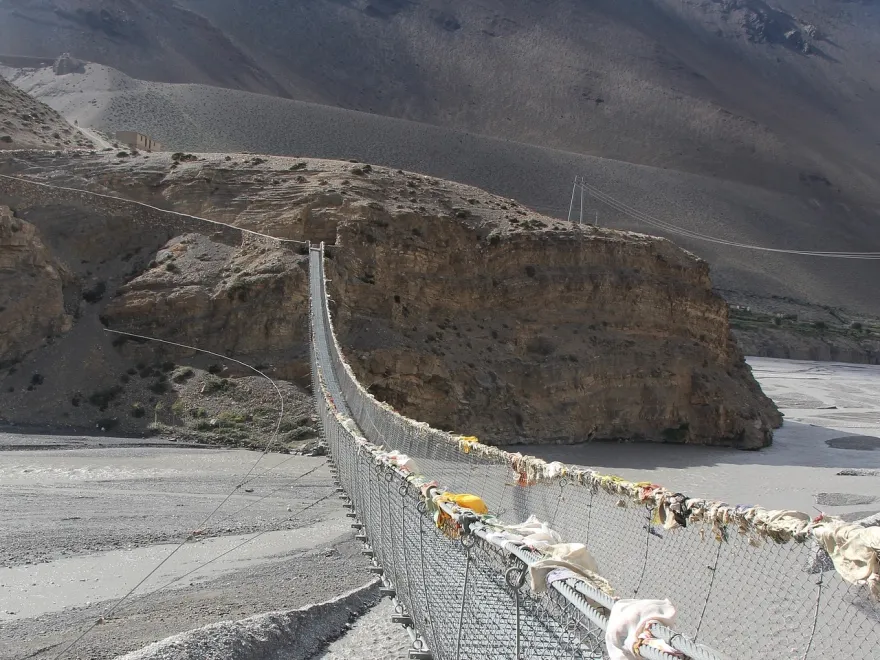
After breakfast, you’ll embark on the trek. Begin trekking along the Bheri River and make your way towards massive gorges. You may witness few small settlements along the bank of Bheri River. Cross few suspension bridges to reach Tarakot village. The settlement of Tarakot contains the colorful terraced fields along the Bheri River
Leaving Tarakot, you’ll begin trekking towards Shey Phoksundo National Park. Begin climbing upstream along the Tarap Chu River and make your way towards the quaint Buddhist site of Sandul Gompa. Sandul gompa (Monastery) lies at a juncture between Barbung Khola and Tarap Chu River. Witness the majestic sight of the confluence before heading uphill towards Laini village (3160m). The trail continues along the southern banks of Barbung Khola to reach Laisicap. After a brief walk, you’ll begin climbing towards Khanigaon and make your way to Laina Odar. Catch the beautiful sceneries of Putha Hiunchuli (7246) and Churen Himal range en route.
The landscape remains gifted with forests. Leave Laina Odar and begin climbing uphill along the Tarap River. The trail goes past deep gorges into Chhyugar. Enjoy a warm lunch before crossing a stream and continuing for a few more hours towards Toltol village. Toltol is a quaint village that serves as the winter settlement for Dolpalis hailing from Upper Dolpo. Every winter, they move down from higher plains towards Toltol.
Leaving Toltol, the trail begins to rise through Shey Phoksundo National Park. Climb upstream along the Tarap Chu River to reach Kamattarka village that lies at the juncture between Tarap Chu and Lang Khola. The trail remains surrounded by wild roses and juniper bushes. A few hours of trek will bring you to the village of Dho Tarap (3950m). The small settlement is famous for its ancient practices gifted from ancient Bon Po religion.
Spend the day acclimatizing at Dho Tarap and exploring the Dolpa valley. The surroundings of Dho Tarap amass few monasteries, Stupas, and Bon relics. The village remains unique for its houses made out of mud, stone, and thatched roof. The more exceptional lifestyle, culture, and occupation of the villagers resemble that of Tibet. You will also find few adherents of the Bon-Po and Nyingma religions. Bon-Po is an ancient religion that predates Buddhism. Today, there are only a few traces of Bon-Po found in western Nepal.
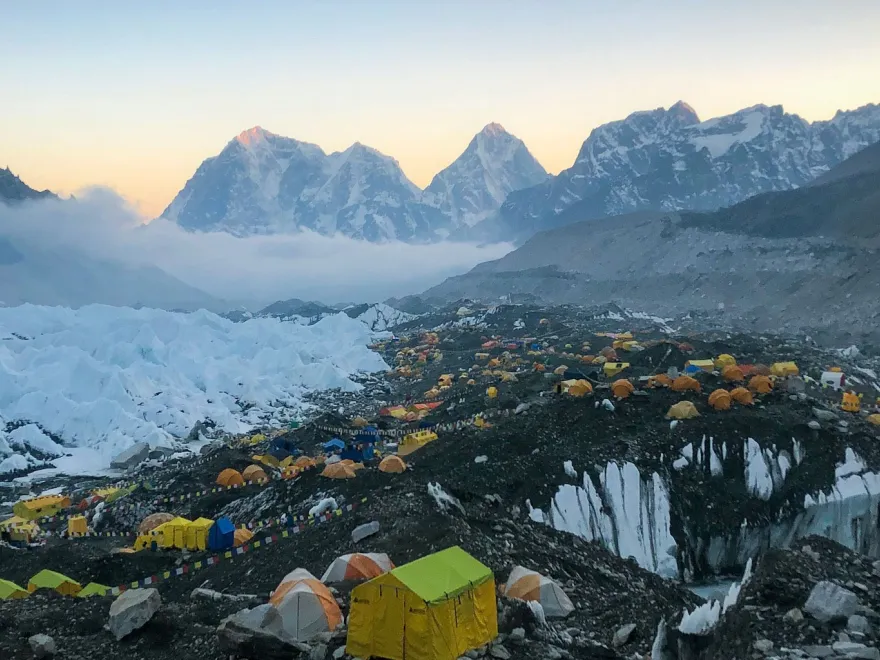
From Dho Tarap, you’ll make your way upstream along the Tarap Chu River. The initial trail goes through lush grassland towards Upper Tarap. From this vantage point, you can catch the beautiful sight of the massive Tarap Chu River. The trail continues further along the meadow of Tarap valley. The trail begins to rise through Tokyu and head uphill along the rock and gravels towards Numa La Base Camp (4350m). Overnight inside a tented camp.
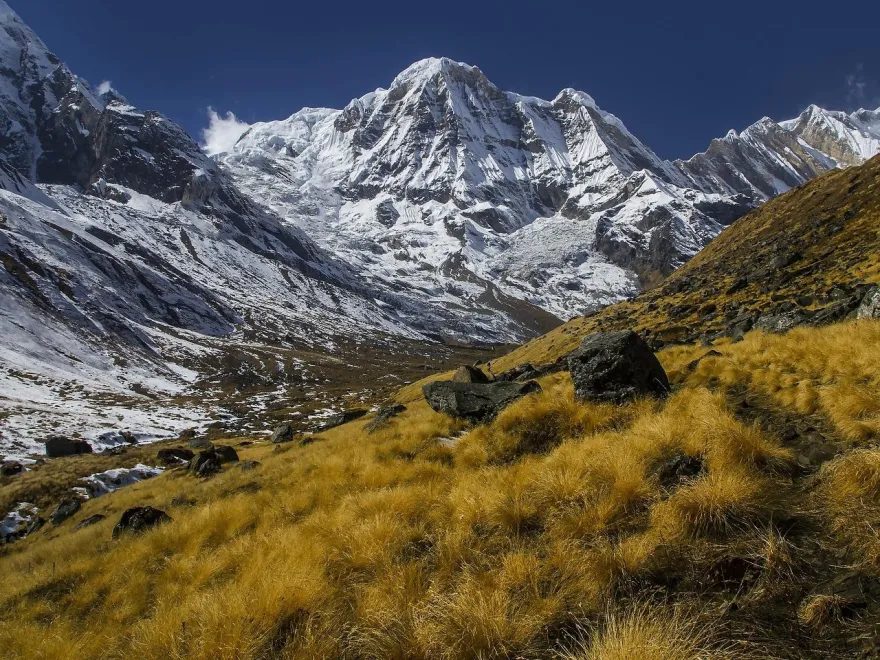
Leaving Numa La Base Camp, the trail begins to rise along with the sparse snows towards Numa La Pass. The trail climbs uphill along with the snow and rocky patches. A short climb will bring you to the top of the pass from where you can enjoy the magnificent sights of Dhaulagiri Peak (8167m), Churen Himal, and Norbung Kang (6085m). The top of the pass contains Buddhist prayer flags. From here, you’ll continue heading down to another side of the pass. A few hours of the pleasant downhill trek along the Gyambo Khola will bring you to Danighar village.
From Danighar, you’ll approach another high pass of Baga La (5170m). The trail rises along with the snow and rocky patches. The solitary path contains with Buddhist prayer flags in many places. Once at the top of Baga La Pass, you will witness many Buddhist Chortens throughout the valley. The majestic sight of Norbung Kang (6085m) and Phoksundo Lake will also be visible. The trail begins to drop along a deep ravine and crosses a frozen stream to reach Temche.
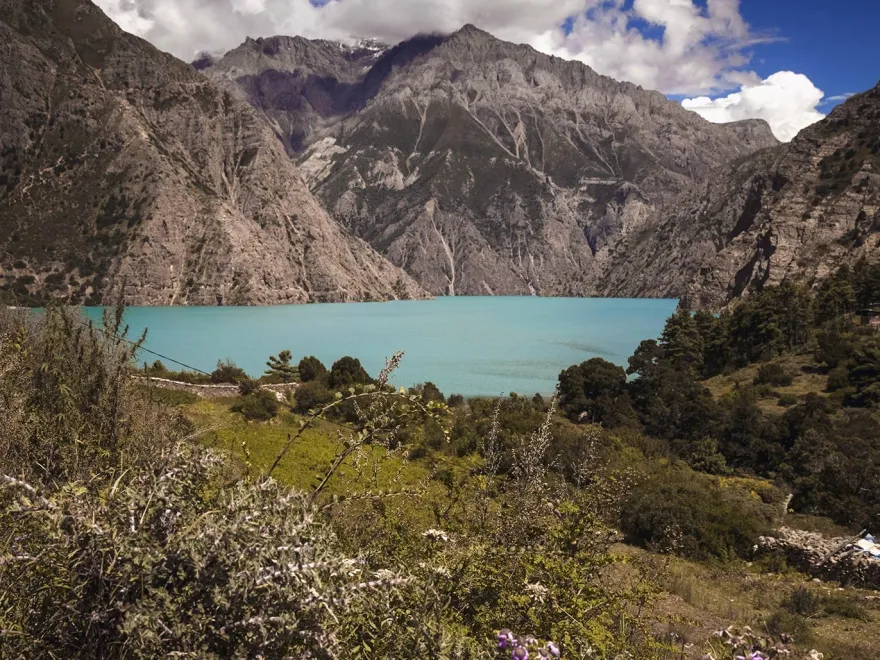
From Danighar, you’ll begin to walk along the rocky surface and descend towards Yak Kharka. Yak Kharka stands for Yak pasture. The locals bring their Yak caravan to the field for grazing. Enjoy an exciting sight of yaks grazing in the fieldsand continue along with them towards Phoksundo Lake. The locals still indulge in the traditional occupation of salt-trading with Tibet in the north. They use Yak caravan to carry salt to the border. Leaving Yak Kharka, you’ll begin trekking towards Ringmo Village. Walk past the village and make your way towards oak and juniper forests. Continue through the forests to arrive at the pristine site of Phoksundo Lake. Spend the evening admiring the beautiful sight of the lake.
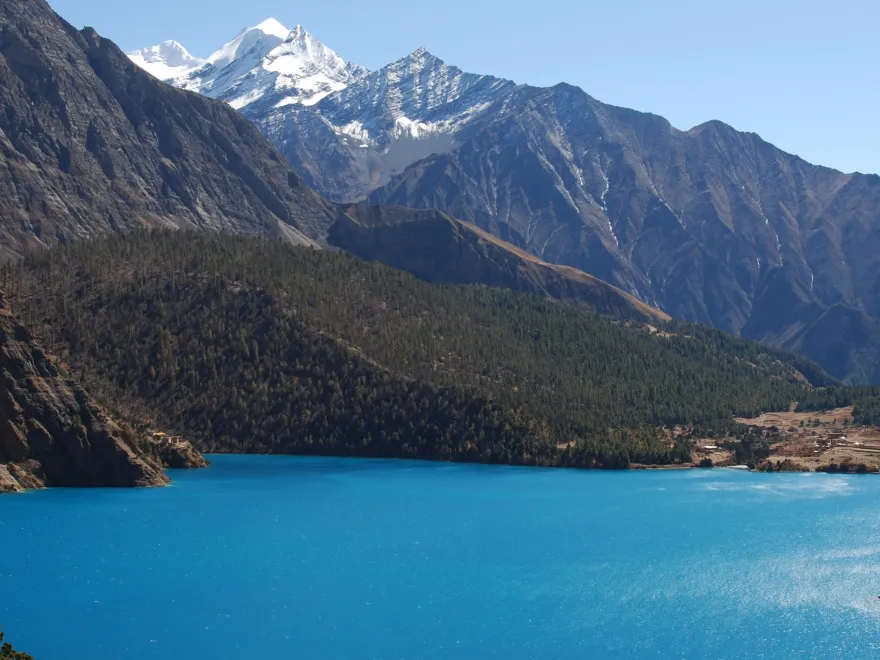
Spend the day exploring the pristine Phoksundo Lake and make a short hike around the Ramsar site. Phoksundo is an oligotrophic lake located at the altitude of 3600 meters. The turquoise-colored lake remains one of the major highlights of this trek. You’ll begin circling the lake as you explore the surrounding Buddhist stupas. The trail continues to move away from Phoksundo Lake and head towards the Tshowa monastery (the lake-shore Bon Monastery) located atop the ridge. Explore the ancient Monastery and its 900 years old history. From here, you’ll begin descending towards Phoksundo Lake
The trek continues through the scenic Shey Phoksundo National Park. Begin climbing the perpendicular ridge. From the top of the hill, you can catch the magnificent view of the beautiful Phoksundo Lake for the last time. The trail continues to drop through the forested paths towards Chunuwar village. Enjoy a warm broth, and then keep heading downhill through lush pine and birch forests towards Chhepka.
On the last day of the trek, you’ll make your way past Chhepka and begin climbing down along the terraced farmlands towards Juphal. A short hike will bring you to Shyanta village. The trail continues through sparse forests towards Kageni. You will exit Shey Phoksundo National Park and make your way towards Juphal village. The trek concedes upon your arrival in Juphal. Spend the evening exploring the Dolpali town of Juphal.
The day begins early. You’ll embark on a short flight back to Nepalgunj. Once at Nepalgunj, you can enjoy your breakfast and catch the connecting flight back to Kathmandu. The short flight from Juphal will take you back to warm Terai town. Another hour-long flight will take you over beautiful western Nepal and massive Trishuli River towards Kathmandu. The trip concedes upon your return. In the evening, we’ll take you for a farewell dinner. Do share your trek experiences with us.
You can use this extra day to explore the historical Kathmandu City. We’ll offer an experienced tour guide who will take you to some of the most popular tourist destinations around the city. You can also indulge in shopping along the way. Overnight in Kathmandu.
You will leave for the airport 2 hours before your flight time. We’ll drive you to the airport. In the meantime, you can choose to do whatever you like.
The Dolpa Trek takes approximately 19 days, including arrival in Kathmandu, permit arrangements, sightseeing, domestic flights, trekking, acclimatization, and departure. Organized by Everest Extreme Adventure, this itinerary takes you through remote villages, dramatic mountain valleys, high-altitude passes, and the spectacular Phoksundo Lake. It also includes a buffer day in Kathmandu to accommodate possible flight delays caused by unpredictable mountain weather.
The Dolpa Trek is considered challenging to strenuous because of its remote location, long walking days, rugged terrain, and high mountain passes above 5,000 meters. Trekkers should be comfortable walking for approximately four to seven hours on many days, sometimes longer depending on conditions. Everest Extreme Adventure recommends regular hiking, cardiovascular training, and uphill exercise before departure. Previous high-altitude trekking experience is beneficial, although individual suitability depends on fitness, preparation, and health.
The highest point on this itinerary is Numa La Pass, approximately 5,310 meters above sea level. The route also crosses Baga La Pass at around 5,170 meters and visits several high-altitude settlements and camps. At these elevations, the risk of altitude sickness increases significantly. Everest Extreme Adventure incorporates an acclimatization day around Dho Tarap, but trekkers must still ascend gradually, remain hydrated, communicate symptoms promptly, and follow their guide's safety advice.
The major highlights include the turquoise waters of Phoksundo Lake, the traditional settlement of Dho Tarap, the dramatic Numa La and Baga La passes, and the remote landscapes of Shey Phoksundo National Park. Trekkers also experience ancient monasteries, traditional stone houses, Buddhist cultural heritage, and the distinctive lifestyles of Dolpo communities. With Everest Extreme Adventure, travelers can explore these natural and cultural attractions while enjoying a carefully coordinated journey through one of Nepal's most secluded Himalayan regions.
Previous trekking experience is highly recommended because the itinerary involves demanding mountain terrain, extended walking days, and elevations exceeding 5,000 meters. Although experienced hikers with strong fitness may be suitable candidates, the trek requires careful preparation, mental resilience, and an understanding of high-altitude risks. Beginners should honestly assess their endurance and consider building experience on shorter mountain treks first. Everest Extreme Adventure can provide preparation guidance, but participants should consult a qualified healthcare professional if they have concerns about their suitability for high-altitude travel.
The best seasons for the Dolpa Trek are generally spring, from March to May, and autumn, from September to November. These periods often offer favorable trekking conditions, clearer mountain views, and suitable opportunities to explore remote Himalayan landscapes. However, snow at high passes and unpredictable weather can affect the route. Everest Extreme Adventure recommends checking current trail conditions and flight availability before confirming your departure dates.
The journey generally begins in Kathmandu, followed by a domestic flight to Nepalgunj, where trekkers stay overnight before continuing to Juphal. The trek starts from Juphal and proceeds toward Dunai and the remote Dolpo region. At the end of the adventure, trekkers return to Juphal and fly to Nepalgunj before connecting to Kathmandu when flights are available. Everest Extreme Adventure helps coordinate these travel arrangements, although weather and operating conditions can cause delays or cancellations.
The permits required depend on the final trekking route and the regulations in force at the time of travel. The itinerary generally requires the appropriate Shey Phoksundo National Park entry authorization and may require additional restricted-area permits if applicable to the confirmed route. Some restricted areas have specific requirements concerning licensed agencies, guides, and trekking groups. Everest Extreme Adventure can assist with permit arrangements and documentation after confirming the itinerary and applicable government regulations.
Accommodation varies according to location and available facilities. In Kathmandu and Nepalgunj, trekkers generally stay in hotels, while trekking days usually involve basic local teahouses, guesthouses, or camping where necessary. Facilities in remote villages can be limited, with shared bathrooms, limited electricity, and inconsistent access to hot showers or internet. Everest Extreme Adventure coordinates accommodation according to the selected package and local availability. A warm sleeping bag suitable for high-altitude temperatures is strongly recommended.
Meals during the Dolpa Trek typically consist of locally available Nepali and Tibetan-influenced dishes. Common options include dal bhat, rice, vegetable curry, noodles, soups, potatoes, porridge, bread, and eggs, depending on the location and supplies. Food choices may become more limited in remote settlements because ingredients are transported over difficult terrain. Everest Extreme Adventure helps coordinate meals according to the trekking arrangements. Trekkers with vegetarian, vegan, or other dietary requirements should communicate their needs before departure.
| No of people | Price per person |
|---|---|
| 1 - 1 | $1,999 |
| 2 - 4 | $1,775 |
| 5 - 9 | $1,755 |
| 10 - 15 | $1,735 |
| 16 - 20 | $1,715 |