Group Adventure Dates.  4.9 of 489 reviews
 4.8 of 232 reviews
4.9 of 489 reviews 4.8 of 232 reviews 
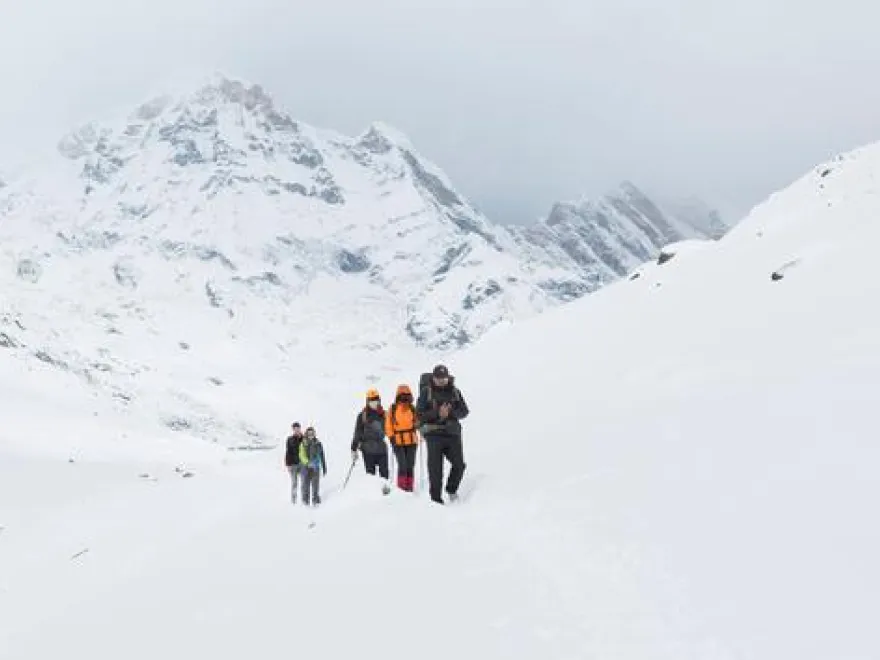
Join Everest Extreme Adventure for the challenging 45-day Mt. Annapurna Expedition, climbing the magnificent 8,091-meter Annapurna I. Experience breathtaking Himalayan landscapes, remote trekking trails, expert expedition planning, and an unforgettable high-altitude mountaineering adventure in Nepal.
The Mt. Annapurna Expedition is one of the most challenging and rewarding mountaineering adventures in the Himalayas of Nepal. Standing at 8,091 meters (26,545 feet) above sea level, Mount Annapurna I is among the world's highest mountains and is renowned for its immense natural beauty, technical climbing challenges, and demanding high-altitude environment. Located in the Annapurna region of north-central Nepal, this expedition offers experienced mountaineers an opportunity to test their endurance, technical skills, and determination while exploring some of the most spectacular landscapes in the Himalayas.
Organized by Everest Extreme Adventure, the 45-day Mt. Annapurna Expedition is designed to provide a structured journey from Kathmandu to the mountain's base camp and back. The itinerary begins with arrival in Kathmandu, expedition preparation, permit arrangements, and a drive to Pokhara and Tatopani. From there, climbers trek through Lete, Jungle Camp, and Miristi Khola before reaching Annapurna Base Camp at approximately 4,200 meters. The itinerary allocates Days 9–38 for the climbing period, allowing time for acclimatization, climbing preparations, and summit attempts, depending on weather, route conditions, and the expedition leader's assessment.
The expedition combines cultural experiences, scenic road journeys, remote trekking, glacier travel, and high-altitude mountaineering. Climbers should arrive with substantial experience on technical peaks and a strong understanding of expedition safety. Reaching the summit is never guaranteed, as conditions on Annapurna can change rapidly.
Choosing the right season is essential for a successful Mt. Annapurna Expedition. The most commonly preferred climbing windows for major Himalayan peaks are spring and autumn, although the specific suitability of each season depends on Annapurna's weather patterns, snow conditions, avalanche risk, and the planned climbing route. Spring, generally from April to May, is the principal season to consider for an Annapurna I summit attempt. During this period, expedition teams may benefit from relatively favorable climbing conditions and longer daylight hours, although storms, high winds, snowfall, and extreme cold remain serious possibilities at high elevations.
Autumn, particularly September through October, can offer clear skies, impressive mountain views, and favorable trekking conditions in the lower Annapurna region. However, autumn is not automatically as suitable as spring for every high-altitude summit attempt. Climbers must evaluate the prevailing snowpack, jet-stream winds, temperatures, and route conditions before choosing their expedition dates. Winter brings severe cold and potentially dangerous winds, while the monsoon season can create heavy rainfall, landslides, slippery trails, and road disruptions at lower elevations. Conditions above the snowline can remain hazardous regardless of the season.
Everest Extreme Adventure can help prospective climbers plan an expedition around the most appropriate seasonal window, subject to operational arrangements and current mountain conditions. The itinerary should also allow flexibility because the 30-day climbing period is an opportunity for acclimatization and summit attempts, not a guarantee of favorable weather or a successful ascent.
Seasonal considerations include:
The Mt. Annapurna Expedition is an extremely difficult undertaking intended for experienced high-altitude mountaineers. At 8,091 meters, Annapurna I presents serious hazards associated with extreme altitude, severe cold, avalanches, crevasses, steep snow and ice slopes, and rapidly changing weather. The low oxygen levels above 8,000 meters can severely affect physical performance and decision-making, making acclimatization, sound judgment, and appropriate technical preparation essential. Participants should have prior experience on demanding glaciated mountains, proficiency with crampons, ice axes, fixed ropes, and ascenders, and the physical and mental resilience needed for prolonged periods in remote terrain.
The 45-day itinerary begins with road transportation from Kathmandu to Pokhara, followed by a drive to Tatopani. After the trekking approach through Lete, Jungle Camp, and Miristi Khola, climbers reach Annapurna Base Camp and enter the planned climbing period. The return journey follows the scheduled trekking route toward Lete before road transfers back through Tatopani to Kathmandu. Driving times can vary significantly because of traffic, road conditions, construction, landslides, and weather. Likewise, trekking times are estimates and may change with trail conditions, group fitness, altitude, and the need for acclimatization.
Everest Extreme Adventure can coordinate the planned ground transportation and trekking logistics as part of the expedition arrangements. However, transportation to the mountain is only one component of the journey; climbers must also be prepared for remote camps, limited facilities, and potential delays.
Difficulty and transportation highlights:
Food and accommodation are important elements of the Mt. Annapurna Expedition because climbers need sufficient energy and rest to manage the physical demands of high-altitude mountaineering. During the initial days in Kathmandu, Pokhara, and other accessible locations, accommodation is generally arranged in hotels or lodges, depending on the selected package. Meals in towns may include a range of local Nepali and international dishes. Common options include dal bhat, rice, noodles, soups, vegetables, potatoes, eggs, bread, and other carbohydrate-rich foods. A balanced diet with adequate protein, fats, and fluids helps support recovery during the trekking approach.
As the expedition progresses into remote mountain terrain, accommodation typically becomes more basic. Depending on the route and the services arranged, climbers may stay in local lodges, temporary camps, or expedition tents. At Annapurna Base Camp and higher camps, facilities are limited, and meals are usually prepared by the expedition kitchen team when such services are included in the package. The menu may focus on easily digestible, energy-rich foods such as porridge, soups, rice, pasta, potatoes, noodles, and hot drinks. Above base camp, food preparation and hydration become increasingly challenging because of cold temperatures, altitude, and limited cooking resources.
Everest Extreme Adventure can explain the precise meal plan, accommodation standards, and kitchen support available under the selected expedition package before departure. Climbers should disclose dietary restrictions in advance and bring any personal snacks, supplements, or specialized nutrition products they require. Adequate hydration is essential, while alcohol and smoking should be avoided during acclimatization and climbing.
Food and accommodation considerations:
Obtaining the necessary permits and completing administrative arrangements are essential steps before beginning the Mt. Annapurna Expedition. As Annapurna I is an 8,000-meter mountain in Nepal, a formal mountaineering permit is required for an authorized summit expedition. The relevant authorization is administered through Nepal's responsible government tourism authorities, and the requirements can depend on the mountain, season, expedition structure, and current regulations. Permit fees and administrative conditions may change, so climbers should verify the latest official requirements before confirming their travel arrangements.
In addition to the mountaineering permit, the expedition may require other documentation and compliance measures, such as approved expedition plans, passport and visa details, a climbing team roster, emergency contact information, and applicable conservation-area permissions for the approach route. The precise requirements should be confirmed with the relevant authorities and the expedition operator. Depending on the current rules and expedition arrangements, additional obligations may include liaison arrangements, insurance documentation, waste-management deposits or procedures, and other environmental and safety requirements.
Everest Extreme Adventure can assist with coordinating permit applications and explaining the documentation required for the planned itinerary. Climbers should provide accurate personal details and submit requested documents within the specified deadlines. They should also confirm which permit fees, government charges, insurance costs, and administrative services are included in the package price and which must be paid separately.
Important permit and documentation considerations:
Choosing the right expedition operator is an important part of preparing for Mt. Annapurna. An 8,000-meter climb demands careful logistics, realistic planning, appropriate equipment, experienced leadership, and a strong commitment to risk management. Everest Extreme Adventure aims to help climbers organize the journey from their arrival in Kathmandu through the trekking approach, base camp preparations, climbing period, and return to the capital. A well-coordinated itinerary helps participants understand the stages of the expedition and prepare for the physical, logistical, and environmental challenges they may encounter.
The 45-day itinerary provides time for initial preparation in Kathmandu, road travel through Pokhara and Tatopani, trekking toward Annapurna Base Camp, and a planned climbing period from Day 9 to Day 38. This structure offers a framework for acclimatization and summit attempts, although the actual schedule must remain flexible in response to weather, route conditions, health, and the expedition leader's decisions. The return journey includes trekking back toward Lete, road transfers to Kathmandu, a rest day, and departure arrangements.
Everest Extreme Adventure can help prospective participants understand the expedition's logistical requirements, prepare the necessary documentation, and clarify the services included in their chosen package. Before booking, climbers should review the operator's relevant high-altitude expedition experience, guide qualifications, emergency procedures, equipment provisions, staff-to-climber arrangements, and evacuation plans. No operator can guarantee a summit, but careful preparation and responsible decision-making can support a more informed and organized expedition.
Reasons to consider Everest Extreme Adventure:
With appropriate experience, thorough preparation, realistic expectations, and careful planning, the Mt. Annapurna Expedition with Everest Extreme Adventure can be a significant milestone in an accomplished mountaineer's Himalayan journey.
The Mt. Annapurna Expedition organized by Everest Extreme Adventure is an adventurous 45-day journey designed for experienced mountaineers aiming to summit Annapurna I (8,091 m / 26,545 ft), one of the world's most challenging 8,000-meter peaks. The expedition begins in Kathmandu with preparation, permit arrangements, and equipment checks before traveling through Pokhara and the scenic Kali Gandaki Valley toward Annapurna Base Camp. Along the way, climbers experience Nepal's spectacular Himalayan landscapes, remote mountain villages, and diverse natural environments.
The itinerary includes acclimatization, technical climbing, establishing high-altitude camps, and a flexible summit attempt period, followed by a gradual descent and return to Kathmandu. With experienced expedition leadership, logistical support, and careful attention to safety, Everest Extreme Adventure aims to provide a professionally organized Himalayan mountaineering experience.
Upon your arrival at Tribhuvan International Airport in Kathmandu, a representative from Everest Extreme Adventure will welcome you and assist you with your transfer to the hotel. After checking in, you can relax following your international journey and enjoy your first impressions of Nepal's lively capital. Depending on your arrival time and energy level, you may take a short walk around the nearby streets, explore local shops, or enjoy a traditional Nepali meal. Your expedition coordinator will provide an initial introduction to the upcoming Annapurna climb, explain the general schedule, and help you settle in comfortably before the formal preparations begin the following day.
Today is dedicated to finalizing the essential arrangements for your Mount Annapurna Expedition with Everest Extreme Adventure. You will meet the expedition leader and support team to review the climbing schedule, proposed route, communication procedures, emergency plans, and high-altitude safety protocols. The team will check your personal mountaineering equipment, including insulated clothing, boots, harnesses, crampons, ice axes, helmets, and other technical gear. The company will coordinate applicable climbing permits, conservation-area documentation, and required administrative arrangements. You will also have time to purchase any missing supplies, organize personal belongings, and discuss food preferences and individual requirements before leaving Kathmandu for the mountains.
After breakfast, you will leave Kathmandu and begin the overland journey to Pokhara, one of Nepal's most popular gateway cities for Himalayan adventures. The drive follows winding highways alongside rivers, terraced hillsides, traditional settlements, and agricultural landscapes, offering an introduction to rural life in Nepal. A stop along the way will allow you to stretch your legs, enjoy refreshments, and have lunch before continuing toward Pokhara. Upon arrival, you will check into your hotel and have time to rest after the drive. If the weather is clear, you may enjoy views of the surrounding mountains or take a relaxing evening walk near Phewa Lake while preparing mentally for the remote mountain journey ahead.
Following breakfast in Pokhara, you will continue by road toward Tatopani, traveling through the picturesque landscapes of western Nepal. The route passes through rural communities, green hills, river valleys, and increasingly rugged terrain as you approach the Kali Gandaki region. Road conditions can vary considerably, particularly during the monsoon and after heavy rainfall, so the actual driving time may depend on traffic and local conditions. On reaching Tatopani, you will settle into a local lodge or guesthouse and have time to rest. The village is known for its natural hot springs, which may be available for a relaxing visit if time, access, and conditions permit. Your team will also review the next day's trekking arrangements.
After breakfast, you will begin trekking north through the dramatic Kali Gandaki Valley, gradually entering a landscape shaped by powerful rivers, rocky slopes, forested hills, and traditional mountain settlements. The trail and walking conditions depend on the selected route and current local access, but the day generally introduces you to the changing environment of the Annapurna and Dhaulagiri region. As you gain elevation, you will notice cooler air and increasingly impressive views of the surrounding Himalayan terrain. Your trekking crew will help manage group pace and equipment, allowing you to walk steadily without unnecessary exertion. Upon reaching Lete, you will check into a local lodge or designated accommodation, enjoy a warm meal, and rest in preparation for the more remote stages ahead.
Today's trek takes you farther into the mountain wilderness as you leave the village surroundings of Lete and follow the approach route toward Jungle Camp. The trail may pass through pine forests, rocky sections, narrow valleys, and areas where the vegetation gradually changes with increasing altitude. You should maintain a comfortable walking rhythm, take regular hydration breaks, and follow the instructions of the trekking guide, especially where the path becomes uneven or exposed. Your support team will coordinate meals, camping arrangements, and the transportation of expedition supplies. After approximately five to six hours of trekking, you will arrive at Jungle Camp, where the team will establish or prepare the designated overnight camp. The evening will be spent recovering, checking equipment, and discussing the following day's route.
You will leave Jungle Camp and continue toward Miristi Khola, gaining substantial elevation as the landscape becomes increasingly rugged and alpine. Forested terrain gradually gives way to open slopes, loose rock, glacially shaped ground, and views of the surrounding high peaks. Although the stated trekking duration is four to five hours, the altitude gain makes this a demanding day that requires a measured pace and careful attention to your physical condition. The expedition leader will monitor the team's progress and assess how everyone is responding to the increasing elevation. At Miristi Khola, the support crew will arrange the overnight camp and provide a meal and warm drinks. You should prioritize hydration, nutrition, and rest while preparing for the approach to Annapurna Base Camp.
Today's journey takes you to Annapurna Base Camp, the principal staging area for the climbing phase of the expedition. The approach crosses remote high-mountain terrain, with possible sections of moraine, loose stones, glacial deposits, and steep or uneven ground depending on the route conditions. Your guide will select a safe pace and appropriate line through the terrain, while the support crew manages camp equipment and essential supplies. Upon arrival at base camp, you will settle into the expedition camp and receive an orientation covering camp organization, communications, sanitation, weather monitoring, and emergency procedures. The climbing team will inspect its equipment, review the intended route, and discuss acclimatization plans. The remainder of the day will focus on rest, hydration, and preparing for the extended climbing period.
Days 09–16: Base Camp Preparation and Acclimatization
The climbing phase begins with organizing Annapurna Base Camp, checking personal and technical equipment, and attending detailed briefings on the climbing route, weather conditions, safety procedures, and acclimatization strategy under the guidance of Everest Extreme Adventure’s expedition team. The initial days focus on gradual altitude adjustment, rest, health assessments, technical training, and practicing the use of crampons, ice axes, harnesses, ascenders, fixed ropes, and other essential mountaineering equipment. Depending on weather, snow stability, and individual fitness, climbers may undertake short acclimatization walks and controlled rotations toward Camp I, carrying limited supplies when appropriate. Regular meals, hydration, equipment maintenance, and monitoring for altitude-related symptoms remain priorities throughout this preparation period.
Days 17–24: Establishing Higher Camps and Acclimatization Rotations
The team prepares food, fuel, tents, ropes, and essential climbing supplies before moving toward Camp I and inspecting the route above it. Climbers gradually gain experience at higher elevations through controlled ascents, route inspections, and acclimatization rotations toward Camp II, depending on weather conditions, route accessibility, and individual health. The expedition leader assesses snow and ice conditions, fixed-rope sections, potential avalanche hazards, and the team's readiness before authorizing further progress. Following each rotation, climbers descend to a lower camp or Annapurna Base Camp for recovery, nutrition, equipment checks, and medical assessments. The schedule remains flexible to ensure adequate acclimatization, preserve energy, and respond appropriately to changing mountain conditions.
Days 25–34: Higher Camp Progression and Summit Preparation
This phase focuses on reviewing the summit strategy, preparing supplies, and progressing through Camp I and Camp II toward Camp III or a suitable high camp, subject to the route conditions and the team's acclimatization. Climbers carry essential equipment and supplies while following established safety procedures on steep snow, ice, glacier terrain, and exposed sections. At higher camps, the team evaluates route conditions, checks shelters and technical equipment, monitors altitude-related symptoms, and maintains regular communication. Rest periods and descents to lower camps are incorporated as needed to support recovery. Before the summit attempt, the expedition leader reviews weather forecasts, wind speeds, visibility, snow stability, personal equipment, food, hydration, supplemental oxygen arrangements if planned, emergency procedures, and turnaround times. The summit push will proceed only when conditions and the team's health provide an acceptable margin of safety.
Days 35–38: Summit Attempt and Descent to Base Camp
If weather conditions and the team's physical readiness are suitable, the expedition begins its summit push toward Mt. Annapurna (8,091 m / 26,545 ft), navigating challenging high-altitude terrain under the guidance of the expedition leader. Climbers follow the agreed route, maintain communication, and observe strict turnaround times, with safety taking priority over reaching the summit. Depending on progress, Day 36 allows for continuation of the summit attempt or descent to the designated high camp, followed by a careful descent through the higher camps on Day 37. On Day 38, the team returns to Annapurna Base Camp, where climbers recover, reorganize personal equipment, and participate in an initial expedition review. The support crew begins sorting supplies and preparing for the return journey toward Miristi Khola, with additional time allowed if weather, route conditions, or recovery needs require it.
After completing the climbing phase, you will leave Annapurna Base Camp and begin the descent toward Miristi Khola with the support of the Everest Extreme Adventure team. Although descending generally requires less cardiovascular effort than climbing uphill, glacial terrain, loose stones, and uneven trail sections can be demanding, especially after several weeks at high altitude. The group will maintain a careful pace, take regular breaks, and ensure that all equipment is securely packed for the return journey. Along the way, you will have opportunities to appreciate the surrounding mountain scenery from a different perspective. Upon reaching Miristi Khola, the team will organize the overnight camp, serve a warm meal, and provide time to rest and recover.
Following breakfast, you will continue descending from Miristi Khola toward Jungle Camp, gradually leaving the exposed high-altitude landscape behind. As the trail loses elevation, the surroundings may become greener, with more vegetation and increasingly sheltered terrain. Your trekking guide will select the safest available route and manage the pace according to the group's condition, taking into account the fatigue that can accumulate during a long expedition. The support crew will coordinate the movement of luggage, camping supplies, and remaining equipment. After approximately five to six hours, you will arrive at Jungle Camp and settle in for the night. The lower elevation and relatively milder conditions should provide a welcome opportunity to rest, enjoy a warm meal, and prepare for the next stage.
Today you will continue trekking from Jungle Camp toward Lete, descending through mountain terrain that gradually transitions toward settled areas of the Kali Gandaki region. Depending on the route, you may pass through forested sections, rocky paths, and small clearings with views of the surrounding hills and Himalayan peaks. The return trek offers time to reflect on the expedition and appreciate the natural environment encountered during the approach and climbing phases. Your guide will help maintain a manageable pace and arrange suitable breaks along the way. Upon reaching Lete, you will settle into local accommodation, enjoy a proper meal, and take advantage of the more comfortable surroundings. The evening can be spent resting, reorganizing personal belongings, and preparing for the road journey the following day.
After breakfast, you will leave Lete and travel by road toward Tatopani, marking the transition from the trekking portion of the expedition to the return journey by vehicle. The drive passes through the Kali Gandaki region, where mountain slopes, riverside settlements, and terraced hillsides form the surrounding landscape. Road conditions and travel times can vary depending on weather, traffic, maintenance work, and local access, so the schedule may require adjustment. Upon arrival in Tatopani, you will check into a guesthouse or lodge and have time to relax. If circumstances permit, you may visit the village's natural hot springs for a soothing break after the long mountain expedition. The evening will be dedicated to rest, a comfortable meal, and preparation for the drive ahead.
After breakfast, you will begin the long drive back to Kathmandu, leaving the mountain communities and river valleys of western Nepal behind. The journey follows winding roads through rural settlements, terraced farmland, green hills, and sections of the main highway network. Stops will be arranged for refreshments, lunch, and rest breaks as appropriate. Travel time can vary considerably with road conditions, traffic congestion, construction, and weather, so it is advisable to maintain flexibility in the schedule. Upon arriving in Kathmandu, you will transfer to your hotel and have time to freshen up after the journey. The evening will be suitable for a relaxed dinner and a well-earned rest after completing the remote trekking and climbing stages of the Annapurna expedition.
Today is reserved for relaxation and enjoying Kathmandu after the demanding expedition. Sleep in, enjoy breakfast at your hotel, and spend the day exploring the city's markets, cultural landmarks, traditional handicraft shops, or historic neighborhoods, depending on your interests and energy level. You may also use the time to buy souvenirs, take photos, or simply unwind after weeks in the mountains. Everest Extreme Adventure will coordinate a farewell dinner where the expedition members, guides, and support team can gather to celebrate the journey and share memories. A traditional Nepali cultural program may accompany the dinner, offering an enjoyable introduction to local music and dance. This final evening provides a meaningful opportunity to recognize the team's efforts and conclude the expedition together.
After breakfast, or according to your international flight schedule, a representative from Everest Extreme Adventure will arrange your transfer from the hotel to Tribhuvan International Airport in Kathmandu. The team will help coordinate departure transportation and provide any final practical assistance required before you leave Nepal. It is recommended that you allow sufficient time for traffic, airport check-in, baggage procedures, and international security formalities. As you prepare to depart, you will carry home memories of Nepal's spectacular Himalayan landscapes, the challenges of high-altitude mountaineering, and the experience of undertaking an ambitious expedition on Annapurna I. Your 45-day itinerary concludes with your onward flight, marking the end of your Mount Annapurna Expedition with Everest Extreme Adventure.
The Mt. Annapurna Expedition organized by Everest Extreme Adventure follows a planned 45-day itinerary, beginning with your arrival in Kathmandu and concluding with your international departure. The schedule includes expedition preparation, travel to the Annapurna region, trekking to base camp, acclimatization, high-altitude climbing, summit attempts, and the return journey. The climbing period is flexible because weather, route conditions, and individual health can affect progress. Additional days may occasionally be necessary if unexpected circumstances delay the expedition.
Annapurna I is considered one of the most challenging and dangerous mountains above 8,000 meters. The expedition involves extreme altitude, technical climbing, steep snow and ice, possible avalanche exposure, unpredictable weather, and significant physical and mental demands. Everest Extreme Adventure recommends this expedition only for experienced mountaineers with strong high-altitude climbing backgrounds. Participants should have previous experience on demanding peaks, be proficient with technical equipment, and understand that reaching the summit cannot be guaranteed regardless of preparation or experience.
Participants should have excellent cardiovascular endurance, strong muscular conditioning, and previous experience with demanding mountaineering objectives. Training should include sustained uphill hiking, carrying a weighted backpack, endurance activities, and practice using crampons, ice axes, harnesses, and fixed-rope systems where appropriate. Experience at high altitude is particularly important because Annapurna I presents challenges beyond ordinary trekking. Everest Extreme Adventure recommends that climbers assess their readiness with qualified mountaineering professionals and obtain appropriate medical advice before departure. Fitness alone does not eliminate altitude-related risks.
Acclimatization allows your body to adapt gradually to decreasing oxygen availability as you ascend. During the expedition, Everest Extreme Adventure plans time for rest, gradual elevation gain, and climbing rotations where appropriate to the route and conditions. Climbers may move to higher elevations before returning to lower camps to support adaptation. The exact schedule depends on individual responses, weather, and the expedition leader's assessment. Participants must report symptoms such as persistent headaches, nausea, dizziness, unusual fatigue, or breathing difficulties immediately. Severe symptoms require prompt medical assessment and may necessitate descent.
Climbers need specialized equipment suitable for an 8,000-meter expedition, including high-altitude mountaineering boots, crampons, an ice axe, a helmet, a harness, technical clothing, insulated gloves, goggles, a sleeping system, and appropriate personal safety equipment. Depending on the expedition plan, supplemental oxygen and associated equipment may also be used. Everest Extreme Adventure should provide a detailed equipment checklist specifying which items are personal responsibilities and which are supplied by the company. All technical equipment must be appropriate for the intended route, compatible with the climbing system, and inspected before the expedition begins.
Safety planning includes route assessment, weather monitoring, acclimatization, communication procedures, appropriate climbing equipment, and decisions made by the expedition leader. Everest Extreme Adventure should establish clear emergency protocols and explain how the team will respond to deteriorating conditions, altitude-related illness, or climbing incidents. Participants must follow instructions, use safety systems correctly, and respect established turnaround times. Annapurna I carries serious objective hazards, including avalanches and rapidly changing weather, which cannot be eliminated entirely. Appropriate rescue insurance and emergency evacuation arrangements are essential, and summit success must never take priority over safety.
Yes, comprehensive insurance is essential for an expedition to Annapurna I. Your policy should explicitly cover high-altitude mountaineering up to the intended elevation of 8,091 meters, technical climbing, emergency medical treatment, helicopter evacuation where available, and repatriation. Standard travel insurance frequently excludes extreme-altitude climbing or mountaineering activities, so exclusions and coverage limits must be reviewed carefully. Everest Extreme Adventure can explain the insurance documentation required for participation, but climbers are responsible for ensuring that their policy is suitable. Rescue services may be limited by weather, terrain, and operational availability, even when insurance is in place.
The main climbing seasons for Annapurna I are generally spring, from April to May, and autumn, particularly September to October, although suitable conditions vary by route and year. Spring is commonly preferred for high-altitude Himalayan expeditions because it can provide a more favorable combination of temperatures and climbing opportunities. Autumn may also offer suitable weather windows, but conditions can be unpredictable. Everest Extreme Adventure will need to assess current forecasts, snowpack conditions, route accessibility, and expedition logistics before recommending specific departure dates.
Weather and mountain conditions can change rapidly on Annapurna I, potentially making the summit route unsafe even after extensive preparation. If high winds, heavy snowfall, avalanche danger, poor visibility, or other hazards arise, the expedition leader may postpone the ascent, modify the climbing schedule, or cancel the summit attempt. Everest Extreme Adventure will prioritize the team's safety when making these decisions. The 30-day climbing window provides flexibility for acclimatization rotations and suitable weather opportunities, but it does not guarantee a successful summit. Climbers should also budget for potential delays and understand the company's cancellation, extension, and additional-cost policies before departure.
Climbing Annapurna I requires the appropriate Nepalese mountaineering permit and other applicable authorizations for the selected route and expedition arrangements. Additional documentation, conservation-area permissions, and administrative requirements may also apply. Everest Extreme Adventure can coordinate the necessary paperwork and explain the documentation required from each participant before departure. Climbers should provide valid passport details, photographs, and other requested documents within the specified deadlines. Permit fees, applicable regulations, and requirements should be confirmed with the company before booking because official rules can change.
Accommodation varies throughout the 45-day itinerary. In Kathmandu and Pokhara, participants generally stay in hotels, while accommodation in smaller mountain settlements may be in local lodges or guesthouses, depending on availability. During the remote trekking and climbing stages, the expedition generally relies on organized camping arrangements, including tents and designated dining facilities where provided. Everest Extreme Adventure should confirm the exact accommodation standard, room-sharing arrangements, camping equipment, and available facilities before departure. Climbers should expect increasingly basic conditions as they travel farther from established mountain communities.
Meals are typically arranged according to the expedition's accommodation and logistical plan, with a combination of local Nepali dishes and practical foods suitable for trekking and mountaineering. At higher camps, meals may consist of simpler, lightweight foods designed to provide energy in cold conditions and at altitude. Drinking water should be treated or purified using appropriate methods before consumption. Everest Extreme Adventure can discuss dietary requirements and food preferences in advance, but participants should bring any essential personal snacks or specialized nutrition products. Maintaining adequate food and fluid intake is particularly important during prolonged high-altitude activity.